Crafting Comfort: A Restorer’s View on Biophilic Sofas for 2026
Building a truly great sofa isn’t just about slapping together some wood and fabric. It’s about understanding how materials age, how joints hold up, and what makes a piece last a lifetime, or even longer. For 2026, the buzz is around ‘biophilic sofa designs’ – bringing the calm of nature indoors. From where I stand, that’s not just a trend; it’s an opportunity to lean into durable, repairable craftsmanship that honors natural materials and stands the test of time.
We’re not just looking for a sofa that *looks* natural; we’re seeking one that *performs* naturally, ages gracefully, and contributes to a sense of well-being through its inherent quality. This means a serious look at everything from the frame to the fill, ensuring longevity and repairability are at the core. Let’s dig into what that means in practice.
The Foundation: Frame and Joinery for Lasting Comfort
Any piece of furniture is only as good as its bones. For a biophilic sofa, that foundation should be as strong and honest as a century-old oak. You’ll want to see kiln-dried hardwood, not just any wood. Kiln-dried birch, maple, or oak are prime choices. The kiln-drying process removes moisture, preventing warping and cracking down the line. It’s an extra step, but it’s crucial for stability.
Next, examine the joinery. Staples and screws are fine for temporary fixes or backing, but they’re not structural. A properly built frame utilizes time-honored techniques: double-dowelled joints, mortise-and-tenon connections, or even corner blocks reinforced with glue and screws, not just staples. When you’re dealing with a piece designed for wellness lounging, it’ll see a lot of use, so those joints need to be solid. They’re what allow a piece to be disassembled, repaired, and reassembled decades from now, rather than just tossed out.
Don’t overlook the suspension system. A truly durable biophilic sofa might feature eight-way hand-tied coil springs – it’s the gold standard for uniform support and longevity. These individual coils are tied to each other and the frame at eight points, distributing weight evenly. Sinuous springs (S-springs) are a good alternative, offering solid support, especially in more modern, lower-profile designs. Webbing, while economical, tends to be less durable over the long haul, though high-quality Pirelli webbing can hold its own for a good while.
Sitting Deep: Dimensions for Wellness Lounging
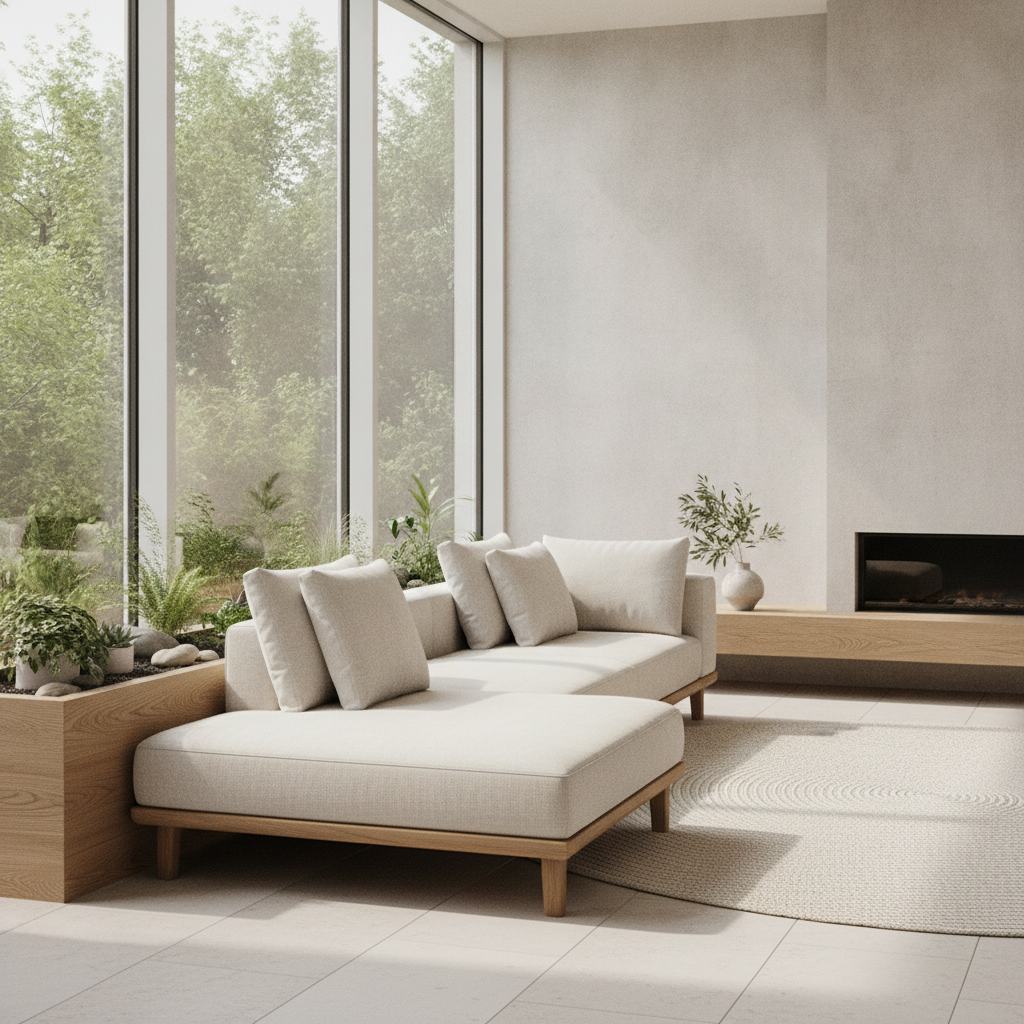
Biophilic design often prioritizes comfort and a connection to the ground, encouraging relaxation. This translates directly into specific dimensions:
- Seat Depth: For deep, comfortable lounging, look for seat depths between 24 and 28 inches. This allows you to really sink back, cross your legs, or even curl up. It’s less about formal posture and more about sustained comfort.
- Seat Height: Lower to the ground is generally preferred, aiming for seat heights of 16 to 18 inches from the floor to the top of the uncompressed cushion. This creates a more grounded, relaxed feeling, making it easier to recline and less like sitting on a perch.
- Armrests: Often wider and flatter, around 6 to 10 inches wide, providing space to rest an arm, a book, or even a small cup. Their height typically aligns with the mid-back for natural support.
- Clearance: A gap underneath the sofa, ideally 4 to 6 inches, helps maintain a lighter visual footprint, allows for easier cleaning, and contributes to an airy, uncluttered feel – a subtle nod to open natural spaces.
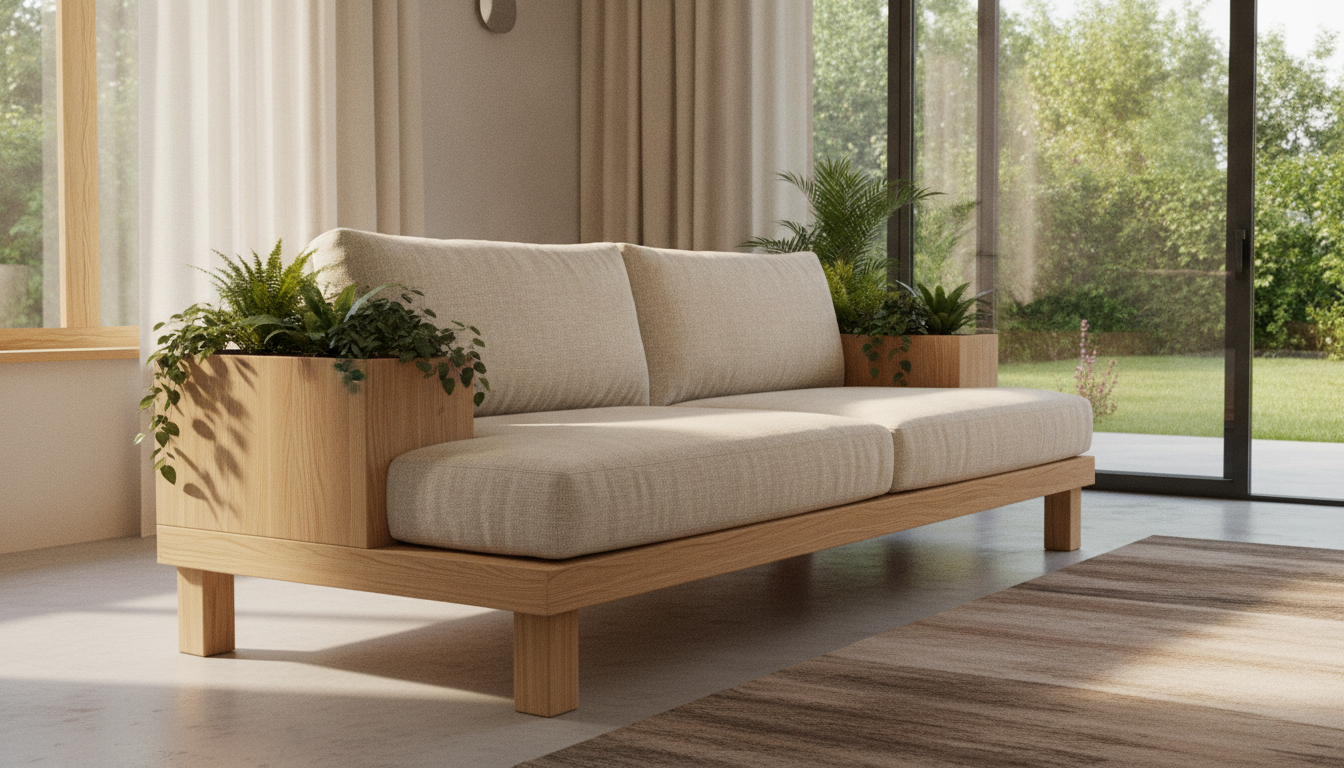
The Heart of Comfort: Foam and Fillings
A sofa’s comfort comes down to its cushioning. For durability and long-term resilience in a biophilic design, you’re usually balancing support with softness. High-density foam is your best friend here. For seat cores, I recommend high-resilience (HR) foam with a density between 1.8 and 2.5 PCF (pounds per cubic foot). This density ensures the foam recovers its shape and won’t sag quickly. A lower density might feel softer initially, but it breaks down faster.
Foam’s firmness is measured in ILD (Indentation Load Deflection). For a supportive core with a bit of give, aim for an ILD of 30-40. To achieve that cloud-like softness on top, many quality sofas layer this firm core with a softer wrap. This could be a thinner layer of lower-ILD foam (20-30 ILD), or, for a true biophilic feel, a natural wrap.
Natural alternatives like latex foam offer excellent elasticity and breathability, often lasting longer than traditional polyurethane. You’ll also find cushions wrapped in a blend of down and feathers, or synthetic fiberfill. A down/feather blend provides luxurious sink-in comfort, but it does require regular fluffing to maintain its loft. For those avoiding animal products or allergens, a high-quality, plant-based fiberfill or organic cotton batting can offer a similar feel with less maintenance.
Fabric That Breathes: Natural Selections for Biophilic Sofas
The upholstery is the skin of the sofa, and in biophilic design, it needs to be as natural and tactile as possible. It’s about feel, breathability, and how it ages. Always consider the rub count, measured in double rubs, which indicates a fabric’s durability.
- Linen: A classic for a reason. Its natural slubs and texture are inherently biophilic. It’s breathable and develops a beautiful patina over time. For residential use, look for a linen with a rub count of at least 12,000-15,000 double rubs. It’s prone to wrinkling, but that’s part of its charm. You can find durable heavy-duty linen fabric that holds up well.
- Wool: Incredibly durable and naturally resistant to stains, odors, and even flames. Wool fabrics typically boast rub counts of 20,000+ double rubs, making them excellent for high-traffic areas. They offer warmth and a rich, substantial feel.
- Cotton Blends: A blend often enhances cotton’s natural strength and softness. Look for cotton blends with other natural fibers like linen or even hemp. They offer good durability (15,000-20,000 double rubs) and a wide range of textures and weaves.
- Performance Fabrics: While synthetic, some newer performance fabrics incorporate recycled content and mimic natural textures very well. If you need extreme stain resistance, consider these, but always prioritize those with a natural hand-feel and a robust rub count (30,000+ double rubs).
The color palette for biophilic sofas usually sticks to earthy tones: muted greens, warm browns, sandy beiges, deep blues, and charcoal grays. These colors connect us directly to nature’s spectrum, fostering a sense of calm and continuity within the indoor space.
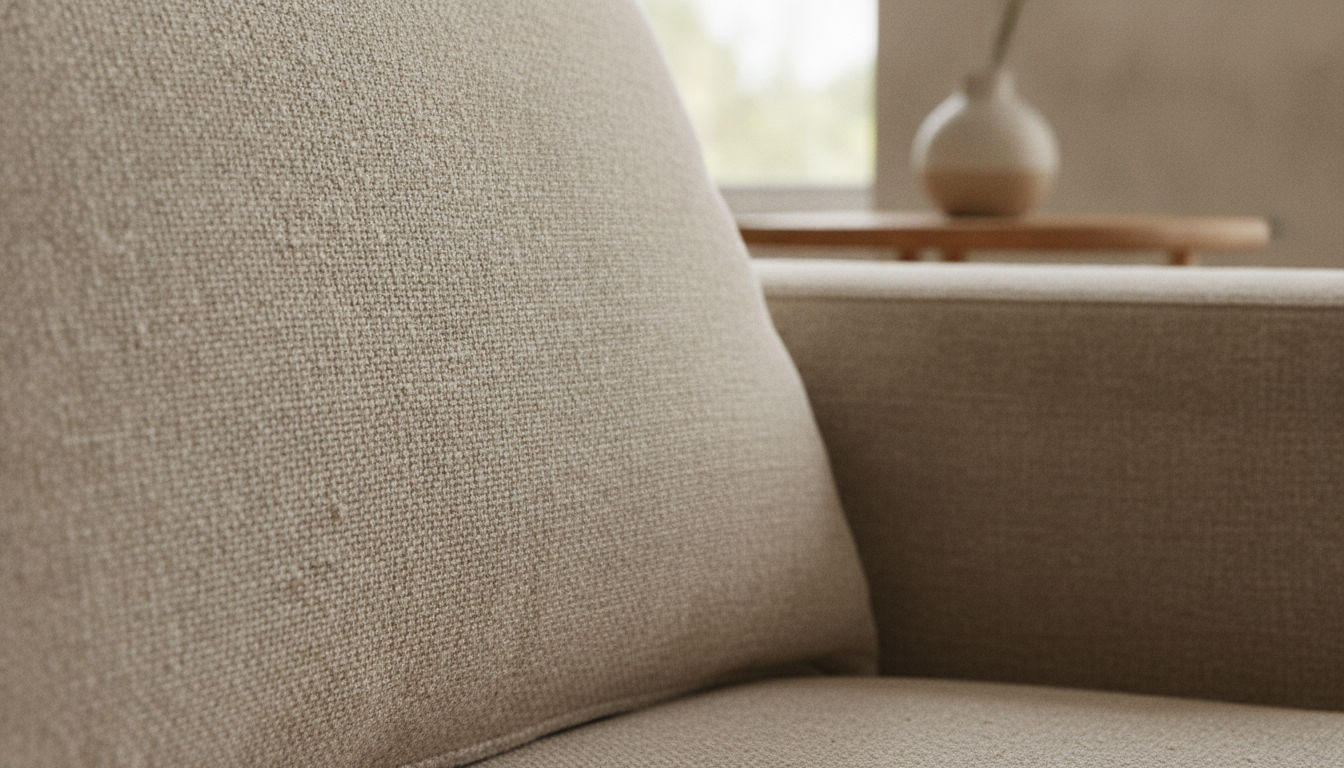
Comparing Biophilic Material Choices
Here’s a quick overview of practical trade-offs for some key biophilic sofa components:
| Feature | Biophilic Choice Example | Practical Trade-offs |
|---|---|---|
| Frame Construction | Kiln-dried Hardwood, Dowel Joinery | Higher initial cost, but repairable and lasts generations. Heavy, can be difficult to move. |
| Cushion Core | High-Density Foam (1.8-2.5 PCF) | Holds shape well, less sink initially. Can feel firmer than lower density options. |
| Cushion Wrap | Down/Feather or Natural Fiberfill | Luxuriously soft, but requires regular fluffing. Some allergen concerns with down. |
| Upholstery Fabric (Linen) | Linen (12,000-15,000 DR) | Natural look and feel, excellent breathability. Prone to wrinkles, might require more care. |
| Upholstery Fabric (Wool) | Wool (20,000+ DR) | Highly durable, naturally resistant to stains and odors. Can be pricier, slight texture. |
| Overall Repairability | High, with modular components | Parts can be sourced/replaced individually, extending life. Requires skilled hands for major repairs. |
Long-Term Appeal: Repairability and Sustainability
A true restorer always thinks about the future. Biophilic design, at its core, should embrace sustainability, and that means choosing pieces that are built to be repaired, not replaced. Look for sofas with separate, zippered cushion covers that can be removed and cleaned or replaced if needed. Modular designs, where sections can be swapped or reconfigured, also offer a practical advantage for longevity and adaptation to changing needs.
When you choose a sofa built with quality, repairable components – a solid frame, good foam, durable fabric – you’re making an investment that pays dividends in both comfort and environmental responsibility. It’s a deliberate choice against the disposable furniture culture, a vote for craftsmanship and enduring value.
FAQ
What makes a sofa truly ‘biophilic’ from a construction standpoint?
From a construction standpoint, a truly biophilic sofa uses primarily natural, sustainable materials like kiln-dried hardwood for the frame, avoids excessive synthetic glues, and employs joinery methods (dowels, mortise-and-tenon) that allow for repair. It’s built for longevity and to be a comfortable, grounded, and breathable piece, often incorporating natural fiber fills and upholstery. It should feel honest and sturdy, reflecting the resilience found in nature.
How do I choose foam density for a long-lasting biophilic sofa?
For a long-lasting biophilic sofa, you’ll want high-resilience (HR) foam for the seat cores, specifically between 1.8 and 2.5 PCF (pounds per cubic foot). This density ensures the foam holds its shape and provides excellent support over many years without significant sagging. If you prefer a softer feel, you can opt for a denser core wrapped in a softer, lower ILD (Indentation Load Deflection) foam or a natural fiber such as down, feather, or kapok batting.
What fabric rub count is ideal for natural biophilic upholstery?
For residential use, a natural biophilic upholstery fabric like linen or cotton should have a minimum rub count of 12,000-15,000 double rubs to be considered durable. For wool, you’re often looking at 20,000+ double rubs, which offers exceptional resilience for everyday lounging. If you anticipate heavy daily use, especially in a busy family room, aim for 20,000 double rubs or higher, even with natural fibers, to ensure it stands up to wear.
The Long View
Biophilic design isn’t a fleeting fancy. It’s about creating spaces that nurture and endure. When you approach a sofa with a restorer’s eye – considering the strength of its frame, the resilience of its foam, the integrity of its fabric, and its potential for repair – you’re not just buying a piece of furniture. You’re investing in a legacy of comfort and quality that genuinely connects your living space to the timeless principles of nature.