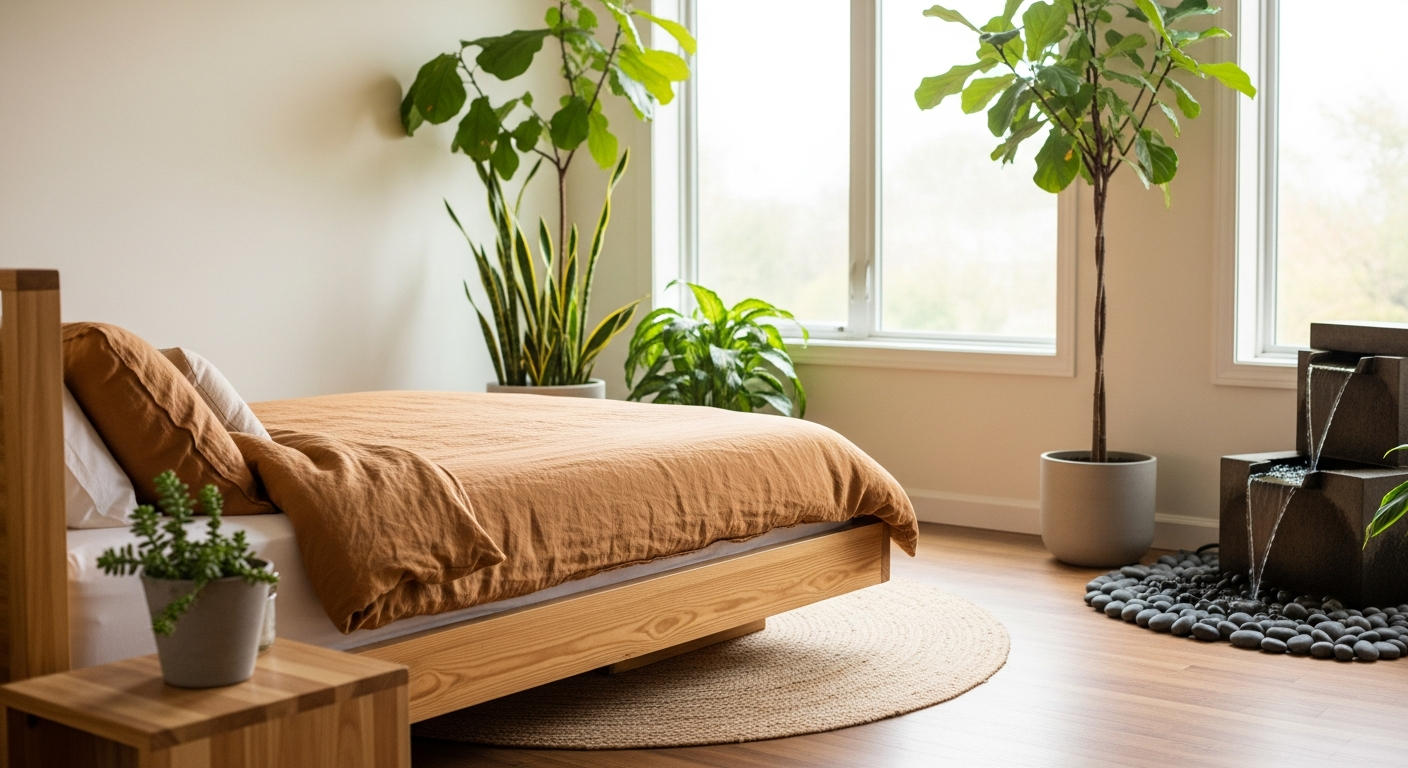
Biophilic Bedroom Design: Bringing Nature into Your Sleep Space

In our increasingly urbanized world, the connection to nature often feels distant. We spend most of our time indoors, surrounded by technology and synthetic materials, which can inadvertently impact our well-being. This disconnect has led to a growing appreciation for biophilic design – an innovative approach that integrates natural elements into built environments to foster a deeper human-nature connection. And where better to start this integration than in our bedrooms, the very sanctuaries where we seek rest, rejuvenation, and peace?

Biophilic Bedroom Design: Bringing Nature into Your Sleep Space

Biophilic bedroom design ideas are not just about aesthetics; they’re about creating a healthier, more harmonious space that supports our mental and physical health. It’s about consciously bringing the restorative power of the natural world indoors, transforming your sleep space into a tranquil haven that encourages relaxation and deep sleep. Imagine waking up feeling refreshed, surrounded by the calming presence of plants, the gentle glow of natural light, and the grounding textures of organic materials. This article will guide you through the principles and practical application of biophilic design, helping you curate a bedroom that truly breathes life into your nights and days.

The Profound Benefits of a Biophilic Bedroom

Integrating biophilic elements into your bedroom offers a cascade of benefits that extend far beyond visual appeal. Scientific research consistently demonstrates the positive impact of nature on human well-being, and bringing these principles into your personal space can lead to significant improvements:

  • Reduced Stress and Anxiety: Exposure to natural environments has been shown to lower cortisol levels, decrease heart rate, and reduce feelings of stress and anxiety. A biophilic bedroom acts as a constant source of calm, helping to unwind after a long day.
  • Improved Sleep Quality: Natural light cycles, a cornerstone of biophilic design, help regulate our circadian rhythms, promoting healthier sleep patterns. The serene atmosphere created by natural elements can also facilitate easier onset of sleep and deeper, more restorative rest.
  • Enhanced Mood and Cognitive Function: Studies suggest that spending time in natural settings can boost mood, increase creativity, and improve focus. Even subtle natural cues in the bedroom can contribute to a more positive outlook and sharper mental clarity.
  • Better Air Quality: Incorporating specific indoor plants not only adds visual appeal but also naturally filters toxins from the air, improving the oxygen levels and overall air quality in your sleep environment.
  • Increased Connection to Nature: For those living in urban areas, a biophilic bedroom provides a vital daily connection to the natural world, even when outdoor access is limited. This connection is fundamental for human psychological well-being.

Embracing biophilic bedroom design ideas is an investment in your health and happiness, creating a space that nurtures both body and mind.

Key Elements of Biophilic Bedroom Design

To truly capture the essence of biophilia, consider integrating these core elements into your bedroom:

1. Abundant Natural Light

Natural light is arguably the most crucial element in any biophilic space. It connects us to the outside world, marks the passage of time, and is essential for regulating our circadian rhythms. Maximize natural light by:

  • Keeping windows unobstructed: Opt for sheer curtains or blinds that can be easily opened to let in the morning sun.
  • Strategic mirror placement: Position mirrors to reflect natural light deeper into the room.
  • Avoiding heavy drapes: If privacy is a concern, choose lightweight, breathable fabrics.
  • Incorporating layers of artificial light that mimic natural light: Warm-toned bulbs and dimmers can replicate the soft glow of dusk.

2. Lush Indoor Plants

Plants are the most direct way to bring nature indoors, offering visual beauty, improved air quality, and a tangible connection to living organisms. When exploring biophilic bedroom design ideas, choose plants known for their air-purifying qualities and low maintenance, such as:

  • Snake Plant (Sansevieria trifasciata): Excellent for purifying air, even at night.
  • Peace Lily (Spathiphyllum): Beautiful foliage and flowers, also great for air filtration.
  • ZZ Plant (Zamioculcas zamiifolia): Extremely low-maintenance and tolerant of various light conditions.
  • Pothos (Epipremnum aureum): Easy to grow and cascade beautifully from shelves.

Consider displaying them in beautiful ceramic planters or hanging plant holders to add an extra layer of natural aesthetic.

3. Organic and Natural Materials

The textures and tactile qualities of materials play a significant role in creating a biophilic environment. Opt for materials that are raw, unprocessed, and derived from nature:

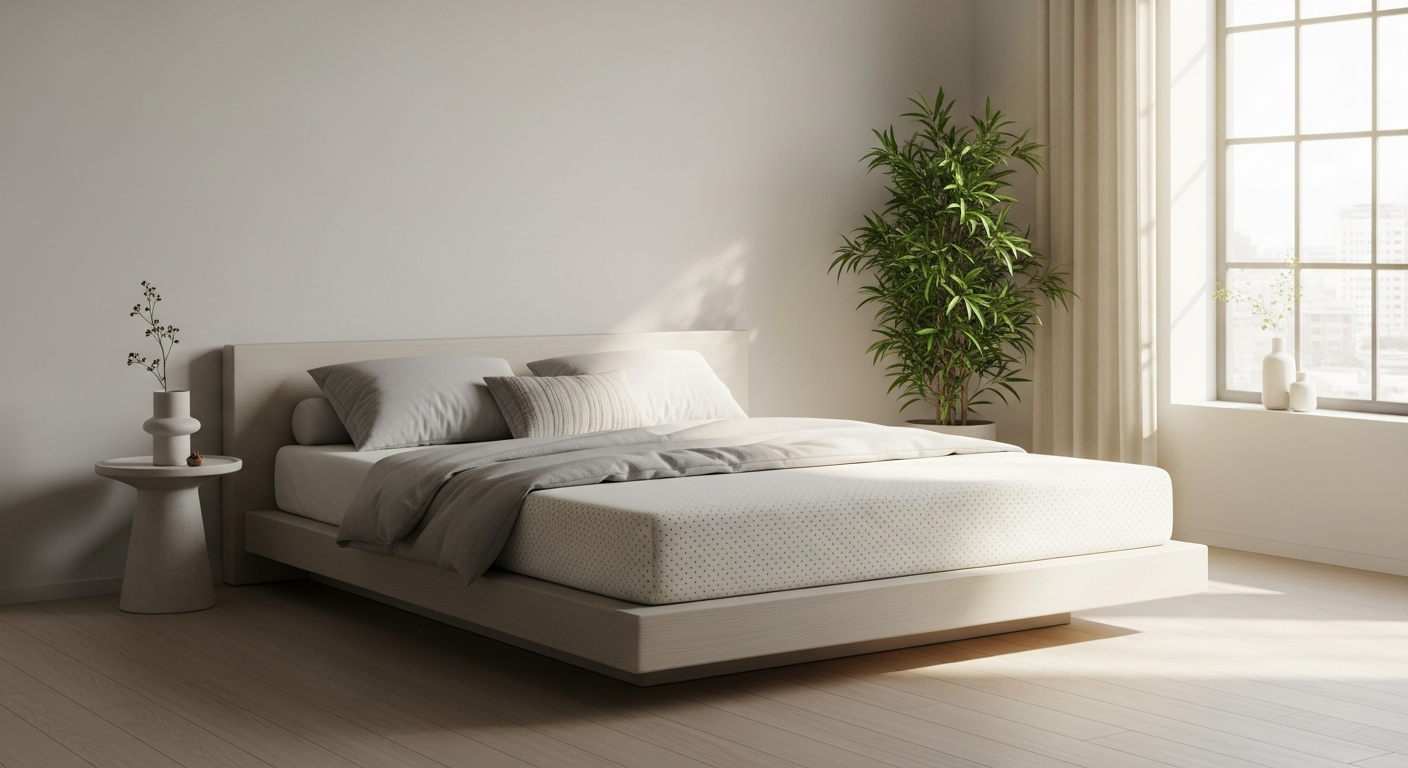
  • Wood: A sturdy wooden bed frame, nightstands, or decorative accents bring warmth and a sense of grounding. Look for sustainably sourced options.
  • Stone: Small stone features, polished river rocks, or even a stone accent wall can add an earthy, enduring quality.
  • Cotton, Linen, Wool: For bedding, curtains, and upholstery, choose natural fibers like crisp linen sheets or a soft organic cotton duvet cover. These materials are breathable, comfortable, and connect us to the earth.
  • Jute, Sisal, Rattan: A natural fiber jute rug or a plush wool area rug underfoot adds texture and warmth, while rattan furniture or baskets introduce a lighter, airy feel.

4. Water Features

The sight and sound of water are inherently soothing. A small indoor fountain can introduce a gentle, rhythmic sound that masks distracting noises and promotes relaxation. Even a simple bowl of water with floating flowers can evoke a sense of tranquility.

5. Earth-Inspired Colors and Patterns

Mimic nature’s palette. Think calming greens, soothing blues, warm earthy browns, soft grays, and sandy beiges. Avoid overly vibrant or artificial colors. Incorporate patterns that subtly echo natural forms – think botanical prints, wood grain textures, or subtle wave motifs.

6. Natural Scents and Sounds

Engage all your senses. Use an essential oil diffuser with calming scents like lavender, chamomile, or cedarwood. Consider playing nature sounds – gentle rainfall, ocean waves, or forest ambiance – at a low volume to further enhance the serene atmosphere.

Practical Biophilic Bedroom Design Ideas for Your Home

Now that we understand the core elements, let’s explore actionable biophilic bedroom design ideas to transform your space:

Curating Your Indoor Garden

Don’t just place plants; arrange them thoughtfully. Create a small cluster of plants on a nightstand or dresser, or use varying heights with floor plants and hanging baskets. Ensure your plants receive adequate light and are easy to maintain to avoid added stress. Consider a vertical garden if space is limited.

Furniture That Connects

Beyond a wooden bed frame, look for furniture with organic shapes and minimal, clean lines. Avoid overly ornate or modern pieces that might feel out of place. Prioritize comfort and functionality, allowing the natural elements to be the focal point.

Textiles and Linens

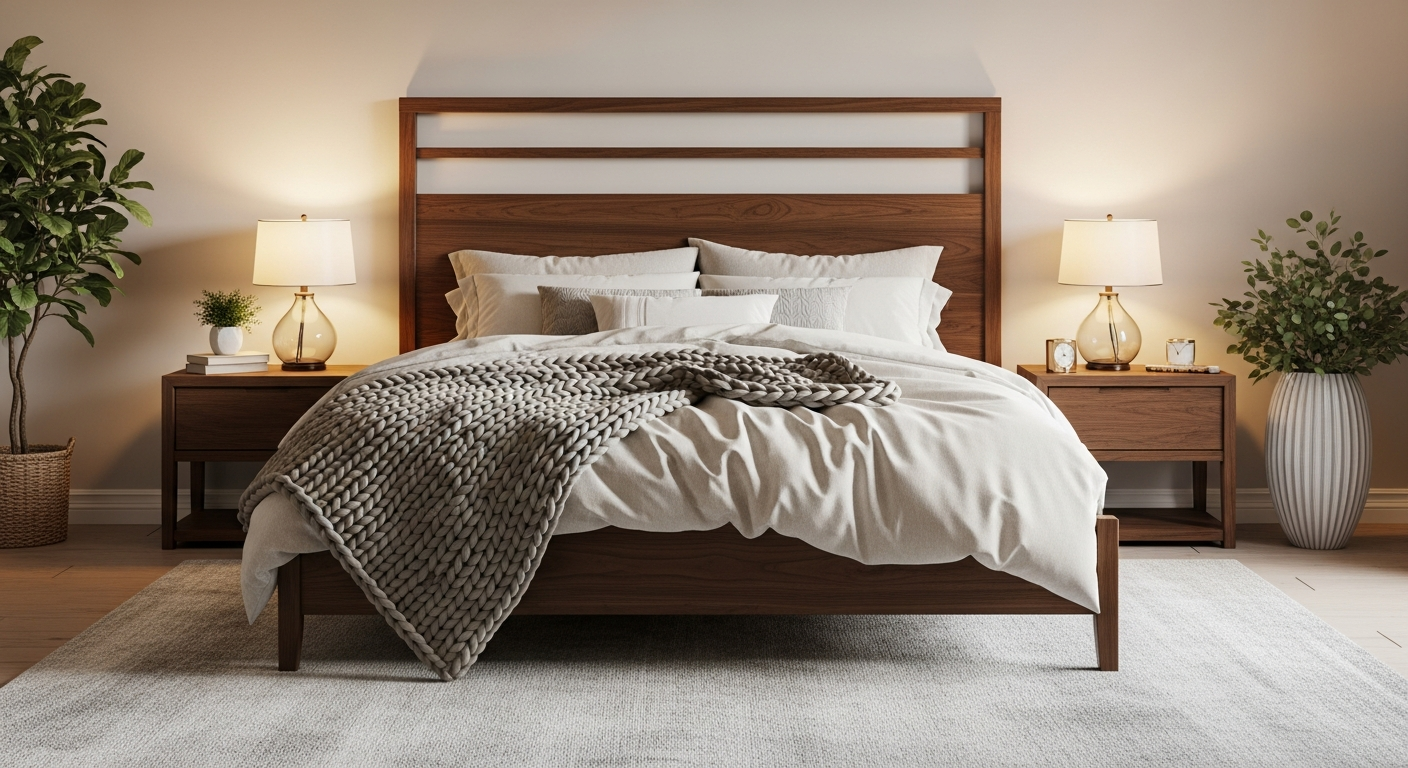
Layering natural textiles is key. Start with an organic cotton or linen duvet cover, add chunky knit throws, and scatter plush cushions made from wool or sustainable fabrics. These layers create warmth, texture, and a sense of inviting comfort.

Art and Decor Echoing Nature

Choose artwork that features landscapes, botanical prints, abstract nature scenes, or even pressed flowers. Handcrafted items made from wood, clay, or stone can also reinforce the natural aesthetic. Avoid mass-produced plastic items.

Creating a ‘Window to the World’

If your bedroom lacks a view, you can simulate one. A large mirror strategically placed can reflect the outdoors (even if it’s just a sliver of sky). Large format nature photography or a natural-themed mural can also serve as a visual connection to the external environment.

Comparison: Traditional vs. Biophilic Bedroom Design

To better understand the shift, here’s a quick comparison:

Feature Traditional Bedroom Design Biophilic Bedroom Design
Light Source Primarily artificial, heavy curtains Maximized natural light, sheer coverings
Materials Synthetic fabrics, engineered wood, metal Organic cotton, linen, wool, solid wood, stone, rattan
Color Palette Varies widely, often vibrant or stark Earth tones, greens, blues, muted natural hues
Focal Points Large furniture, technology (TV) Plants, natural views, calming textures
Sensory Experience Visual focus, sometimes artificial scents Multi-sensory: sight, touch, natural sound, aroma

DIY Biophilic Touches for Every Budget

You don’t need a complete overhaul to introduce biophilic bedroom design ideas. Here are some simple, budget-friendly DIY touches:

  • Forage for Decor: Collect interesting branches, smooth river stones, or dried flowers from nature (responsibly, of course!) to use as decorative accents.
  • Press Your Own Flowers: Create unique, natural wall art by pressing flowers and framing them.
  • Create a Plant Shelfie: Arrange a collection of small plants on a floating shelf or windowsill.
  • Upcycle with Natural Paints: Give an old dresser a new lease on life with non-toxic, earthy-toned chalk paint.
  • Hang a Macrame Plant Hanger: A simple macrame hanger adds a handmade, natural touch and frees up surface space.

Integrating Technology Mindfully

While biophilic design emphasizes nature, it doesn’t mean banishing all technology. The key is mindful integration. Conceal charging cables, tuck away devices when not in use, and consider a smart light system that can mimic natural sunrise and sunset. If you must have a screen, opt for one that can display nature scenes or turn into an art piece when off.

Maintenance Tips for Your Nature-Inspired Sanctuary

A biophilic bedroom requires a little love to thrive. Regularly dust plant leaves, water them appropriately, and ensure they get enough light. Keep natural wood clean and oiled, and natural fiber textiles washed gently. Regular airing of the room will also keep the air fresh and vibrant.

Frequently Asked Questions About Biophilic Bedroom Design

Q1: What are the best plants for a biophilic bedroom?

A1: Look for low-maintenance, air-purifying plants like Snake Plants, ZZ Plants, Pothos, Peace Lilies, and Spider Plants. Ensure they are non-toxic if you have pets. Consider the light conditions of your room when choosing.

Q2: Can biophilic design work in small bedrooms?

A2: Absolutely! In fact, it can make small spaces feel larger and more open. Use vertical gardens, hanging plants, reflective surfaces to amplify light, and strategically placed natural elements to draw the eye upwards and outwards. Focus on quality over quantity for materials.

Q3: How do I incorporate water elements without too much maintenance?

A3: Small, self-contained tabletop fountains require minimal maintenance – just refilling with distilled water occasionally to prevent mineral buildup. You can also simply place a beautiful bowl of water with floating flowers or river stones for a static, yet calming, water presence without a motor.

Q4: What’s the difference between biophilic and bohemian design?

A4: While both often use natural materials and plants, biophilic design is driven by the scientific principle of connecting humans to nature for well-being, focusing on natural light, genuine natural elements, and organic forms. Bohemian design is more about an eclectic, free-spirited aesthetic, often incorporating global influences, varied patterns, and a more maximalist approach, though it can certainly include natural elements.

Q5: Is biophilic design expensive?

A5: Not necessarily. While high-end natural materials can be an investment, many biophilic bedroom design ideas are very budget-friendly. Incorporating plants, natural light, DIY nature-inspired decor, and upcycling existing furniture with natural paints are all cost-effective ways to achieve a biophilic look. Focus on a few key natural elements rather than trying to overhaul everything at once.

Embrace Nature, Embrace Wellness

Transforming your bedroom into a biophilic haven is more than just a design trend; it’s a commitment to your health, well-being, and a deeper connection with the natural world. By thoughtfully integrating natural light, living plants, organic materials, and nature-inspired aesthetics, you can create a sleep space that genuinely nurtures your soul and prepares you for a vibrant day ahead. Start exploring these biophilic bedroom design ideas today and experience the profound peace that only nature can bring.

Ready to create your serene sleep sanctuary?

Begin your biophilic journey now and transform your bedroom into a rejuvenating oasis. Explore our curated selections of natural home decor and sustainable furnishings to bring these inspiring ideas to life.
The 5 Best Storage Beds for Clutter-Free Bedrooms

Are you tired of tripping over shoes, mountains of laundry, or an ever-growing collection of books in your bedroom? If your small room feels more like a storage unit than a serene sanctuary, it’s time for a smart solution. Enter the storage bed – a revolutionary piece of furniture designed to reclaim your space, one cleverly hidden compartment at a time. Here at Lesofa.club, we understand the struggle of maximizing every inch, especially when it comes to the heart of your home – your bedroom.

The 5 Best Storage Beds for Clutter-Free Bedrooms

In this comprehensive guide, we’ll dive deep into the world of storage beds, helping you navigate the options and ultimately choose from the best storage beds for small rooms. Say goodbye to clutter and hello to a beautifully organized, spacious bedroom!

Why Storage Beds Are a Game-Changer for Small Spaces

Living in a small apartment or a cozy house often means making tough choices about what to keep and what to let go. But with a storage bed, you don’t have to compromise on functionality or style. These innovative beds are more than just a place to sleep; they are multi-functional powerhouses that address one of the biggest challenges of small-space living: storage.

Here’s why they’re indispensable:

  • Maximize Vertical & Horizontal Space: Instead of letting the valuable real estate under your bed go to waste (or become a dust-bunny haven), storage beds utilize every cubic inch, transforming it into usable space.
  • Declutter Your Room: By providing designated spots for everything from linens and seasonal clothing to books and even electronics, storage beds help you keep your room tidy and organized.
  • Reduce Need for Extra Furniture: A good storage bed can eliminate the need for bulky dressers, chests, or extra shelves, freeing up floor space and making your room feel larger and more open.
  • Enhance Aesthetics: Modern storage beds come in a myriad of styles, materials, and finishes, ensuring that functionality doesn’t come at the expense of design. They seamlessly blend into your existing decor, adding a touch of sophistication.
  • Improve Sleep Environment: A clutter-free room is a stress-free room. By removing visual distractions, a storage bed contributes to a calmer, more relaxing sleep environment.

Understanding the Different Types of Storage Beds

Before we jump into our top picks, it’s helpful to understand the various types of storage mechanisms available. Each offers unique benefits depending on your needs and the layout of your room:

1. Drawer Storage Beds

These are perhaps the most common type. They feature built-in drawers underneath the mattress, typically ranging from two to six, depending on the bed size. They are easy to access and ideal for storing clothes, linens, or smaller items you need to reach frequently. You can find excellent platform beds with drawers that combine sleek design with practical storage.

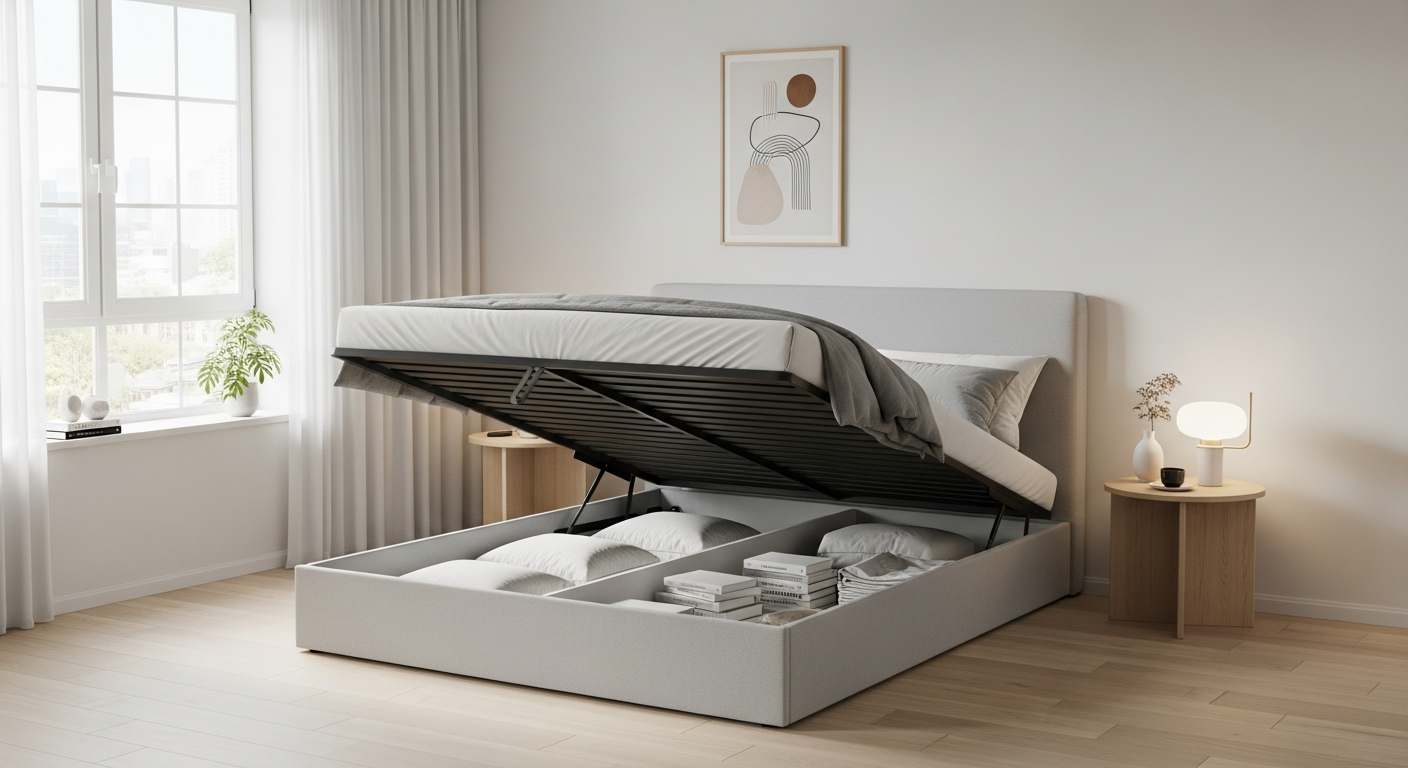
2. Ottoman (Lift-Up) Storage Beds

An ottoman storage bed features a hydraulic lift mechanism that allows you to effortlessly raise the entire mattress platform, revealing a large, open storage compartment underneath. This type offers the largest storage volume, perfect for bulky items like spare duvets, seasonal clothes, or even luggage. They are an elegant solution, often found in upholstered ottoman beds.

3. Captain’s Beds

Often associated with children’s rooms but available for adults too, captain’s beds typically combine drawers with shelves or cubbies built into the headboard or sides. They are multi-functional pieces that offer diverse storage options. For truly comprehensive storage, consider a captain bed with bookshelves.

4. Platform Beds with Open Cubbies/Shelves

Some platform beds integrate open shelves or cubbies around the base. While these don’t offer concealed storage like drawers or lift-up mechanisms, they are great for displaying books, decorative items, or easy-access bins. They often lend a minimalist, airy feel to the room.

Factors to Consider When Choosing a Storage Bed

To ensure you pick the perfect storage bed for your needs, keep these key factors in mind:

  • Storage Capacity & Type: How much storage do you need? What types of items will you store? If it’s bulky items, an ottoman bed is best. For daily essentials, drawers work well. Consider the number, size, and location of the storage compartments.
  • Bed Size: Naturally, the bed needs to fit your room. For small rooms, a queen or full-size storage bed can be a great compromise between sleeping space and storage. Make sure to measure your room carefully, allowing for walking space around the bed.
  • Mechanism: Test or research the drawer slides or hydraulic lift system. Are they smooth and durable? High-quality mechanisms ensure longevity and ease of use.
  • Material & Durability: Storage beds come in various materials, including solid wood, engineered wood (MDF, particle board), metal, and upholstered finishes. Solid wood is the most durable but also the most expensive. Engineered wood offers a good balance of cost and performance. Consider a sturdy wood storage bed frame for long-term use.
  • Style & Aesthetics: Your storage bed should complement your bedroom’s existing decor. Do you prefer a modern, minimalist look, a traditional style, or something industrial? Choose a color and finish that blends well.
  • Mattress Compatibility: Most storage beds are designed for standard mattresses, but always double-check. Some may require a specific mattress height or type (e.g., memory foam or spring).
  • Assembly: Storage beds can be more complex to assemble than regular bed frames due to the integrated components. Consider if you’re comfortable with DIY assembly or if you’ll need professional help.
  • Price: Set a budget. Storage beds range widely in price based on material, brand, and features. Investing in a good quality bed will pay off in the long run. You might find great value in an affordable yet durable metal storage bed frame if your budget is tight.

The 5 Best Storage Beds for Small Rooms

After extensive research and considering various factors crucial for small spaces, we’ve rounded up our top five storage bed recommendations. Each offers a unique blend of style, functionality, and storage capacity, making them ideal for clutter-free bedrooms.

1. The Maximizer Ottoman Lift-Up Storage Bed

Overview: This type of bed is a dream come true for anyone with significant storage needs. The entire mattress platform lifts up with a smooth hydraulic mechanism, revealing a cavernous, full-sized compartment underneath. It’s perfect for storing seasonal clothing, extra bedding, luggage, or even sports equipment.

Why it’s Great for Small Rooms: Its main advantage is the sheer volume of storage it provides without taking up any additional floor space. Because the storage is concealed, your room maintains a clean, minimalist aesthetic. The robust lifting mechanism ensures easy access, making it surprisingly convenient despite its size.

Pros:

  • Unrivaled storage capacity.
  • Concealed storage maintains a tidy look.
  • Easy-to-use hydraulic lift system.
  • Often comes in stylish upholstered finishes.

Cons:

  • Can be more expensive than drawer beds.
  • Requires clearing the top of the bed to access storage.
  • Assembly can be more complex due to hydraulics.

Best For: Individuals or couples with substantial storage needs, especially for bulky or infrequently accessed items. Ideal for those who value maximum space utilization and a clean aesthetic. Consider a hydraulic lift ottoman storage bed if you’re looking for ultimate under-bed space.

2. The Classic Platform Bed with Integrated Drawers

Overview: A timeless choice, this style integrates two to four spacious drawers directly into the bed frame’s sides or footboard. It’s a practical and aesthetically pleasing solution that offers easy access to your belongings.

Why it’s Great for Small Rooms: The drawers slide out smoothly, making them ideal for daily essentials like clothes, socks, or small electronics. They eliminate the need for an extra dresser, freeing up valuable floor space. Many designs are sleek and minimalist, blending effortlessly into modern or traditional decors.

Pros:

  • Easy and quick access to stored items.
  • No need to move the mattress for access.
  • Eliminates the need for a separate dresser.
  • Available in a wide range of styles and materials.

Cons:

  • Storage capacity is less than an ottoman bed.
  • Requires clear space on the sides or foot of the bed to open drawers.
  • Drawer quality can vary, so look for smooth glides.

Best For: Anyone needing convenient access to everyday items, especially clothing or linens. Excellent for small bedrooms where a dresser is impractical. A platform bed frame with storage drawers is a popular and versatile choice.

3. The Versatile Captain’s Bed with Headboard & Footboard Storage

Overview: Going beyond simple under-bed drawers, a captain’s bed often incorporates shelves, cubbies, or additional drawers in the headboard, footboard, and/or sides. This design maximizes every available surface for diverse storage solutions.

Why it’s Great for Small Rooms: It acts as an all-in-one storage hub, potentially replacing a bedside table, dresser, and even a small bookcase. This multi-functional approach is excellent for very small rooms where every piece of furniture must pull double duty. It’s particularly effective for storing books, decorative items, and personal gadgets.

Pros:

  • Comprehensive, multi-faceted storage.
  • Reduces the need for multiple furniture pieces.
  • Great for organizing books, tech, and display items.
  • Often sturdy and well-built.

Cons:

  • Can have a bulkier appearance.
  • Specific styles might not suit all decors.
  • Access to headboard shelves can be limited once lying down.

Best For: Students, avid readers, or anyone who needs diverse storage for a variety of items and wants to consolidate furniture. Opt for a full size captain bed with storage for a robust solution.

4. The Minimalist Upholstered Storage Bed

Overview: Combining luxurious comfort with discreet storage, these beds feature an upholstered headboard and frame, often with either lift-up ottoman storage or integrated drawers. The fabric finish adds a soft touch and can elevate the room’s aesthetic.

Why it’s Great for Small Rooms: Upholstered beds can make a small room feel cozy and inviting. The storage mechanisms are usually well-integrated and subtle, ensuring that the primary focus remains on comfort and style. The lack of harsh edges often found in wooden frames can also contribute to a softer, less ‘cramped’ feel in a small space.

Pros:

  • Adds elegance and softness to the room.
  • Comfortable headboard for reading or relaxing.
  • Storage is often well-concealed.
  • Wide range of fabric choices (velvet, linen, faux leather).

Cons:

  • Fabric can be prone to stains or wear over time.
  • May require specific cleaning products (e.g., upholstery cleaner).
  • Typically in a higher price bracket.

Best For: Those prioritizing style and comfort alongside storage. Perfect for creating a luxurious bedroom ambiance in a small footprint. A queen upholstered storage bed offers a blend of elegance and functionality.

5. The Compact & Clever Twin/Full Storage Bed

Overview: Specifically designed for very tight spaces, these beds come in twin or full sizes and often feature ingenious storage solutions tailored for a smaller footprint. This can include narrow drawers, cubbies, or even a smaller lift-up section.

Why it’s Great for Small Rooms: When space is at an absolute premium, a compact storage bed ensures you still get valuable organizational capacity without overwhelming the room. They are designed with efficient use of space in mind, often having a smaller overall frame footprint compared to their larger counterparts while still delivering essential storage.

Pros:

  • Ideal for extremely small bedrooms, guest rooms, or studios.
  • Minimizes overall footprint.
  • Can be more affordable.
  • Smartly designed for specific small-space challenges.

Cons:

  • Limited sleeping area.
  • Overall storage capacity is lower than larger beds.
  • Options for elaborate styles might be fewer.

Best For: Children’s rooms, studio apartments, or guest rooms where a larger bed isn’t feasible. Anyone looking for the most efficient use of a very small bedroom will benefit from a twin storage bed for a small room.

Comparison Table: Best Storage Beds for Small Rooms

Storage Bed Type Storage Mechanism Key Advantage for Small Rooms Ideal For Consideration
Maximizer Ottoman Lift-Up Bed Hydraulic Lift Platform Largest concealed storage volume. Bulky items, seasonal storage. Requires clear space above bed for access.
Classic Platform with Drawers Integrated Side/Footboard Drawers Easy access to daily essentials. Clothing, linens, small items. Needs clearance around drawers.
Versatile Captain’s Bed Drawers, Shelves, Cubbies (Head/Foot/Sides) Multi-functional, replaces several furniture pieces. Books, decor, diverse items, students. Can look bulky; specific styles.
Minimalist Upholstered Storage Bed Lift-Up or Drawers (concealed) Adds style & comfort, discreet storage. Style-conscious individuals, cozy ambiance. Fabric maintenance; higher price point.
Compact Twin/Full Storage Bed Drawers, Cubbies (space-efficient) Minimizes footprint in very tight spaces. Children’s rooms, studios, guest rooms. Limited sleeping and storage capacity.

How to Choose the Right Storage Bed for Your Small Room

Selecting the perfect storage bed boils down to understanding your personal needs and your room’s specific characteristics:

  1. Assess Your Storage Needs: Make a list of everything you want to store. Are they bulky items (luggage, winter coats) or small, frequently used items (socks, books)? This will guide your choice between ottoman, drawer, or captain’s styles.
  2. Measure Your Space Meticulously: Don’t just measure the wall where the bed goes. Measure the entire room, including door swings, window heights, and any existing furniture. For drawer beds, ensure you have enough clearance for drawers to open fully. For ottoman beds, confirm overhead clearance is not an issue.
  3. Consider Your Lifestyle: If you’re constantly accessing items under your bed, a drawer bed offers more convenience. If you prefer to ‘set it and forget it’ with seasonal items, an ottoman bed is fantastic. If you read in bed, a captain’s bed with integrated shelves might be ideal.
  4. Match Your Aesthetic: A storage bed is a significant piece of furniture. Choose a material, color, and design that complements your existing decor to create a harmonious and inviting bedroom. A dark wood bed might anchor a light room, while a light upholstered bed could brighten a small space.
  5. Read Reviews: Always check customer reviews for insights into assembly difficulty, durability, and the actual usability of the storage features. This can save you from potential headaches down the line.

Maximizing Storage in Small Bedrooms Beyond the Bed

While a storage bed is a fantastic starting point, consider these additional tips to fully optimize storage in a small bedroom:

  • Vertical Shelving: Utilize wall space with floating shelves or tall, narrow bookcases.
  • Over-the-Door Organizers: Perfect for shoes, accessories, or toiletries.
  • Under-Bed Bins: If your bed doesn’t have built-in storage, invest in slim, roll-away under bed storage bins with wheels.
  • Wall-Mounted Desks: Fold-down or compact wall-mounted desks save floor space.
  • Declutter Regularly: The best storage system is one that isn’t overflowing. Regularly purge items you no longer need or use.

Maintenance Tips for Your Storage Bed

To keep your storage bed looking great and functioning flawlessly for years:

  • Clean Regularly: Dust the frame and vacuum inside drawers or ottoman compartments. For upholstered beds, use appropriate fabric upholstery cleaner as needed.
  • Check Mechanisms: Periodically inspect drawer slides and hydraulic lifts for smooth operation. Lubricate if necessary according to manufacturer instructions.
  • Don’t Overload: Respect the weight limits for drawers and lift mechanisms to prevent damage.
  • Protect Contents: Use storage bags or organizers within compartments to keep items clean and easy to find.

Frequently Asked Questions (FAQs)

Q1: Are storage beds difficult to assemble?

A1: Assembly difficulty varies greatly. Beds with simple drawers are generally easier, while hydraulic lift beds can be more complex due to the mechanism. Many manufacturers provide detailed instructions and even video tutorials. If you’re not comfortable with DIY, consider professional assembly services.

Q2: Can I use any mattress with a storage bed?

A2: Most storage beds are designed to accommodate standard mattress sizes (Twin, Full, Queen, King). However, it’s always best to check the manufacturer’s specifications. Some storage beds, especially ottoman types, might have recommendations for mattress weight to ensure the hydraulic lift functions optimally.

Q3: Do storage beds make a room feel smaller?

A3: On the contrary! While they might appear bulkier than a simple metal frame, by consolidating storage that would otherwise require additional furniture (dressers, chests), storage beds actually help to declutter your room and free up floor space, making the room feel larger and more open. Choosing a lighter color or a minimalist design can further enhance this effect.

Q4: How much storage capacity do these beds really offer?

A4: Storage capacity varies significantly. Ottoman lift-up beds offer the most, often equivalent to a large chest of drawers. Drawer beds provide space comparable to one or two standard dressers. Captain’s beds offer diverse compartments. Always check the cubic feet or specific dimensions of the storage compartments in the product description.

Q5: Are storage beds durable?

A5: The durability depends heavily on the material and construction quality. Solid wood frames with sturdy drawer glides and robust hydraulic systems will last for many years. Less expensive models made from engineered wood might be less durable, especially if frequently overloaded. Investing in a good quality storage bed from a reputable brand usually ensures better longevity.

Q6: Are there specific storage beds for very small apartments or studios?

A6: Absolutely! For very compact living, consider twin storage beds with headboard or even full-size options that focus on efficiency. Look for designs with shallow drawers, integrated shelves, or minimalist frames that don’t add unnecessary bulk. The goal is to maximize functionality without overwhelming the limited space.

Conclusion: Reclaim Your Space with the Perfect Storage Bed

A clutter-free bedroom isn’t just about aesthetics; it’s about creating a peaceful, organized environment that promotes relaxation and better sleep. Investing in one of the best storage beds for small rooms is one of the smartest decisions you can make for your home.

Whether you opt for the immense capacity of an ottoman bed, the everyday convenience of a drawer bed, or the multi-functional design of a captain’s bed, you’re taking a significant step towards a more organized and serene living space. Don’t let a small room dictate your comfort and style – empower it with smart, integrated storage.

Ready to transform your bedroom from cluttered to cozy? Explore our top picks and find the storage bed that perfectly fits your space and lifestyle today!

How to Style a Bed with Layered Patterns and Textures

Your bed isn’t just a place to sleep; it’s the undisputed focal point of your bedroom, a canvas for comfort, and a reflection of your personal style. While a neatly made bed is always appealing, mastering the art of layering patterns and textures can elevate it from merely functional to utterly breathtaking. Imagine sinking into a bed that’s a symphony of tactile sensations and visual intrigue – that’s the magic we’re about to unlock. If you’ve ever wondered how to style a layered bed that looks straight out of a designer magazine, yet feels incredibly inviting and personal, you’ve come to the right place. This comprehensive guide will walk you through every step, from foundational elements to the delicate finishing touches, ensuring your bed becomes the ultimate statement of luxury and comfort.

How to Style a Bed with Layered Patterns and Textures

The Foundation: Building Your Bedding Base

Every masterpiece begins with a solid foundation. For your layered bed, this means investing in quality basics that provide comfort and serve as a neutral backdrop for your creative expressions. Start with a plush mattress protector for hygiene and longevity, followed by a comfortable mattress pad to add an extra layer of softness. Next, select your fitted and flat sheets. While it might be tempting to jump straight to exciting patterns, a solid, high-quality sheet set in a neutral color – think crisp white, soothing ivory, or a soft gray – is often the best choice for the base. This provides a clean canvas and allows subsequent layers to truly pop without clashing. Prioritize soft, breathable fabrics like cotton or linen, which feel luxurious against the skin and wear beautifully over time. Consider investing in premium organic cotton sheets for unparalleled comfort and a sustainable choice that sets the tone for your entire bedding ensemble. The right foundation ensures not only aesthetic appeal but also a supremely comfortable sleep experience, which, after all, is the ultimate goal of any bed.

Adding Depth with Duvets and Comforters

Once your sheets are in place, it’s time for the primary warmth and visual anchor of your bed: the duvet or comforter. This layer dictates much of the bed’s overall feel and is often the largest block of color or pattern. For a layered look, you have a few options. A solid-colored duvet in a rich, inviting hue can ground your scheme, allowing you to go bolder with subsequent layers. Alternatively, a subtly patterned duvet, perhaps with a textured weave or a muted geometric design, can introduce your first layer of visual interest. Consider the weight and warmth – an all-season down alternative comforter is a versatile choice that offers year-round comfort. Ensure your duvet or comforter is generously sized to drape elegantly over the sides of the bed, creating a luxurious and full appearance. This initial layer should feel substantial and inviting, setting the stage for the lighter, more decorative elements to follow.

The Art of Layering: Quilts and Coverlets

This is where the true art of layering begins. A quilt, coverlet, or blanket placed over your duvet adds an incredible amount of depth and texture. This secondary top layer is perfect for introducing a contrasting pattern, a complementary color, or a new tactile element. For instance, if your duvet is a solid color, a patterned quilt can inject vibrancy. If your duvet has a subtle pattern, a solid-colored coverlet with a distinct texture (like a matelassé weave or a linen blend) can add sophistication. Drape it folded neatly at the foot of the bed, or pull it up halfway over the duvet for a more relaxed, lived-in feel. A lightweight quilted coverlet in a contrasting shade or a subtle print is an excellent choice for adding visual interest without overwhelming the bed. This layer also offers practical benefits, providing an extra touch of warmth on cooler nights or serving as a lighter option during warmer seasons when the main duvet might be too much.

Pillow Power: Mixing and Matching

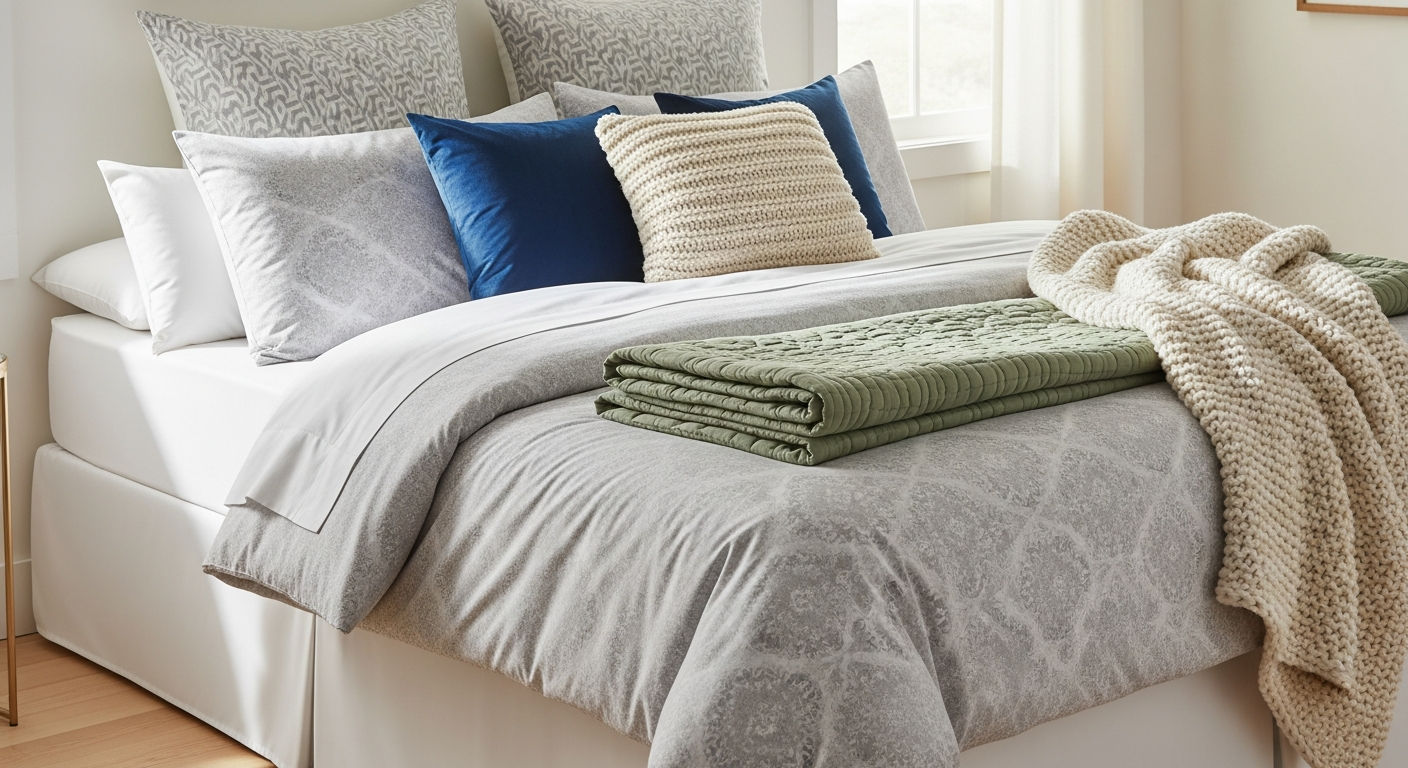
Pillows are arguably the most impactful element when learning how to style a layered bed. They offer endless opportunities for mixing patterns, textures, and colors. The standard setup usually involves:

  • Sleeping Pillows: Two king or queen-sized pillows, often covered by standard shams that match your sheet set or duvet. These are usually tucked behind the decorative pillows.
  • Euro Shams: Typically 26×26 inches, these square pillows are placed against the headboard, providing height and a luxurious backdrop. They are excellent for introducing a bold pattern or a rich texture.
  • Decorative Throw Pillows: This is where you can truly have fun. Incorporate two to three smaller pillows in varying shapes (squares, lumbar, round) and sizes. Mix fabrics like crisp linen, plush velvet throw pillows, or chunky knits. Experiment with different patterns, ensuring there’s a unifying element, such as a shared color or a consistent theme, to maintain cohesion.

The key is to layer them from tallest (Euro shams) to shortest (small decorative pillows) towards the front, creating a visually appealing cascade of comfort and style. Don’t be afraid to experiment with asymmetrical arrangements for a more modern, relaxed vibe.

The Finishing Touches: Throws and Blankets

The final layer, the throw blanket, is like the jewelry of your bed. It adds a touch of effortless chic, extra warmth, and another opportunity to introduce texture and color. A beautifully draped throw can make a bed feel instantly more inviting and lived-in. Common ways to style a throw include:

  • Draped Artfully: Casually tossed over one corner of the bed, allowing it to fall naturally. This creates a relaxed, bohemian feel.
  • Folded Neatly: Folded lengthwise and laid across the foot of the bed, either on top of or beneath the quilt. This provides a clean, tailored look.
  • Layered with Other Throws: For ultimate texture, you can even layer two different throws, perhaps a lightweight linen over a soft cashmere or a chunky knit throw blanket for a cozy, rustic touch.

Choose a throw in a contrasting texture or a pop of color that complements your existing palette. Faux fur, chunky knits, velvet, or even a simple linen throw can add that perfect touch of warmth and personality.

Mastering Patterns: A Guide to Harmonious Mixing

Mixing patterns can feel intimidating, but with a few guidelines, you can create a cohesive and exciting look:

  1. Vary Scale: The golden rule. Pair a large-scale pattern (like a bold floral on your duvet) with a medium-scale pattern (a geometric on Euro shams) and a small-scale pattern (a subtle stripe on a throw pillow). This prevents patterns from competing and allows each to shine.
  2. Anchor with Solids: Use solid-colored sheets, a duvet, or pillows as a ‘rest stop’ for the eye between patterns.
  3. Choose a Common Color: Ensure at least one color is shared across all the patterns you introduce. This creates visual continuity and brings everything together, even if the patterns are diverse.
  4. Mix Pattern Types: Don’t stick to just florals or just geometrics. Combine different styles – a botanical print with a simple stripe, or a modern abstract with a classic herringbone.

Remember, the goal is harmony, not uniformity. When you know how to style a layered bed with patterns, you understand that variety adds depth and character.

Embracing Textures: The Sensory Experience

Texture is perhaps even more critical than pattern for creating a truly luxurious and inviting layered bed. It’s what makes you want to reach out and touch. Aim for a mix of smooth, soft, crisp, and plush elements. Consider:

  • Smooth: Sateen sheets, silk pillowcases, polished cotton.
  • Crisp: Percale sheets, linen coverlets.
  • Soft/Plush: Velvet pillows, faux fur throws, cashmere blankets, brushed cotton duvets.
  • Nubby/Textured: Waffle weave blankets, knitted throws, embroidered quilts.

The contrast between these textures is what creates visual interest and a rich sensory experience. Imagine the crispness of linen against the softness of velvet, or the smoothness of silk against a chunky knit. This interplay of textures is paramount to making your layered bed feel incredibly cozy and expensive.

Color Palette Perfection: Unifying Your Layers

A well-chosen color palette is the glue that holds your layered bed together. You can approach this in several ways:

  • Monochromatic: Stick to varying shades and tones of a single color (e.g., different shades of blue, from navy to sky blue). This creates a sophisticated, calming effect, relying heavily on texture for interest.
  • Analogous: Use colors that are next to each other on the color wheel (e.g., blues, greens, and teals). This creates a harmonious, flowing palette.
  • Complementary or Accent Colors: Start with a dominant neutral base (white, gray, beige), then introduce one or two accent colors that provide a pop of contrast. For instance, a gray bed with mustard yellow and deep teal accents.

The key is to select a palette that evokes the mood you desire for your bedroom – whether it’s serene and calming, vibrant and energetic, or warm and earthy. Ensure your chosen colors complement the existing decor of your room, from wall paint to furniture and soft bedroom area rug, creating a cohesive and inviting space.

Beyond the Bed: Integrating Bedroom Decor

While the bed is the star, the surrounding bedroom decor plays a crucial supporting role in enhancing the layered look. Elements like curtains, bedside tables, lighting, and wall art should harmonize with your bedding choices. For instance, if you’ve opted for a bed with bold patterns, consider more subdued curtains or a minimalist bedside lamp. Conversely, a largely neutral bed allows for more adventurous choices in artwork or a vibrant area rug. Ensure that the overall mood and aesthetic of the room complement the luxurious, layered feel of your bed. The goal is to create a holistic sanctuary where every element contributes to an atmosphere of comfort and style.

Popular Bedding Fabrics for Layering: A Comparison

Choosing the right fabrics is crucial for achieving both comfort and a visually rich layered look. Here’s a comparison of popular bedding fabrics:

Fabric Type Key Characteristics Best For Layering Tip
Cotton (Percale) Crisp, cool, matte finish, breathable. Base sheets, lighter duvets, summer. Pairs well with plush textures like velvet or faux fur for contrast.
Cotton (Sateen) Smooth, silky feel, slight sheen, drapes beautifully. Luxury sheets, duvet covers, year-round comfort. Complements textured quilts or knitted throws, adding elegance.
Linen Breathable, natural texture, becomes softer with age, relaxed look. Casual sheets, relaxed duvet covers, coverlets. Adds an organic, lived-in texture; contrasts beautifully with smooth sateen or crisp percale.
Flannel Soft, fuzzy, warm, cozy, excellent for cold climates. Winter sheets, cozy throws, comforters. Layer with smooth fabrics to balance its warmth; great for rustic or cabin aesthetics.
Velvet Luxurious, soft, rich pile, reflects light beautifully. Decorative pillows, throw blankets, upholstered headboards. Introduces opulence and depth, pairs with almost any other texture for contrast.

Troubleshooting Common Layering Mistakes

Even with the best intentions, it’s easy to fall into common traps when layering your bed. Here are a few to avoid:

  • Over-Layering: While more is generally better for layering, too many heavy blankets or an excessive number of pillows can make the bed look cluttered and uninviting rather than plush. Aim for balance.
  • Neglecting Color Harmony: Randomly choosing patterns and textures without a unifying color palette can lead to a chaotic look. Always ensure there’s a common thread.
  • Ignoring Scale: Using too many patterns of the same scale can make the bed feel busy and overwhelming. Remember the rule of varying scales.
  • Lack of Texture Variation: Sticking to all smooth or all rough textures will make the bed fall flat. The magic is in the contrast.
  • Poor Quality Base Layers: Skimping on sheets or a duvet can undermine the entire luxurious effect, no matter how many beautiful layers you add on top.

By being mindful of these pitfalls, you can ensure your layered bed remains a masterpiece of design.

Conclusion

Mastering how to style a layered bed with patterns and textures is an exciting journey into bedroom design. It’s about combining comfort with aesthetics, creating a space that looks inviting and feels incredibly cozy. From the foundational sheets to the decorative throws and pillows, each layer plays a vital role in building depth, character, and luxury. Don’t be afraid to experiment, mix and match, and let your personal style shine through. Remember the principles of varying scale in patterns, contrasting textures, and maintaining a cohesive color palette, and you’ll be well on your way to creating a bed that’s not just a place to sleep, but a stunning sanctuary. Ready to transform your sanctuary?

Explore Our Curated Bedding Selections on Amazon and Start Your Transformation!

Frequently Asked Questions

Q1: How many layers should a bed have to look styled, but not overdone?

A beautifully styled layered bed typically has between 4 to 6 distinct layers, not including the mattress protector and mattress pad. This usually breaks down to: 1) Fitted & flat sheets, 2) A main duvet or comforter, 3) A quilt or coverlet, 4) Euro shams, 5) Decorative throw pillows (2-3), and 6) A throw blanket. The key is to vary the textures and patterns within these layers, rather than simply adding more of the same.

Q2: Can I mix different patterns on my bed, or should they all be similar?

Absolutely, mixing patterns is central to a well-layered bed! The trick is to vary their scale (large, medium, small) and ensure they share at least one common color. You can mix florals with geometrics, stripes with abstract designs, as long as there’s a cohesive element that ties them together, preventing the look from becoming chaotic. Aim for 2-3 distinct patterns at most for balance.

Q3: What’s the best way to fold a throw blanket on a bed?

There are a few popular ways to fold a throw blanket:
1. The “Effortless Drape”: Casually toss it over one corner or side of the bed, allowing it to fall naturally.
2. The “Neat Fold”: Fold it lengthwise into a neat rectangle and lay it across the foot of the bed, either on top of or slightly beneath the duvet/quilt.
3. The “Half-Fold”: Fold it in half or thirds lengthwise, then lay it across the bed about two-thirds of the way down, leaving the top portion of the duvet exposed. The best method often depends on the throw’s texture and the overall aesthetic you’re aiming for.

Q4: How do I keep all the layers from sliding off the bed, especially with movement?

While some shifting is natural, you can minimize it by using a good quality fitted sheet that stays taut. For duvets, ensure your duvet cover has corner ties that attach to the duvet insert. When arranging layers, tucking them slightly under the mattress or heavier layers at the foot of the bed can help secure them. For throws, a more structured fold (like the neat fold) tends to stay in place better than a casual drape if sliding is an issue.

Q5: Should all my decorative pillows match?

No, not at all! In fact, having all your decorative pillows match can make your bed look stiff and less interesting. The beauty of layering pillows comes from mixing different shapes, sizes, textures (e.g., velvet, linen, knit), and even patterns. The key is to select pillows that complement each other through a shared color palette or a consistent style, even if their individual designs are unique.

Organic and Sustainable Mattresses for Your New Eco-Friendly Bed in 2026

As we navigate the mid-2020s, the conversation around health, wellness, and environmental responsibility has intensified, reaching every corner of our lives—even our bedrooms. The mattress, once seen merely as a sleeping surface, is now recognized as a critical component of both our personal well-being and the planet’s health. With advancements in eco-friendly manufacturing and a heightened consumer demand for transparency, the landscape of ‘organic sustainable mattress 2026’ is more vibrant and promising than ever before. This comprehensive guide will delve into why choosing an organic and sustainable mattress is a profound investment in your health and the environment, what to look for, and how to pair it perfectly with your new bed frame.

Organic and Sustainable Mattresses for Your New Eco-Friendly Bed in 2026

The Unseen Impact: Why Your Mattress Matters

For roughly one-third of our lives, we are in direct contact with our mattresses. Traditional mattresses, often made with synthetic foams and chemical adhesives, can off-gas volatile organic compounds (VOCs) that may contribute to indoor air pollution and potentially impact respiratory health, skin sensitivities, and overall well-being. Furthermore, the lifecycle of these conventional mattresses, from raw material extraction to disposal, often leaves a significant environmental footprint.

In contrast, an organic and sustainable mattress is designed with both human health and ecological stewardship in mind. It’s about more than just ‘natural’ materials; it’s about certified organic components, responsible manufacturing processes, and a commitment to reducing waste and promoting biodegradability. Choosing such a mattress is a conscious step towards creating a healthier home environment and supporting a more sustainable future.

The Pillars of an Organic & Sustainable Mattress: Certifications and Materials

Understanding what makes a mattress truly organic and sustainable can be complex, given the varying claims in the market. The key lies in reputable certifications and the inherent qualities of the materials used.

Key Certifications to Look For:

  • Global Organic Textile Standard (GOTS): This is the gold standard for the processing of organic fibers. If a mattress carries a GOTS certification, it means that at least 70-95% of its materials are certified organic, and strict environmental and social criteria are met throughout the entire supply chain. This applies to cotton, wool, and other textile components.
  • Global Organic Latex Standard (GOLS): Specifically for latex, GOLS ensures that a rubber plantation meets organic farming standards, including the prohibition of pesticides and synthetic fertilizers. It also covers the processing of the latex from the tree to the finished product.
  • Oeko-Tex Standard 100: While not an organic certification, Oeko-Tex Standard 100 certifies that every component of the product, from the fabric to the thread and accessories, has been tested for harmful substances and found to be harmless for human health. It’s an excellent indicator of safety from chemicals.
  • GREENGUARD Gold: This certification signifies that a product has met some of the world’s most rigorous third-party chemical emissions standards, helping to reduce indoor air pollution and the risk of chemical exposure.
  • CertiPUR-US: This certification applies specifically to polyurethane foam, ensuring it’s made without ozone depleters, PBDEs, mercury, lead, heavy metals, formaldehyde, and phthalates, and has low VOC emissions. While it certifies foam safety, it does not mean the foam is organic.

Common Organic and Sustainable Materials:

  • Natural Latex: Derived from the sap of rubber trees, natural latex is inherently durable, hypoallergenic, and resistant to dust mites and mold. Look for 100% natural latex (either Dunlop or Talalay process), ideally GOLS certified. If you’re looking for a truly natural sleep surface, consider a natural latex mattress, renowned for its pressure relief and longevity.
  • Organic Cotton: Used in covers, comfort layers, and batting, organic cotton is grown without synthetic pesticides or fertilizers, making it breathable and soft. GOTS certification is crucial here.
  • Organic Wool: Often used as a natural flame retardant and a temperature regulator, organic wool wicks away moisture and helps maintain a comfortable sleep temperature. It’s naturally antimicrobial and dust-mite resistant. GOTS-certified wool ensures ethical sourcing and processing.
  • Recycled Steel Coils: For innerspring and hybrid mattresses, recycled steel coils reduce the demand for new raw materials and offer excellent support and durability.

Types of Organic & Sustainable Mattresses

The market for organic and sustainable mattresses has diversified significantly, offering various constructions to suit different preferences:

  • All-Latex Mattresses: These mattresses are entirely made of natural latex, offering exceptional contouring, pressure relief, and durability. They come in various firmness levels.
  • Hybrid Mattresses: Combining pocketed recycled steel coils with layers of natural latex, organic cotton, and wool, hybrid mattresses offer a balance of support, bounce, and pressure relief. For those who prefer a firmer feel with excellent breathability, an organic hybrid mattress often combines responsive coils with layers of organic latex or wool.
  • Innerspring Mattresses (with organic components): While less common for full organic claims, some innerspring mattresses use organic cotton and wool comfort layers over traditional coil systems, offering a more breathable and firmer feel than foam options.

Choosing the Right Organic & Sustainable Mattress for You

Beyond certifications and materials, several factors will guide you to your perfect eco-friendly sleep solution:

  • Firmness Level: This is highly personal. Consider your preferred sleeping position (side sleepers often need softer, back/stomach sleepers firmer) and any existing back or joint pain.
  • Support and Comfort: Look for a mattress that properly aligns your spine while cradling your body. Latex is known for its buoyant support and pressure relief.
  • Trial Period and Warranty: Most reputable organic mattress brands offer generous sleep trial periods (100-365 nights) and long warranties (10-25 years), reflecting their confidence in product quality and durability.
  • Budget: Organic and sustainable mattresses often come with a higher upfront cost due to premium materials and ethical manufacturing. However, their exceptional durability and health benefits represent a long-term investment.
  • Brand Reputation: Research brands that are transparent about their sourcing, manufacturing processes, and certifications. Read customer reviews and look for companies with strong environmental and social commitments.

Pairing Your Organic Mattress with Your New Bed

An organic mattress performs best when paired with an appropriate and equally sustainable bed foundation. The right foundation ensures proper support, mattress longevity, and optimal airflow.

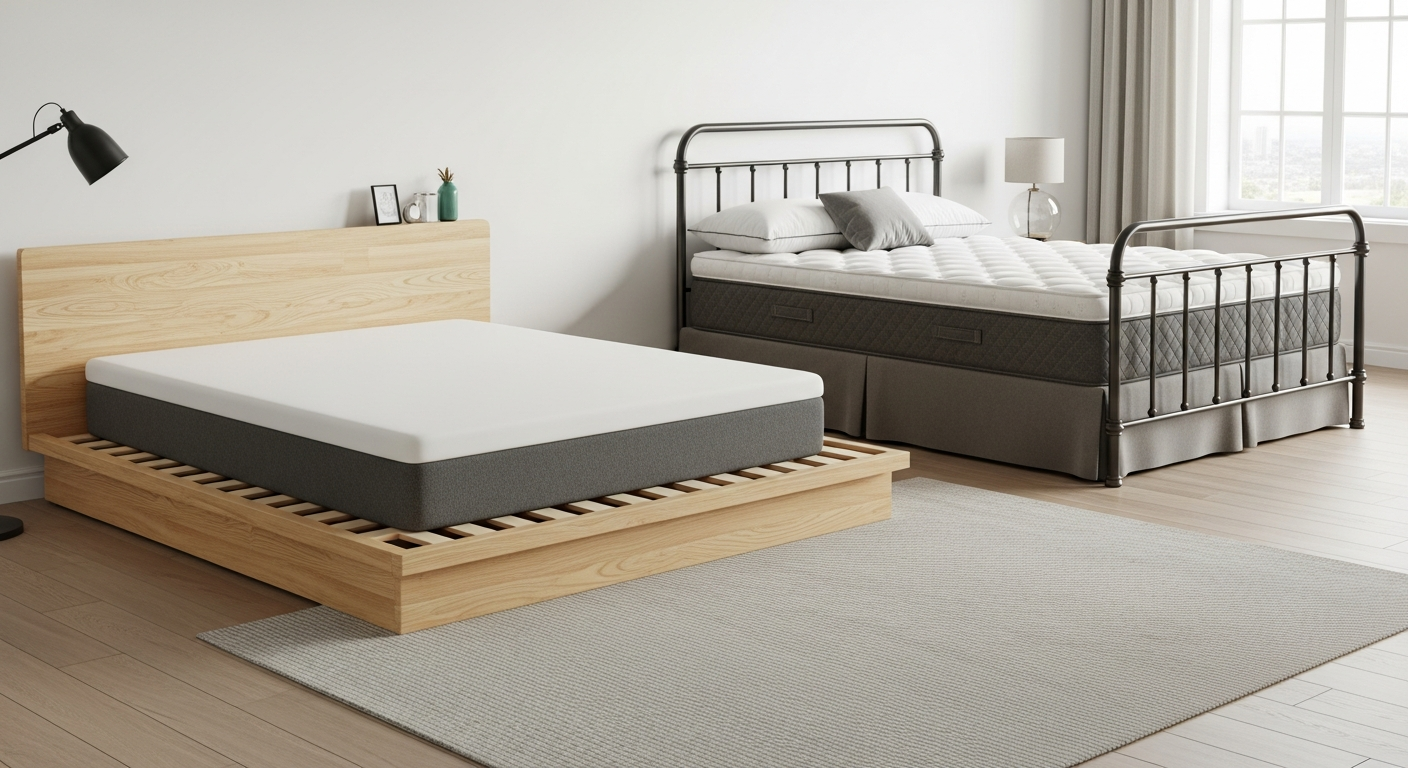
  • Slatted Platform Beds: These are ideal. Ensure the slats are no more than 3-4 inches apart to provide adequate support and prevent sagging, especially for all-latex mattresses. Many organic wood frames are available that complement an eco-friendly setup.
  • Adjustable Bases: If you desire features like head and foot elevation, ensure your organic mattress is compatible with an adjustable base. Most latex and hybrid mattresses work well.
  • Box Springs (if applicable): Traditional box springs with actual springs are generally not recommended for modern organic mattresses, especially latex ones, as they can cause premature sagging. If you need height, opt for a solid foundation or a bunkie board over your existing frame.

To protect your investment and ensure a healthy sleep environment, an organic mattress protector is essential. Look for options made from organic cotton or Tencel for breathability and non-toxic waterproofing. Enhance your sleep haven further with organic cotton sheets and complete the eco-friendly setup with an organic pillow, choosing materials like organic kapok, buckwheat, or shredded latex for a truly natural slumber.

Comparison Table: Popular Organic & Sustainable Mattress Types

Here’s a snapshot of common features you’ll find across leading organic and sustainable mattress brands:

Feature All-Natural Latex Organic Hybrid (Latex + Coils) Organic Innerspring (Wool/Cotton Top)
Primary Materials GOLS Certified Natural Latex, Organic Cotton Cover, Organic Wool Fire Barrier GOLS Certified Natural Latex, Recycled Steel Coils, Organic Cotton Cover, Organic Wool Fire Barrier Recycled Steel Coils, Organic Cotton, Organic Wool, Natural Fibers
Feel/Support Conforming, buoyant, excellent pressure relief, very durable. Various firmness options. Responsive, bouncy, supportive with good pressure relief. Often has edge support. Firm, traditional spring feel, good airflow. Less contouring than latex.
Certifications (Typical) GOLS, GOTS, Oeko-Tex, GREENGUARD Gold GOLS, GOTS, Oeko-Tex, GREENGUARD Gold GOTS (for textiles), Oeko-Tex
Off-Gassing Minimal (natural rubber scent, dissipates quickly) Minimal (natural rubber/fabric scent, dissipates quickly) Low to none (depending on non-organic components if any)
Best For All sleepers, especially those with allergies, seeking ultimate durability and contouring. All sleepers, those who like a traditional spring feel with added pressure relief. Back/stomach sleepers, those who prefer a very firm and breathable surface.

Beyond the Bedroom: The Broader Impact

The choice of an organic and sustainable mattress extends beyond personal health. It supports industries committed to fair labor practices, sustainable agriculture, and reduced environmental pollution. It means less toxic waste in landfills, fewer chemicals in our waterways, and a healthier ecosystem for everyone. As we move towards 2026 and beyond, the collective impact of such conscious consumer choices will only grow in significance.

Frequently Asked Questions About Organic & Sustainable Mattresses

Q1: Are organic mattresses truly chemical-free?

While no product can be guaranteed 100% chemical-free due to ubiquitous environmental factors, certified organic mattresses significantly reduce your exposure to harmful chemicals, VOCs, flame retardants, and heavy metals commonly found in conventional mattresses. Certifications like GOTS, GOLS, Oeko-Tex, and GREENGUARD Gold ensure rigorous testing for harmful substances.

Q2: How long do organic mattresses last compared to traditional ones?

Organic mattresses, particularly those made with natural latex, are renowned for their exceptional durability. A high-quality organic latex mattress can easily last 15-25 years, often outlasting traditional memory foam or innerspring mattresses that typically last 7-10 years. This longevity further contributes to their sustainability by reducing landfill waste.

Q3: Are organic mattresses more expensive?

Generally, yes, organic mattresses tend to have a higher upfront cost due to the premium quality of certified organic materials, ethical sourcing, and specialized manufacturing processes. However, considering their superior durability, health benefits, and environmental advantages, they often represent a better long-term value than cheaper, less sustainable alternatives.

Q4: Do organic mattresses need a special bed frame?

Most organic mattresses are designed to be compatible with standard bed frames, but they perform best on a solid, flat, or slatted foundation with slats no more than 3-4 inches apart. This ensures proper support, adequate airflow, and prevents premature sagging. Traditional box springs with widespread coils are generally not recommended.

Q5: Can I really tell the difference in sleep quality?

Many individuals report a noticeable improvement in sleep quality after switching to an organic mattress. This can be attributed to several factors: reduced exposure to allergens and VOCs leading to better respiratory health, improved temperature regulation from natural materials like wool and cotton, and the inherent comfort and support of high-quality organic latex or hybrid systems.

Invest in Your Sleep, Invest in the Planet

The decision to purchase an organic and sustainable mattress in 2026 is more than just a trend; it’s a commitment to a healthier lifestyle and a more sustainable future. By understanding the certifications, materials, and personal preferences that guide your choice, you can find a mattress that provides unparalleled comfort, support, and peace of mind. Make the switch and wake up feeling refreshed, knowing you’ve made a positive impact on both your well-being and the world around you.

Ready to transform your sleep? Explore certified organic and sustainable mattress options today!

Warm Dark Wood Bed Frames: The 2026 Bedroom Trend

As the world whirls through cycles of fleeting fads, certain design elements resurface with renewed vigor, proving their timeless appeal. For 2026, the bedroom is undergoing a transformation, shedding sterile minimalism for a embrace of warmth, depth, and grounding sophistication. Leading this charge is an undeniable gravitational pull towards the dark wood bed frame trend, a movement that promises to redefine our personal sanctuaries. Forget the cold, utilitarian sleeping spaces; 2026 is all about creating an inviting, opulent, and deeply comfortable haven, anchored by the rich, earthy tones of dark wood.

Warm Dark Wood Bed Frames: The 2026 Bedroom Trend

The allure of dark wood isn’t new, but its resurgence is powered by a desire for stability, luxury, and a connection to nature within our homes. These bed frames offer more than just a place to sleep; they act as a foundational statement, capable of elevating any bedroom aesthetic from contemporary to rustic, bohemian to industrial. Join us as we delve into why this enduring material is becoming the cornerstone of the modern bedroom and how you can seamlessly integrate this dominant 2026 trend into your own home.

Why Dark Wood is Dominating Bedroom Design in 2026

The rise of the dark wood bed frame trend isn’t accidental. It’s a response to evolving homeowner desires for spaces that feel both luxurious and livable, durable and distinguished. Here’s why dark wood is set to be the defining characteristic of bedrooms in the coming years:

The Allure of Timeless Elegance

In an era of fast furniture and disposable trends, there’s a profound appreciation for pieces that transcend fleeting styles. Dark wood, with its inherent richness and depth, offers a sophisticated elegance that never truly goes out of fashion. It speaks of craftsmanship, heritage, and a considered approach to design. A dark wood bed frame instantly imbues a room with a sense of gravitas and refined taste, creating a focal point that is both grand and welcoming.

Durability and Longevity

Investing in quality is a cornerstone of sustainable living and smart home design. Solid dark wood bed frames are renowned for their exceptional durability. Crafted from hardwoods like mahogany, walnut, or oak, these pieces are built to last generations, resisting wear and tear far better than lighter, less substantial alternatives. This longevity makes a dark wood bed frame not just a purchase, but an inheritance—a testament to its inherent value and robust construction.

Versatility in Styling

One of the most compelling reasons behind the dark wood bed frame trend is its incredible versatility. Far from being pigeonholed into traditional or heavy aesthetics, dark wood surprisingly complements an array of design palettes. It can anchor a minimalist room, add gravitas to an industrial loft, warm up a contemporary space, or provide a sophisticated contrast in a bohemian retreat. Its neutral yet profound character allows it to pair beautifully with a vast spectrum of colors, textures, and decorative styles, making it an incredibly adaptable choice for diverse personal tastes.

Creating a Serene Sanctuary

The psychological impact of dark, warm tones cannot be overstated. Dark wood inherently evokes a sense of comfort, security, and tranquility. In a world brimming with stimulation, our bedrooms should be places of ultimate calm and restoration. A substantial dark wood bed frame can help achieve this by grounding the space, creating an enveloping atmosphere that encourages relaxation and deep sleep. It’s about crafting a cocoon, a true sanctuary away from the outside world.

Decoding the Shades: Finding Your Perfect Dark Wood

While we speak of ‘dark wood,’ this category encompasses a beautiful spectrum of tones, each with its own unique personality and styling implications. Understanding these nuances is key to selecting the perfect wooden bed frame for your desired aesthetic:

Deep Espresso: The Epitome of Luxury

Almost black, deep espresso wood exudes unparalleled sophistication and drama. This shade is ideal for creating a truly luxurious, hotel-like feel. It pairs exquisitely with crisp whites, muted grays, and metallic accents like gold or brass. Think sleek lines, sumptuous bedding, and minimalist decor for a high-end, contemporary look.

Rich Walnut: Classic Charm Meets Modernity

Walnut offers a beautiful balance, with its deep brown hues often featuring subtle red or purple undertones and distinctive grain patterns. It feels both classic and effortlessly modern. A walnut bed frame is incredibly versatile, working well with earthy greens, warm blues, and creamy neutrals. It’s perfect for those seeking warmth without the starkness of espresso, bridging traditional and contemporary styles with ease.

Mystical Mahogany: A Touch of Grandeur

Mahogany is celebrated for its reddish-brown tones and fine, even grain, giving it a distinguished and often antique appearance. It carries a sense of grandeur and historical depth. Mahogany bed frames are magnificent in more traditional or transitional settings, pairing beautifully with jewel tones like emerald green, sapphire blue, or deep burgundy. It evokes an old-world charm that is both regal and inviting.

Robust Oak (Dark Stained): Rustic Sophistication

While natural oak is often light, dark-stained oak bed frames offer a rugged yet refined aesthetic. The prominent grain of oak, when darkened, provides a textural richness that is perfect for rustic, industrial, or modern farmhouse styles. It pairs wonderfully with natural textures like linen, wool, and leather, and colors such as charcoal, olive green, or terracotta, creating a grounding and earthy bedroom.

Styling Your Dark Wood Bed Frame: A Guide to Cohesive Design

Once you’ve chosen your perfect dark wood bed frame, the magic truly begins in how you style it. The key is to balance the depth of the wood with contrasting textures, colors, and lighting to create a harmonious and inviting space.

Textiles and Bedding: Layering for Comfort and Contrast

This is where you can soften the strong presence of dark wood. Opt for luxurious soft linen bedding in lighter shades like crisp white, soft ivory, or gentle grays. Don’t shy away from texture—think chunky knit throws, faux fur blankets, velvet cushions, or silk sheets to add layers of tactile richness. Jewel tones like deep blues, emerald greens, or rich purples can provide a stunning contrast and amplify the feeling of luxury.

Lighting: Setting the Mood

Thoughtful lighting is crucial when working with dark furniture. Incorporate multiple light sources to create depth and warmth. Bedside lamps with warm ambient light, a dimmer switch on your overhead fixture, and even sconces or wall washers can highlight the wood’s beauty and prevent the room from feeling too dim. Maximize natural light during the day to keep the space feeling open and airy.

Accent Furniture: Completing the Look

Consider complementing your dark wood bed frame with accent pieces that either match closely for a cohesive look or provide a deliberate contrast. Lighter wood nightstands or dressers can create visual interest, while metallic or glass accents can add a modern edge. A plush upholstered bench at the foot of the bed can add comfort and a touch of softness.

Rugs: Anchoring the Space

An area rug is essential for grounding a bedroom with a dark wood bed frame. Choose a plush area rug in a lighter color or a pattern that incorporates your room’s accent colors. A cream, beige, or light gray rug will provide a soft landing for your feet and visually lighten the floor space, creating a beautiful contrast with the dark wood.

Wall Decor and Art: Personalizing Your Haven

On the walls, consider artwork with lighter backgrounds or vibrant colors to pop against the dark wood. Large mirrors can also work wonders, reflecting light and making the room feel more expansive. A gallery wall with mixed frames (some metallic, some light wood) can also add personality without overwhelming the space.

Greenery: Bringing Life In

Adding indoor plants is a simple yet effective way to bring freshness and life into a room anchored by dark wood. The vibrant green of plants provides a beautiful, natural contrast to the deep wood tones, enhancing the sense of a serene sanctuary.

Dark Wood Bed Frame Comparison Table

To help you navigate the choices, here’s a quick comparison of popular dark wood options:

Wood Type / Finish Key Characteristics Best Suited For Common Pairings Maintenance Level
Deep Espresso (Stained) Almost black, sleek, uniform appearance Modern, Minimalist, Luxury Whites, grays, metallics (gold, chrome) Low (dusting, occasional polish)
Walnut Rich brown, visible grain, often with reddish/purple undertones Transitional, Mid-Century Modern, Contemporary Earthy tones, warm neutrals, muted jewel tones Medium (occasional oiling/waxing)
Mahogany Reddish-brown, fine straight grain, lustrous finish Traditional, Colonial, Grand Classic Deep jewel tones, rich creams, antique brass Medium (regular polishing)
Dark Stained Oak Prominent grain, rustic yet refined, earthy Farmhouse, Industrial, Rustic Modern Charcoal, olive green, terracotta, natural fibers Low to Medium (depending on finish)

Maintenance and Care: Preserving Your Investment

To ensure your dark wood bed frame remains a stunning focal point for years to come, proper care is essential. Regular dusting with a soft, lint-free cloth is paramount. For deeper cleaning, use a wood-specific cleaner or a mild solution of soap and water, wiping immediately with a dry cloth. Avoid harsh chemicals or abrasive materials, which can damage the finish.

Periodically, apply a high-quality wood furniture polish or wax, especially for natural wood finishes like walnut or mahogany, to nourish the wood and protect its luster. Always follow the product manufacturer’s instructions. Keep your bed frame out of direct sunlight to prevent fading and cracking, and maintain consistent humidity levels in your bedroom to avoid warping. With a little care, your dark wood bed frame will only grow more beautiful with age.

The Environmental Angle: Sustainable Choices

For environmentally conscious buyers, choosing a dark wood bed frame can also be a sustainable decision. Look for frames made from reclaimed wood or certified sustainable timber (e.g., FSC certified). Investing in a durable, long-lasting piece also reduces waste in the long run, making it a responsible choice for your home and the planet.

Frequently Asked Questions (FAQ)

Q1: Is dark wood suitable for small bedrooms?
A1: Absolutely! While dark colors can sometimes make a room feel smaller, a dark wood bed frame, when styled correctly, can add depth and sophistication to a small bedroom. Use lighter bedding, walls, and plenty of ambient lighting to create balance. Minimalist designs with clean lines work best in smaller spaces.
Q2: What mattress types pair best with dark wood frames?
A2: Dark wood frames are versatile and can accommodate almost any mattress type. Whether you prefer a plush memory foam mattress, a supportive innerspring, or a hybrid model, ensure your mattress fits the frame’s dimensions properly for optimal comfort and support. The key is comfort and personal preference.
Q3: How do I prevent my dark wood from looking too heavy or masculine?
A3: To soften the look, introduce feminine touches through textiles (lace, velvet, floral patterns), curved decor, soft lighting, and lighter color palettes for bedding and walls. Incorporate fresh flowers or delicate art pieces. The contrast will create a beautiful balance.
Q4: Can I mix dark wood with light-colored furniture?
A4: Yes, mixing dark wood with light-colored furniture is a fantastic way to add visual interest and balance. A dark bed frame paired with light oak nightstands or a white dresser can create a striking and modern contrast. Ensure there’s a unifying element, such as a consistent color palette or style, to tie the room together.
Q5: What’s the best way to clean a dark wood bed frame?
A5: Regular dusting with a microfiber cloth is best. For deeper cleaning, use a damp cloth with a small amount of mild soap (like dish soap diluted in water), then immediately wipe dry. For a lasting shine and protection, use a wood-specific polish or wax a few times a year, following product instructions carefully.

Embrace the Dark Wood Bed Frame Trend for 2026

The dark wood bed frame trend for 2026 isn’t just about aesthetics; it’s about making a statement of enduring style, conscious luxury, and mindful living. It’s an invitation to transform your bedroom into a sophisticated sanctuary that offers both timeless beauty and unparalleled comfort. Whether you lean towards the dramatic allure of espresso, the classic charm of walnut, the grandeur of mahogany, or the rustic sophistication of dark oak, there’s a dark wood bed frame waiting to become the cornerstone of your dream bedroom.

Ready to anchor your sleep sanctuary with this powerful trend? Explore the vast options available and embrace the warmth, depth, and undeniable elegance that a dark wood bed frame brings. Your perfect bedroom oasis awaits!

The Best Murphy Beds and Sofa Beds for Studio Apartments

Living in a studio apartment offers a unique blend of urban convenience and cozy intimacy. However, it also presents the ultimate challenge in space management. Every square foot counts, and the furniture you choose needs to work overtime. The key to unlocking the full potential of a small living area lies in multi-functional pieces, with sofa beds for studio apartments and Murphy beds leading the charge. These innovative solutions transform your space from a daytime living area into a nighttime sleeping sanctuary, ensuring comfort without compromise.

The Best Murphy Beds and Sofa Beds for Studio Apartments

At lesofa.club, we understand the art of small space living. We’ve delved deep into the world of convertible furniture to bring you a comprehensive guide to selecting the perfect Murphy bed or sofa bed for your studio. From maximizing square footage to enhancing your aesthetic, we’ve got you covered.

Why Small Spaces Demand Smart Solutions

A studio apartment, by definition, combines your living room, bedroom, and often your dining area into one cohesive space. This open-concept layout requires furniture that is not only functional but also adaptable. Traditional beds and sofas can quickly overwhelm a small room, making it feel cramped and cluttered. This is where the magic of convertible furniture comes in.

Imagine having a comfortable sofa for entertaining friends during the day, which seamlessly transitions into a restful bed for a good night’s sleep. Or a discreet wall unit that hides your bed until you’re ready to retire. These solutions aren’t just about saving space; they’re about creating a more versatile, organized, and enjoyable living environment. They allow you to define different zones within your studio, even if those zones share the same footprint at different times of the day.

Understanding Your Options: Murphy Beds vs. Sofa Beds

While both Murphy beds and sofa beds aim to solve the same problem – providing sleeping and seating in limited spaces – they approach it in fundamentally different ways. Understanding these differences is crucial for making the right choice for your lifestyle.

Murphy Beds: The Wall-Mounted Wonder

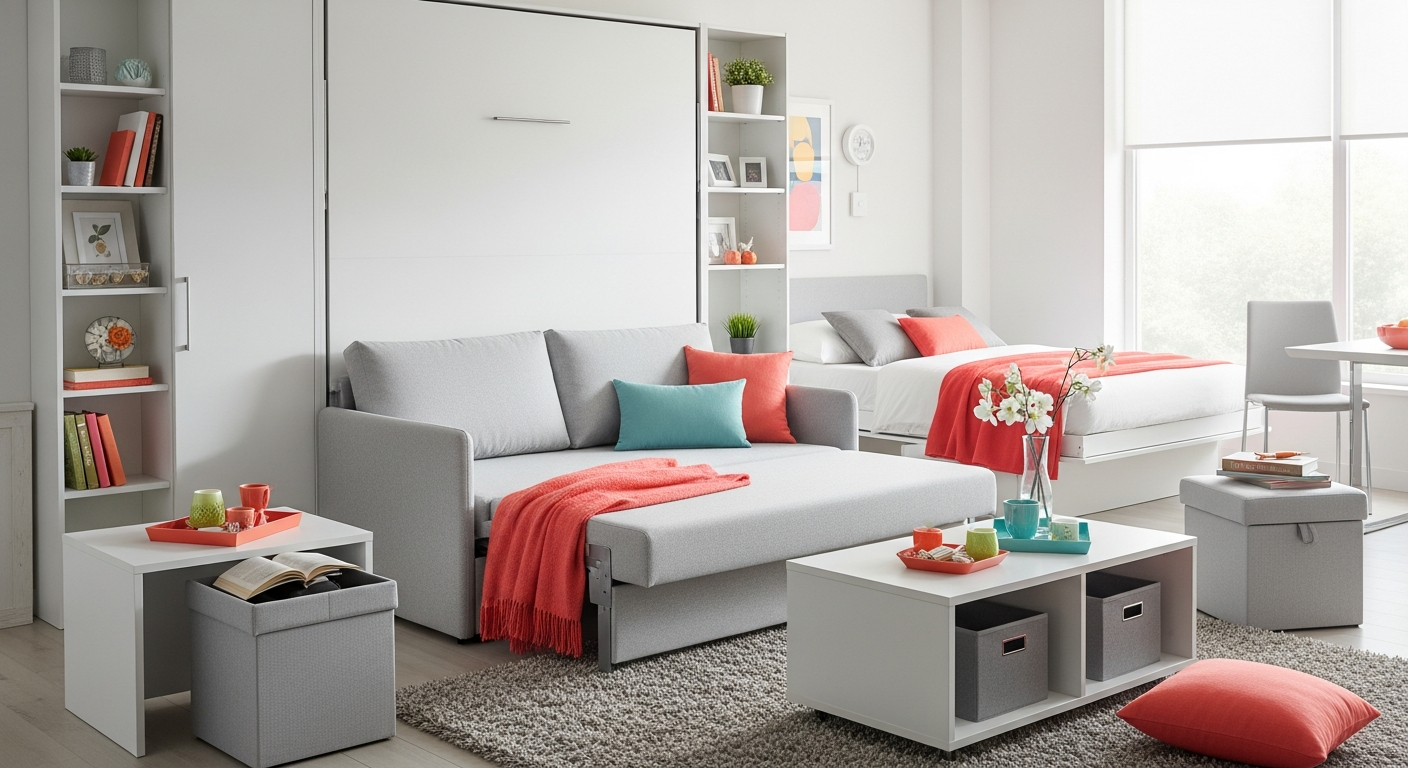
A Murphy bed, also known as a wall bed, is a bed that folds up vertically or horizontally into a cabinet or against a wall, typically freeing up significant floor space when not in use. Originally invented by William Lawrence Murphy in the late 19th century, these beds have evolved from simple hinged designs to sophisticated systems often integrated with shelving, desks, or even sofas.

Pros of Murphy Beds:

  • Maximum Space Saving: When folded away, the entire floor area where the bed would normally sit is completely clear, making them unparalleled for freeing up space.
  • Superior Sleeping Comfort: Unlike many sofa beds, Murphy beds often accommodate a standard mattress (e.g., a queen size memory foam mattress), offering the comfort of a traditional bed.
  • Integrated Functionality: Many modern Murphy beds come with built-in desks, bookshelves, or even integrated sofas, making them true multi-functional units.
  • Clean Aesthetic: When closed, they present a sleek, unobtrusive cabinet appearance that can blend seamlessly with your decor.

Cons of Murphy Beds:

  • Installation Complexity: Most Murphy beds require professional installation or a competent DIYer, as they need to be securely anchored to a wall.
  • Higher Initial Cost: Generally, Murphy beds tend to be more expensive than sofa beds, especially those with additional features.
  • Less Seating: If not combined with a sofa, a traditional Murphy bed doesn’t offer seating when folded up.
  • Permeance: Once installed, moving a Murphy bed can be a significant undertaking.

Types of Murphy Beds:

  • Vertical: The most common type, where the bed folds up with the headboard at the bottom.
  • Horizontal: Ideal for rooms with low ceilings or narrow walls, the bed folds up lengthwise.
  • Desk Combo: Features a desk that remains level as the bed is lowered, so you don’t have to clear your workspace.
  • Sofa Combo: A sofa sits in front of the bed, which folds down over the sofa (often the sofa back folds down to make room).

Sofa Beds: The Dual-Purpose Dynamo

A sofa bed, or sleeper sofa, is a piece of furniture that functions as a sofa during the day and can be converted into a bed for sleeping. They come in various styles and mechanisms, making them a popular choice for guest rooms and small living spaces alike.

Pros of Sofa Beds:

  • Dual Functionality: Offers both comfortable seating and a bed in one unit, perfect for maximizing utility in a studio.
  • No Installation Required: Simply unbox and place; no wall mounting necessary.
  • Versatility: Available in a vast array of styles, colors, and sizes to match any decor.
  • Often More Affordable: Generally, sofa beds are less expensive than Murphy beds.

Cons of Sofa Beds:

  • Less Sleeping Comfort: While modern sofa beds have improved significantly, the mattress quality often doesn’t match a traditional bed, especially for daily use.
  • Takes Up Floor Space: Even when converted to a bed, the sofa bed still occupies a large footprint, and the frame remains visible.
  • Heavier to Move: The mechanisms can make them heavy and cumbersome to rearrange.
  • Can Be Cumbersome to Convert: Depending on the mechanism, transforming a sofa into a bed (and vice-versa) can be a daily chore.

Types of Sofa Beds:

  • Pull-Out/Traditional: Features a hidden mattress that pulls out from under the cushions and unfolds.
  • Futon: A simple mattress that folds to form a sofa and lays flat for a bed. Often less comfortable for seating and sleeping.
  • Click-Clack/Convertible: The back of the sofa reclines or clicks into various positions, eventually laying flat to form a bed. These are often compact.
  • Daybed: Designed as a bed that doubles as a sofa with back and armrests, ideal for a more permanent bed solution with seating capability.

Key Factors to Consider When Choosing

Selecting between a Murphy bed and a sofa bed, or even deciding on a specific model, requires careful consideration of several factors pertinent to your lifestyle and space.

Space Availability

Measure, measure, measure! Not just the footprint when the bed is open, but also the clearance required around it. A Murphy bed clears the floor entirely, offering more open space. A sofa bed still occupies floor space when open, and you need room for it to extend.

Frequency of Use

Will this be your primary bed for daily use, or an occasional guest bed? For daily sleeping, the comfort of a Murphy bed with a traditional mattress is usually superior. For occasional use, a comfortable pull-out sleeper sofa might suffice.

Comfort

This applies to both sleeping and seating. Test them out if possible. For sofa beds, look for high-density foam cushions and a mattress that’s at least 4-5 inches thick. For Murphy beds, remember you can often choose your own mattress, giving you more control over sleep comfort.

Budget

Prices vary widely. Set a realistic budget that accounts for not just the unit itself but also potential installation costs for Murphy beds.

Aesthetics and Style

Your convertible furniture should complement your studio’s decor. Murphy beds offer a clean, built-in look, while sofa beds come in countless designs, from modern minimalist to classic traditional. Consider the fabric, color, and overall design.

Top Picks: The Best Sofa Beds for Studio Apartments

When it comes to sofa beds for studio apartments, the goal is often finding that perfect balance of compact size, comfortable seating, and a decent sleeping surface. Here are some categories and features to look for:

  • Compact Click-Clack Sofas: These are excellent for tiny studios. They often feature a simple mechanism where the back clicks down to create a flat sleeping surface. Look for models with sturdy metal frames and thick, supportive foam. Some even offer split-back designs, allowing independent recline for different users.
  • Small Pull-Out Sleepers: While traditional pull-outs can be bulky, many manufacturers now offer scaled-down versions perfect for apartments. Focus on those with high-quality innerspring or memory foam mattresses that are at least 4-5 inches thick. The transformation mechanism should be smooth and easy to operate.
  • Futons with Style: Modern futons have come a long way from their dorm-room predecessors. You can find sophisticated designs with hardwood frames and plush mattresses that offer respectable comfort for both sitting and sleeping. They are generally very easy to convert.
  • Daybeds with Trundle: If your studio allows for a more permanent bed presence, a daybed is an excellent option. It functions as a sofa during the day and a twin bed at night. Many come with a trundle bed underneath, offering an extra sleeping spot for guests without taking up much more space.

Consider a small velvet sleeper sofa if you want to add a touch of luxury and sophistication to your studio while retaining crucial functionality. The plush fabric can make your small space feel more inviting and upscale.

Top Picks: The Best Murphy Beds for Studio Apartments

For those prioritizing floor space above all else, a Murphy bed is often the optimal choice. The market offers a wide range of designs, from minimalist to those with extensive storage and integrated features.

  • Basic Wall Beds: These are straightforward units that hide a full or queen-size bed within a simple cabinet. Look for robust piston or spring mechanisms that ensure smooth and safe operation.
  • Desk/Table Combo Murphy Beds: Perfect for a home office in a studio. These units integrate a desk that stays level as the bed lowers, allowing you to use your desk right up until bedtime. This is a game-changer for productivity in a small space.
  • Murphy Beds with Storage: Many models come with flanking bookshelves, drawers, or wardrobe cabinets. These provide invaluable storage for clothing, books, and other essentials, further decluttering your studio.
  • Sofa & Murphy Bed Combos: The ultimate in multi-functionality. These units feature a sofa that sits permanently in front of the Murphy bed. When you’re ready to sleep, the bed folds down over or around the sofa. This gives you comfortable seating during the day and a real bed at night, without having to move furniture.

When purchasing a Murphy bed, always check the mattress compatibility. Most can accommodate standard mattresses, but some have depth limitations. An excellent option for a compact studio is a full-size horizontal Murphy bed, which can be ideal for narrower walls or rooms with lower ceilings, providing a comfortable sleep surface without dictating too much of your wall space.

Comparison Table: Murphy Beds vs. Sofa Beds for Studio Apartments

Feature Murphy Bed Sofa Bed
Space Saving (Day) Excellent (clears floor entirely) Good (compact seating)
Space Saving (Night) N/A (bed is down) Fair (occupies significant floor space)
Sleeping Comfort Generally Excellent (accommodates standard mattress) Variable (can be good, but often less than traditional bed)
Seating Comfort Only if integrated with sofa/desk Generally Excellent (designed as a sofa)
Ease of Transformation Often smooth & quick (piston/spring assisted) Varies by mechanism (pull-out can be heavy, click-clack easy)
Installation Requires secure wall mounting (professional recommended) No installation required (ready to use)
Price Range Higher ($800 – $4000+) Lower to Mid ($300 – $2000)
Aesthetics Sleek, integrated cabinet look Wide range of sofa styles and fabrics

Maximizing Your Studio Apartment Space

Beyond selecting the right convertible furniture, there are other strategies to make your studio apartment feel larger and more functional:

  • Vertical Storage: Utilize walls with shelving units, floating shelves, and tall, narrow bookcases.
  • Multi-Functional Furniture: Ottomans with storage, coffee tables that lift to become dining tables, and nesting tables are your best friends.
  • Strategic Lighting: Use layers of lighting (ambient, task, accent) to brighten the space and create depth. Wall-mounted or floor lamps save valuable surface area.
  • Mirrors: A well-placed large mirror can reflect light and create the illusion of a larger room.
  • Declutter Relentlessly: Less stuff means more space. Regularly go through your belongings and donate or discard what you don’t need.
  • Area Rugs: Define zones within your open-plan studio. A large geometric area rug can delineate the living area from the kitchen or sleeping zone, adding warmth and style.

Maintenance and Care

To ensure your Murphy bed or sofa bed lasts for years, regular maintenance is key:

  • Sofa Beds: Vacuum regularly to prevent dust and debris buildup. Spot clean spills immediately with a mild upholstery fabric cleaner suitable for your fabric type. Rotate cushions to ensure even wear.
  • Murphy Beds: Periodically check all hardware, screws, and mechanisms to ensure they are tight and functioning smoothly. Lubricate moving parts if recommended by the manufacturer. Keep the mattress clean by vacuuming and using a mattress protector.

Frequently Asked Questions (FAQs)

Q: Are sofa beds comfortable enough for daily sleeping?

A: Modern sofa beds have improved significantly. While still generally not as comfortable as a traditional bed with a high-quality mattress, many models now offer gel memory foam or innerspring mattresses that are suitable for daily use. Look for mattress thickness of at least 4-5 inches.

Q: How difficult is it to install a Murphy bed?

A: Installation difficulty varies by model. Basic models might be manageable for an experienced DIYer, but many, especially those with complex mechanisms or integrated cabinets, require professional installation to ensure safety and proper functionality. They must be securely anchored to wall studs.

Q: Can I use my own mattress with a Murphy bed?

A: Most Murphy beds are designed to accommodate a standard mattress, but there are usually limits on thickness and weight. Always check the manufacturer’s specifications before purchasing a mattress.

Q: Do sofa beds damage my floors when I pull them out?

A: Modern sofa bed mechanisms are typically designed with wheels or glides that minimize floor damage. However, it’s always a good idea to place a rug or felt pads under the sofa’s feet and under any parts that make contact with the floor during conversion, especially on hardwood floors.

Q: How much space do I need for a full-size Murphy bed?

A: When closed, a full-size Murphy bed cabinet typically requires a wall space of about 54-60 inches wide and 80-86 inches high, with a depth of 15-20 inches. When open, it will extend about 80-86 inches into the room. Always consult specific product dimensions.

Conclusion

Choosing the best Murphy bed or sofa bed for your studio apartment is a decision that can dramatically improve your quality of life in a small space. Whether you prioritize clearing every inch of floor space with a sleek Murphy bed or prefer the dual functionality and easy setup of a sofa bed, there’s a perfect solution waiting for you.

By carefully considering your needs, budget, and aesthetic preferences, you can transform your studio into a highly functional, comfortable, and stylish haven. Embrace the versatility, reclaim your space, and enjoy the smart living that these ingenious furniture pieces offer. Happy decorating!

Explore our curated selections and find the perfect fit for your compact home today!

Platform vs. Box Spring: Which Bed Frame Lasts Longer?

Choosing the right foundation for your mattress is just as crucial as selecting the mattress itself. It’s the unsung hero that dictates comfort, support, and, perhaps most importantly, the longevity of your entire sleep setup. For many, the choice boils down to two primary contenders: the sleek, modern platform bed or the traditional, time-tested box spring system. But beyond aesthetics and immediate comfort, a critical question often arises: Platform vs. Box Spring: Which Bed Frame Lasts Longer?

Platform vs. Box Spring: Which Bed Frame Lasts Longer?

This comprehensive guide from lesofa.club will dissect both options, examining their construction, durability, maintenance requirements, and overall lifespan. We’ll help you understand the nuances of each, ensuring you make an informed decision that promises years of restful sleep and optimal mattress health. Let’s embark on this journey to uncover the champion of bed frame longevity.

Understanding the Basics: What are Platform Beds and Box Springs?

Before we delve into the durability debate, it’s essential to grasp what each system entails and how it functions as the backbone of your bed.

The Platform Bed Explained

A platform bed is a type of bed frame that features a built-in base designed to support a mattress directly, without the need for an additional box spring. Its support system typically consists of closely spaced wooden or metal slats, a solid surface, or a metal grid. This integrated design means your mattress sits atop the frame, offering a lower profile and often a more contemporary aesthetic.

Platform beds are celebrated for their minimalist design, often made from sturdy materials like solid wood, metal, or engineered wood. A high-quality wooden platform bed can seamlessly integrate into various decor styles. Many modern mattresses, especially memory foam, latex, and hybrid varieties, are specifically designed to be used with platform bases, often even requiring them for warranty validity. Some platform beds also come with ingenious built-in storage drawers, maximizing bedroom space – a significant advantage for those living in smaller environments.

The Traditional Box Spring System

In contrast, a box spring is a foundation consisting of a wooden frame covered in fabric, typically containing springs or a steel grid. Its primary purpose is to absorb shock from the mattress, provide a firm and even surface, and elevate the bed to a comfortable height. Unlike platform beds, a box spring does not stand alone; it requires a separate bed frame, usually a basic metal bed frame for box spring, to support it and keep it off the floor.

Historically, box springs were essential for traditional innerspring mattresses, which relied on the give of the coils in the box spring to enhance comfort and prolong mattress life. They add a significant amount of height to the bed, which some sleepers prefer for ease of getting in and out. While once ubiquitous, the rise of foam and hybrid mattresses has seen a decline in the universal necessity of the box spring, leading many to question its relevance and longevity compared to modern alternatives.

The Durability Showdown: Platform vs. Box Spring Lifespan

Now, let’s get to the crux of the matter: which system is built to stand the test of time?

Factors Influencing Longevity

Several variables contribute to how long a bed frame or box spring will last:

  • Material Quality: The type and quality of wood (hardwood vs. softwood), metal gauge, and fabric used are paramount.
  • Construction: How well components are joined (screws vs. staples), the strength of slats, and the design of central supports play a huge role.
  • Maintenance: Regular tightening of bolts, cleaning, and addressing minor issues can significantly extend life.
  • Usage: Exceeding weight limits, excessive jumping, or rough handling will degrade any foundation faster.
  • Mattress Type: Using an incompatible mattress can prematurely wear out the foundation (e.g., heavy foam mattress on a flimsy box spring).

Platform Bed Durability

Generally, platform beds are known for their robust construction and fewer moving parts, which often translates to a longer lifespan. Since the mattress rests directly on solid slats or a solid surface, the support is direct and even. The absence of coils means there are fewer components to wear out or break down over time.

A well-made platform bed, especially a heavy duty platform bed crafted from solid wood or thick metal, can easily last for 10-15 years, or even longer with proper care. The main points of failure tend to be slats that are too thin, spaced too far apart, or lacking adequate central support. If the slats are designed poorly or made from weak materials, they can sag or break, leading to uneven mattress support and potential damage to the mattress itself. However, many quality platform beds include a center support beam with additional legs, dramatically increasing their stability and longevity.

Their simple, sturdy design often makes them less susceptible to creaking and noise over time compared to coil-based systems, provided the connections remain tight.

Box Spring Durability

Traditional box springs, particularly those with actual spring coils, are designed to absorb impact and provide some give. This shock absorption can potentially extend the life of an innerspring mattress by reducing wear and tear. However, the coils within the box spring are also its weakest link in terms of longevity.

Over time, these springs can lose their tension, sag, become noisy (squeaking or creaking), or even break. Once the springs begin to fail, the box spring loses its ability to provide even support, leading to mattress sagging and a less comfortable sleep surface. The fabric covering can also tear, and the wooden frame can become loose or warped, especially if exposed to moisture or excessive weight.

A high-quality coil box spring might last anywhere from 5-10 years. However, many modern “box springs” are actually just rigid foundations made of wood and metal, without coils. These perform more like solid platform bases and can have a similar lifespan to a platform bed, assuming similar construction quality. The traditional coil box spring generally has a shorter lifespan than a robust platform bed due to the inherent wear and tear on its spring components.

Beyond Longevity: Other Key Considerations

While durability is crucial, it’s not the only factor. Your lifestyle, mattress type, and aesthetic preferences also play a significant role.

Support and Mattress Compatibility

  • Platform Beds: Offer a firm, consistent support, which is ideal for modern foam mattresses (memory foam, latex) and hybrid mattresses. Many mattress manufacturers specifically recommend or require a solid or slatted platform base with slats no more than 2-3 inches apart to maintain warranty validity and prevent sagging.
  • Box Springs: Best suited for traditional innerspring mattresses. They complement the spring system of these mattresses, providing a slightly softer, more yielding feel. Using a box spring with a foam or hybrid mattress is generally not recommended as it can lead to premature sagging and inadequate support for the mattress’s structure.

Comfort and Feel

  • Platform Beds: Tend to create a firmer overall feel for the mattress, as there is no give from a spring system below.
  • Box Springs: Add a degree of cushioning and bounce, making the mattress feel slightly softer and more responsive.

Aesthetics and Design

  • Platform Beds: Offer a modern, low-profile, and often minimalist aesthetic. They come in countless designs, materials, and colors, often acting as a focal point in the bedroom. Many feature headboards, footboards, and even built-in storage.
  • Box Springs: Are largely functional and are typically hidden by bed skirts or the bed frame itself. They contribute to a more traditional, elevated bed look.

Height and Accessibility

  • Platform Beds: Result in a lower overall bed height, which some people prefer for a contemporary look or ease of access for children/pets.
  • Box Springs + Frame: Create a significantly taller bed, which can be advantageous for individuals who struggle to get in and out of lower beds.

Cost

  • Platform Beds: A single purchase for the entire bed frame and foundation. Prices vary widely based on materials and features, but can be a cost-effective choice in the long run as no separate box spring is needed.
  • Box Springs: Require two purchases: the box spring itself and a separate bed frame. This can sometimes result in a higher overall initial cost.

Airflow and Hygiene

  • Platform Beds: Slatted designs allow for good airflow underneath the mattress, which can help prevent moisture buildup and inhibit mold/mildew growth. Solid platforms can restrict airflow more, so consider slatted options for better ventilation.
  • Box Springs: The open structure (especially traditional coil box springs) allows for excellent airflow, which is beneficial. However, the fabric covering can become a haven for dust mites and allergens over time, requiring more frequent cleaning or encasements.

Comparison Table: Platform vs. Box Spring

Feature Platform Bed Box Spring
Primary Function Direct mattress support, integrated frame Mattress shock absorption, elevation, separate frame needed
Typical Lifespan 10-15+ years (high quality) 5-10 years (traditional coil); 10-15+ years (rigid foundation)
Durability Factors Quality of slats/construction, center support Coil integrity, frame stability, fabric wear
Mattress Compatibility Memory foam, latex, hybrid (preferred) Traditional innerspring (preferred)
Overall Feel Firmer, more direct support Softer, more bouncy, some give
Aesthetics Modern, sleek, often standalone furniture piece Traditional, functional, usually hidden by bed skirt/frame
Bed Height Lower profile Taller (box spring + frame)
Cost (Initial) One purchase, can be higher but no box spring needed Two purchases (box spring + frame), potentially higher overall
Airflow Good with slats, less with solid platforms Generally good through open structure
Maintenance Tighten bolts, clean frame Check for sagging/creaking, clean fabric, dust mites

Making the Right Choice for Your Sleep

Ultimately, the decision between a platform bed and a box spring largely hinges on your specific needs and preferences. There isn’t a universally “better” option; there’s only the best option for you.

Consider your mattress type: If you have a modern memory foam, latex, or hybrid mattress, a platform bed is almost certainly the way to go, both for optimal support and warranty compliance. If you still prefer a traditional innerspring mattress, a quality box spring (or a rigid foundation if you want the height without the coils) can serve you well.

Evaluate your preferred bed height and firmness: Do you like a low-slung, minimalist look, or do you prefer to climb into a taller bed? Do you want your mattress to feel firmer or have a bit more give?

Think about aesthetics and functionality: Does a sleek, modern platform bed with potential storage appeal to you, or do you prefer the classic look that a box spring and traditional frame provides, perhaps with a decorative bed skirt?

Factor in your budget: While platform beds can have a higher upfront cost for premium models, remember they are a single purchase. Box springs require a separate bed frame, which adds to the total investment.

By carefully weighing these factors against the durability insights discussed, you can confidently choose the foundation that will provide you with the best sleep and the longest lifespan for your investment.

FAQs about Platform Beds and Box Springs

Q: Can I use a box spring on a platform bed?

A: Technically, yes, but it’s usually unnecessary and can make your bed excessively high. A platform bed is designed to provide direct support, eliminating the need for a box spring. Adding one might negate the benefits of your platform bed and can sometimes lead to an unstable setup.

Q: Can I put a memory foam mattress on a box spring?

A: It’s generally not recommended, especially with traditional coil box springs. Memory foam and latex mattresses require a firm, consistent, and even surface. The give and open coil structure of a traditional box spring can cause these mattresses to sag prematurely, compromising support and potentially voiding your mattress warranty. A rigid foundation (which is sometimes called a “box spring” but contains no coils) can work, but a slatted platform is usually ideal.

Q: How do I know if my box spring is bad?

A: Signs of a failing box spring include noticeable sagging, creaking noises, broken or bent coils (if it’s a traditional box spring), a visible dip or hump, and the mattress feeling less supportive or comfortable than it used to.

Q: What’s the ideal slat spacing for a platform bed?

A: For optimal support and mattress longevity, especially for memory foam and latex mattresses, slats should typically be no more than 2-3 inches apart. This ensures even weight distribution and prevents sagging through the gaps.

Q: Do platform beds really last longer?

A: In most cases, yes, especially when comparing a quality platform bed to a traditional coil box spring. Platform beds have fewer moving parts and offer more direct, solid support. However, a cheaply made platform bed with flimsy slats can fail faster than a very high-quality rigid box spring foundation.

Conclusion: The Verdict on Longevity and Your Best Bet

When asking Platform vs. Box Spring: Which Bed Frame Lasts Longer?, the evidence leans towards the well-constructed platform bed. Its solid, integrated design, fewer moving parts, and direct support typically afford it a longer lifespan than a traditional coil box spring, which is prone to coil fatigue and noise over time. Modern rigid foundations (often marketed as box springs) can rival platform beds in durability, but they share the platform’s core principle of direct, firm support.

Ultimately, the longevity of either system is heavily dependent on the quality of materials and construction. A cheap platform bed with thin, widely spaced slats will likely fail faster than a premium, coil-reinforced box spring. However, for most contemporary mattresses and a desire for robust, long-term support, a well-engineered platform bed emerges as the champion of durability.

Your Next Step Towards a Perfect Sleep!

Ready to upgrade your sleep setup? Consider your mattress type, preferred comfort, and aesthetic to make the best decision for your home. Explore a wide range of quality bed frames, from sturdy platform beds to supportive foundations, and invest in the foundation that will cradle your mattress—and your sleep—for years to come. Sweet dreams!

5 Ways to Make a Cheap Sectional Look Like Luxury Furniture

Is your budget-friendly sectional sofa doing more to cramp your style than elevate your living space? You’re not alone. Many homeowners opt for affordable sectionals for their practicality and expansive seating, but often lament their lack of high-end appeal. The good news is, you don’t need to break the bank on a new designer sofa to achieve a sophisticated look. With a few strategic upgrades and clever styling tricks, you can master the art of making a cheap sectional look expensive and effortlessly integrate it into a luxurious home aesthetic. Get ready to transform your ordinary seating into a statement piece!

5 Ways to Make a Cheap Sectional Look Like Luxury Furniture

1. Elevate with High-End Textiles and Pillows

One of the quickest and most impactful ways to make a cheap sectional look expensive is through the strategic use of luxurious textiles. A sectional’s large surface area makes it a perfect canvas for layering rich textures and sophisticated patterns. Forget the flimsy, flat pillows that often come with budget sofas; these are usually the first giveaway of a lower-cost piece.

Invest in Quality Throw Pillows

High-quality throw pillows are paramount. Think beyond the basic square shapes and explore different sizes and forms, such as lumbar or bolster pillows. Opt for covers made from premium materials like velvet, linen, faux fur, or even a soft chenille. The tactile quality and visual depth these fabrics provide instantly upgrade the entire sectional. Mix and match textures rather than sticking to a single fabric type. For instance, combine a couple of plush velvet throw pillows in deep jewel tones with some textured linen pillows in a neutral shade. The key is to create an intentional, layered look that speaks to comfort and elegance. Don’t be afraid to incorporate subtle patterns, but keep them cohesive with your overall room palette. Remember, the inserts matter just as much as the covers. Replace any cheap, lumpy inserts with down feather pillow inserts or high-quality polyester alternatives for a fuller, more substantial look that holds its shape gracefully.

Drape with Luxurious Throws and Blankets

A beautifully draped throw blanket can add immense visual appeal and a sense of inviting comfort. Choose throws made from cashmere, faux fur, chunky knit wool, or a weighty cotton blend. Avoid thin, synthetic fleece blankets that can look cheap. The goal is to select a throw with a substantial feel and an elegant drape. Casually toss one over the armrest or across a corner of the sectional, allowing it to fall naturally. The way it’s styled can convey a sense of effortless luxury, suggesting a curated rather than a neglected piece of furniture. A well-chosen throw adds another layer of texture and color, breaking up the monotony of the sectional’s upholstery and adding depth to your living space. This simple addition can instantly make cheap sectional look expensive.

2. Upgrade the Foundation: Legs and Structural Details

Often, one of the most glaring indicators of a cheap sectional is its legs. Budget furniture frequently comes with flimsy plastic or basic wooden block legs that lack style and substance. Swapping these out is a surprisingly easy and impactful DIY project.

Replace Legs for an Instant Facelift

Measure your existing leg height and threading carefully. Then, explore options like elegant tapered wood legs in a rich walnut or espresso finish, sleek metal legs in brass or black, or even ornate carved designs if they suit your aesthetic. These small changes can dramatically alter the perception of quality. Imagine a sectional sitting on sophisticated decorative brass legs compared to its original plastic stumps – the difference is night and day. This upgrade not only enhances the visual appeal but can also make the sectional feel more stable and substantial. Ensure the new legs are sturdy and properly installed to support the weight of the sectional and its occupants. This is a subtle yet highly effective way to make cheap sectional look expensive.

Consider Trim and Detail Additions

While more advanced, adding decorative trim or details can further elevate your sectional. For example, if your sectional has removable skirt panels, you could replace them with a more tailored, inverted pleat skirt, or even remove them entirely if the base underneath is suitable for new legs. For sectionals with flat arms, consider adding a thin strip of decorative nailhead trim along the base or edges for a custom, upholstered look. This requires a bit more precision and possibly upholstery tools, but the payoff in perceived value is significant. Even a simple piping detail added to cushions can make a vast difference. These types of bespoke touches are usually reserved for high-end pieces, making their addition a brilliant hack to make cheap sectional look expensive.

3. Master the Art of Styling with Thoughtful Accessories

Beyond the sectional itself, the surrounding elements play a crucial role in its perceived luxury. Thoughtful styling can distract from any inherent cheapness and draw attention to a curated, sophisticated environment.

Curate Your Coffee Table and Side Tables

The coffee table in front of your sectional is prime real estate for creating a luxurious vignette. Instead of clutter, aim for a balanced arrangement of a few carefully chosen items. Stack a couple of beautiful designer coffee table books, topped with a decorative object like a sculptural vase or a unique paperweight. Add a small plant or a fresh flower arrangement for a touch of life and color. A stylish tray can gather remotes and coasters, making them look intentional rather than haphazard. On adjacent side tables, place a chic lamp with warm lighting to create ambiance, and perhaps a small, framed piece of art or a personal memento. The goal is to create moments of visual interest that reflect a sophisticated taste, making the entire seating area feel more expensive.

Strategic Lighting and Greenery

Lighting is a powerful tool for setting a luxurious mood. Harsh, overhead lighting can make any space feel less inviting. Incorporate floor lamps and table lamps with warm-toned bulbs around your sectional. A tall, arched floor lamp positioned over the corner of the sectional can provide excellent task lighting for reading and act as a sculptural element. The soft glow from multiple light sources creates depth and coziness, which is a hallmark of high-end design. Don’t underestimate the power of greenery. A large, healthy floor plant next to the sectional, or a smaller potted plant on a side table, adds life, texture, and a sense of freshness. Faux plants have come a long way; choose realistic-looking ones that don’t scream ‘fake’. These organic touches instantly make the space feel more vibrant and expensive.

4. Anchor the Space with a Luxurious Area Rug

An area rug is essential for grounding your sectional and defining the living area. A poorly sized or low-quality rug can undermine all your efforts to make cheap sectional look expensive.

Choose the Right Size and Material

The cardinal rule for rugs under a sectional: it must be large enough. Ideally, at least the front legs of all major pieces of the sectional should rest on the rug. Even better, have all legs on the rug or leave a generous border around the entire sectional. A rug that is too small will make the sectional appear to float awkwardly and diminish the sense of spaciousness. As for material, opt for natural fibers like wool, jute, or sisal for durability and a high-end feel. A beautiful large wool area rug not only adds warmth and texture but also provides excellent sound dampening, contributing to a more comfortable and luxurious environment. Synthetic rugs can also be stylish and durable, but choose ones with a dense pile and a sophisticated pattern or texture rather than thin, shiny options.

Patterns and Textures that Elevate

The pattern and texture of your rug can significantly influence the overall aesthetic. A subtle geometric pattern, a distressed oriental style, or a solid rug with a rich, inviting texture (like a plush shag or a high-low pile) can instantly elevate the room. Avoid overly busy or childish patterns that can cheapen the look. The rug should complement the color palette of your sectional and the rest of your room, either by providing a harmonious backdrop or by introducing a carefully chosen pop of color or pattern. A well-chosen rug ties the entire seating arrangement together, creating a cohesive and polished look that makes your cheap sectional look expensive by association.

5. Refine Comfort and Form with Cushion Upgrades and Slipcovers

The internal components and external finishes of your sectional cushions are often the most telling signs of its quality. Addressing these areas can make a profound difference.

Replace Cushion Inserts for Better Structure

Cheap sectionals often come with low-density foam cushions that quickly flatten, sag, and lose their shape. Replacing these inserts is one of the most effective ways to make cheap sectional look expensive and feel more comfortable. For seat cushions, consider high-density foam wrapped in Dacron for a firm, supportive sit that bounces back. For back cushions, a down-and-feather blend or a high-quality foam and fiber mix will provide a plush, luxurious feel that also maintains its shape. You can often purchase custom-sized foam or feather inserts from upholstery suppliers or online. This upgrade not only improves the comfort of your sectional but also gives it a more structured, tailored appearance that mimics higher-end furniture. Over time, even with a great sectional, cushions will wear out, so knowing how to upgrade them is a fantastic long-term strategy for maintaining a luxurious feel.

Invest in a Custom-Fit Slipcover

If your sectional’s original upholstery is faded, stained, or simply not to your taste, a custom-fit slipcover can work wonders. This isn’t about throwing a baggy sheet over your sofa; we’re talking about tailored slipcovers designed specifically for your sectional’s dimensions. Many companies offer slipcovers in a wide array of high-quality fabrics, from durable linens and cottons to luxurious velvets. A well-made slipcover can completely transform the look, making it appear like a brand-new, high-end piece of furniture. While it’s an investment, it’s significantly cheaper than buying a new sectional and offers the flexibility to change your sectional’s look with the seasons or evolving trends. Additionally, a slipcover makes cleaning much easier, especially if you have pets or children, as many are machine washable. This practical luxury helps maintain the pristine look, meaning your cheap sectional can look expensive for longer. And don’t forget the occasional need for a premium fabric cleaning spray to keep those new textiles fresh.

Comparison Table: Quick Fix vs. Investment Upgrade

Here’s a breakdown of the impact and cost-effectiveness of various upgrades to make cheap sectional look expensive:

Upgrade Method Impact on Luxury Look Estimated Cost Range Ease of DIY
High-Quality Throw Pillows & Blankets High – Immediate visual and tactile improvement. $50 – $300+ Very Easy
Replacing Sofa Legs High – Fundamental change to silhouette and stability. $40 – $200+ Easy to Moderate
Thoughtful Accessories (Trays, Books, Plants, Lamps) Medium to High – Creates a curated, styled environment. $100 – $500+ Easy
Luxurious Area Rug High – Grounds the space, adds warmth and definition. $150 – $1000+ Easy
Upgrading Cushion Inserts Very High – Improves comfort, structure, and longevity. $200 – $800+ Moderate
Custom-Fit Slipcover Very High – Complete transformation of appearance. $300 – $1500+ Moderate (installation)

FAQs: Making Your Cheap Sectional Look Expensive

Got more questions about transforming your budget sectional? Here are some common queries:

Q: Can I really make an old, worn-out sectional look new again?

A: Absolutely! While some structural issues might require professional help, many aesthetic flaws can be hidden or completely revamped. A custom-fit slipcover is your best friend here, as it covers everything from stains to outdated fabric. Combine this with new cushion inserts and updated legs, and your sectional can feel practically brand new. The key is to address the elements that are giving away its age or low price point.

Q: What’s the most impactful single change I can make on a tight budget?

A: If you can only do one thing, focus on high-quality throw pillows and a luxurious throw blanket. These items are relatively inexpensive compared to a new sectional or custom slipcover, but they provide an immediate visual and tactile upgrade. They can introduce texture, color, and a sense of plush comfort that instantly makes cheap sectional look expensive.

Q: How do I choose the right color scheme for my sectional upgrades?

A: Start with your room’s existing palette. If your sectional is a neutral color (grey, beige, white), you have a wide range of options. You can introduce pops of color through pillows and throws, or keep it monochrome with varying textures for a sophisticated look. If your sectional has a specific color, choose accent colors that complement it – either analogous colors for a harmonious feel or contrasting colors for a more dynamic look. Always consider the overall mood you want to create in the room.

Q: Are slipcovers difficult to clean?

A: It depends on the fabric. Many modern slipcovers are designed for easy care, with options for machine washing. Always check the care instructions provided by the manufacturer. Choosing a durable, washable fabric like performance linen or a poly-blend can make maintenance a breeze, allowing you to keep your sectional looking pristine without much effort.

Q: Should I hire a professional for any of these upgrades?

A: While many of these upgrades are DIY-friendly, some, like adding decorative trim or ensuring custom slipcovers fit perfectly, might benefit from professional assistance if you’re not confident in your skills. Replacing cushion inserts is typically a straightforward DIY, but if you want specific foam densities or custom feather blends, an upholstery shop might be able to provide better guidance and materials.

Conclusion: Your Path to a High-End Sectional

Transforming a cheap sectional into a piece that exudes luxury is entirely within reach, even on a budget. By focusing on quality textiles, upgrading fundamental components like legs and cushion inserts, and mastering the art of thoughtful styling, you can dramatically elevate your living space. Each of these five strategies offers a powerful way to make cheap sectional look expensive, turning it from a functional piece into a stylish centerpiece. Experiment with these tips, mix and match techniques, and watch as your affordable sectional takes on a newfound elegance and sophistication. Your dream living room is just a few clever upgrades away!

Ready to Transform Your Living Room?

Start exploring high-quality throws, decorative pillows, and elegant new sofa legs today. Browse our recommended Amazon selections and begin your budget-friendly luxury makeover!

How to Arrange Two Sofas Facing Each Other for Conversation

The living room is the heart of any home – a space for relaxation, entertainment, and most importantly, connection. While many opt for an L-shaped sectional or a single sofa with accent chairs, there’s a timeless and incredibly effective arrangement that often gets overlooked: two sofas facing each other. This setup doesn’t just look elegant; it’s a design power move, purposefully crafted to foster intimacy and engaging dialogue. If you’re looking to transform your living space into a hub for genuine interaction, mastering how to arrange two sofas facing each other is your secret weapon.

How to Arrange Two Sofas Facing Each Other for Conversation

At lesofa.club, we believe that furniture should not only be beautiful but also functional, enhancing your lifestyle. A face-to-face sofa configuration creates a naturally balanced and symmetrical aesthetic, drawing people together into a dedicated conversation zone. It promotes eye contact, making it easier for guests to converse without straining their necks or feeling excluded. Beyond its social benefits, this arrangement exudes sophistication and can make even the most expansive rooms feel cozy and defined. Let’s dive into the ultimate guide to perfecting this classic layout.

Why Choose a Facing Sofa Arrangement?

Before we delve into the ‘how,’ let’s understand the ‘why.’ The appeal of two sofas facing each other extends beyond mere aesthetics. It’s about designing a space that serves a specific, cherished purpose.

  • Promotes Conversation: This is the most obvious and perhaps most valuable benefit. By placing sofas opposite one another, you eliminate the awkward angles and distances that often hinder natural dialogue. Everyone is equally engaged and visible, encouraging lively discussions.
  • Creates Symmetry and Balance: A symmetrical layout is inherently pleasing to the eye. Two identical or complementary sofas facing each other bring a sense of order, harmony, and grandiosity to your living room. It’s a hallmark of classic design that never goes out of style.
  • Defines Space: In open-concept homes, defining distinct zones can be a challenge. Two sofas facing each other act as natural room dividers, clearly demarcating the conversation area from other functions like dining or a home office, without the need for physical walls.
  • Adds Elegance and Formality: There’s an undeniable air of sophistication to this arrangement. It evokes images of chic Parisian salons or stately libraries, making your living room feel more refined and upscale. A well-chosen velvet sofa modern or a pair of classic chesterfields can elevate this look further.
  • Versatile for Various Room Shapes: While often associated with larger, rectangular rooms, this setup can be adapted for square or even some smaller spaces with careful planning.

Essential Considerations Before You Begin

Successful furniture arrangement is all about planning. Before you start pushing furniture around, take a moment to consider these crucial factors:

  • Room Size and Shape: The dimensions of your room are paramount. A grand, spacious living room can easily accommodate two large sofas with ample walking space. Smaller rooms might require more compact sofas or even a sofa facing a loveseat to maintain balance without feeling cramped. Consider whether your room is long and narrow, square, or an irregular shape.
  • Sofa Style and Size: Will your sofas be identical? Or will you opt for complementary styles and colors? Matching sofas offer a cohesive, formal look, while contrasting pieces can introduce personality and visual interest. Ensure the scale of the sofas is appropriate for the room – an oversized sofa in a small room is a common design misstep.
  • Traffic Flow: Always visualize pathways. You need clear, unobstructed routes to doors, windows, and other areas of the room or adjacent rooms. Avoid placing sofas in a way that creates bottlenecks or forces people to squeeze past furniture.
  • Focal Point: Every successful room design has a focal point – a fireplace, a large window with a view, a prominent piece of art, or a TV. Your sofa arrangement should ideally complement or emphasize this focal point. The sofas typically face each other, with the focal point positioned at one end of this imaginary rectangle.
  • Lighting: Both natural and artificial lighting play a huge role in how a room feels. Ensure your sofa arrangement doesn’t block natural light sources. Plan for ambient, task, and accent lighting around your seating area for a well-lit and inviting atmosphere. Elegant floor lamps for living room modern or sophisticated table lamps can drastically improve the mood.
  • Rug Selection: An area rug is often the anchor of a seating arrangement. It defines the space, adds warmth, and introduces color and texture. Its size is critical: ideally, all front legs of the sofas (and any accompanying chairs) should rest on the rug.
  • Coffee Table: This central piece is not just for drinks; it completes the conversation zone. Its size and shape should be proportionate to the space between the sofas and easily accessible from both.
  • Accent Chairs/Ottomans: Don’t forget these supporting actors. They can be used to fill in corners, add extra seating, or introduce contrasting elements to your symmetrical sofa setup.

Step-by-Step Guide to Arranging Two Sofas Facing Each Other

Now that we’ve covered the groundwork, let’s walk through the practical steps to bring your vision to life.

Step 1: Measure Your Space and Sofas

Before moving any furniture, grab a measuring tape, graph paper, and a pencil. Measure the length and width of your room. Then, measure the length, width, and height of both your sofas. Sketch a basic floor plan and draw in your sofas to scale. This helps you visualize the arrangement and determine if your chosen pieces will fit comfortably.

Step 2: Determine Your Focal Point

Identify the natural focal point of your room. Is it a fireplace? A large window? A television? If you have a TV, consider where it will be placed. The sofas will typically be arranged to face each other, with the focal point at one end of this seating arrangement, creating a natural point of interest for those seated.

Step 3: Position the First Sofa

Begin by placing your first sofa. If your room has a natural long wall, it often works well to place one sofa parallel to it. Consider its relationship to the focal point; it should typically face it or be perpendicular to it, depending on your room’s layout. Ensure there’s enough space behind it if it’s not against a wall for traffic flow or a console table.

Step 4: Place the Second Sofa

Now, position the second sofa directly opposite the first. This is where the magic happens. The distance between the two sofas is critical for fostering conversation. Aim for 5 to 8 feet (1.5 to 2.4 meters) between the front edges of the sofas. This distance allows for comfortable conversation without shouting, but also enough space for a coffee table and easy movement. Too close, and it feels cramped; too far, and intimacy is lost.

Step 5: Introduce the Coffee Table

Place your coffee table in the center of the two facing sofas. It should be easily reachable from both sofas, typically around 18 inches (45 cm) from each. The coffee table should be roughly two-thirds the length of one sofa to maintain visual balance. A functional ottoman coffee table with storage can add versatility and keep clutter at bay.

Step 6: Define with a Rug

Roll out your area rug. As mentioned, it should be large enough to at least fit the front legs of both sofas. An ideal rug size will extend beyond the sofas, encompassing the entire conversation area, including any accent chairs. A large geometric area rug can add a modern touch and ground the entire arrangement.

Step 7: Add Accent Furniture

With your main seating in place, fill in the perimeter. Place accent chairs (one or two) at either end of the sofa arrangement, perpendicular to the sofas, to complete a U-shape. This creates even more seating and defines the boundaries of your conversation zone. Side tables next to the accent chairs or at the ends of the sofas provide surfaces for drinks and lamps.

Step 8: Layer with Lighting and Accessories

Finally, bring in the finishing touches. Add table lamps to side tables and floor lamps to corners to create a warm, layered lighting scheme. Introduce throw pillows and blankets to add comfort, texture, and pops of color. Incorporate art, plants, and decorative objects to personalize the space and reflect your style. Remember, accessories are the jewelry of your room, making it feel complete and lived-in.

Creative Variations and Advanced Tips

While the classic symmetrical setup is popular, don’t be afraid to experiment:

  • Sofa Facing a Loveseat: If your room is smaller, consider pairing a full-size sofa with a matching or complementary loveseat. This still achieves the conversational effect but with a lighter footprint.
  • Mixed Sofa Styles: While matching sofas create a formal look, two different but harmonious sofas can add character. For example, a sleek modern sofa facing a more traditional, tufted one can create an eclectic yet sophisticated vibe.
  • Incorporating a Console Table: If one sofa isn’t against a wall, a console table behind it can be a fantastic addition. It offers a surface for lamps, books, and decor, and can help define the space.
  • Creating Multiple Zones: In very large rooms, you might create two distinct conversation areas, one with two facing sofas and another with a sectional or chairs around a different focal point.
  • Movable Seating: Consider incorporating ottomans or poufs that can be easily moved around to accommodate extra guests or simply for propping up feet.

Comparison Table: Sofa Arrangement Styles

To help you compare, here’s how the ‘two sofas facing each other’ arrangement stacks up against other popular layouts:

Arrangement Type Best For Pros Cons
Two Sofas Facing Each Other Formal & intimate conversation, symmetrical rooms, defining open spaces. Excellent for conversation, elegant, balanced, classic aesthetic, defines zones. Requires more space, can feel formal, less ideal for TV watching (unless TV is main focal point).
L-Shape Sectional Casual lounging, maximizing seating in a corner, TV watching. Comfortable for stretching out, good for small groups, efficient use of corners. Can feel bulky, less flexible for rearrangement, can limit conversation.
Sofa + Two Accent Chairs Versatile, smaller rooms, creating visual interest with varied pieces. Flexible, allows for different styles, good for mixed activities. Chairs can feel less integrated, less formal than two facing sofas for conversation.
U-Shape (Sectional or multiple sofas) Large gatherings, family rooms, dedicated entertainment areas. Maximizes seating, very inclusive, great for large families. Requires a very large room, can feel overwhelming, less formal.

Common Pitfalls to Avoid

Even with the best intentions, certain mistakes can undermine your efforts:

  • Overcrowding the Room: The biggest mistake is trying to fit too much furniture into a space. Leave breathing room around your sofas and tables.
  • Blocking Traffic Flow: Always ensure clear pathways. If people have to navigate an obstacle course, your design is flawed.
  • Choosing Disproportionate Furniture: A tiny coffee table between two grand sofas looks awkward, as does an enormous rug in a small space. Scale and proportion are key.
  • Ignoring the Focal Point: If your sofas don’t relate to a focal point, the room can feel aimless and unbalanced.
  • Poor Lighting: A beautiful arrangement can fall flat in bad lighting. Plan for ambient, task, and accent lighting.

FAQs about Arranging Facing Sofas

Q1: How much space should be between two facing sofas?

A: Ideally, aim for 5 to 8 feet (1.5 to 2.4 meters) between the front edges of the sofas. This allows for comfortable conversation without shouting and provides enough space for a coffee table and easy movement around the seating area.

Q2: Can I use different style sofas facing each other?

A: Yes, absolutely! While identical sofas create a formal, symmetrical look, using two different but complementary styles can add character and visual interest. Ensure they share some common elements, like a similar height, leg style, or color palette, to maintain cohesion.

Q3: What if my room is very small?

A: In a smaller room, consider using two smaller sofas (e.g., apartment-sized sofas or loveseats) or pairing one full-size sofa with a loveseat or two accent chairs. Focus on compact designs, minimal arms, and light colors to prevent the space from feeling cramped. You might also need to reduce the distance between them slightly, but ensure it’s still comfortable for conversation.

Q4: How do I incorporate a TV with two facing sofas?

A: There are a few ways. You can make the TV your focal point, placing it on a wall at one end of the sofa arrangement. Alternatively, if your TV isn’t the primary focal point (e.g., you have a fireplace), you can place the TV on an adjacent wall, allowing guests to turn slightly to watch, or use a swivel mount. Some people even opt for no TV in their primary conversation area, reserving it for other rooms to emphasize face-to-face interaction.

Q5: What kind of rug works best with this arrangement?

A: A large area rug is crucial. It should be big enough so that at least the front legs of both sofas rest on it. Ideally, it should extend beyond the sofas and any accent chairs, encompassing the entire conversation zone. This grounds the arrangement and makes the space feel cohesive and complete. Choose a rug that complements your room’s color scheme and texture palette.

Conclusion

Arranging two sofas facing each other is more than just a decorating choice; it’s a statement about how you want your living space to function. It prioritizes human connection, fosters engaging conversation, and brings an undeniable sense of elegance and balance to your home. By thoughtfully considering your room’s dimensions, focal points, and the flow of traffic, you can create a sophisticated and inviting environment where memories are made and conversations flourish.

Take the plunge and reimagine your living room. The reward is a space that is not only beautiful but also deeply functional, truly serving as the heart of your home.

Ready to transform your living room? Explore our other expert guides for more design inspiration and furniture arrangement tips!

The Return of the Skirted Sofa: Grandmillennial Style Explained

In an era increasingly dominated by sleek lines, minimalist aesthetics, and cold, impersonal spaces, a warm, nostalgic wave is sweeping through interior design. It’s called Grandmillennial style, and at its heart lies a beloved, oft-misunderstood piece of furniture: the skirted sofa. Far from being a relic of the past, this ‘grandma chic’ trend is making a triumphant return, championed by a new generation eager to infuse their homes with comfort, character, and a touch of inherited elegance. At lesofa.club, we’re thrilled to unravel the charm behind this resurgence, showing you how to embrace the skirted sofa and Grandmillennial aesthetic without ever feeling dated.

The Return of the Skirted Sofa: Grandmillennial Style Explained

The Grandmillennial movement is more than just a passing fad; it’s a rejection of stark modernism in favor of a layered, personalized approach to home decor. It’s about celebrating tradition, craftsmanship, and pieces with a story, all while injecting fresh, contemporary energy. And no single item embodies this philosophy quite like the skirted sofa – a piece that offers both aesthetic appeal and incredible practicality, often overlooked in the race for the next big thing.

What Exactly is Grandmillennial Style?

Before diving deeper into the skirted sofa itself, let’s define Grandmillennial style. Coined by House Beautiful, Grandmillennial refers to millennials (and others!) who appreciate and incorporate design elements traditionally associated with their grandparents’ homes. Think chintz, toile, floral patterns, needlepoint, pleated lampshades, antique furniture, and, of course, skirted upholstery. But here’s the crucial twist: it’s not about recreating a time capsule. Instead, it’s about curating these classic elements and mixing them with modern pieces to create spaces that feel both fresh and familiar, curated and comfortable.

Unlike shabby chic, which often leans into a distressed, overtly rustic aesthetic, Grandmillennial is more refined and polished, yet still approachable. It values symmetry, quality craftsmanship, and a sense of permanence. It’s a rebellion against the soulless grey boxes that have dominated recent design trends, opting instead for spaces rich in texture, pattern, and color. It’s about building a home that feels lived-in, loved, and deeply personal, not like a showroom display.

The Skirted Sofa: A Deep Dive into its Enduring Charm

The skirted sofa, with its elegant fabric skirt gracefully concealing its legs, has a long and storied history. Originally a practical solution to protect furniture legs from dust and wear, it evolved into a design statement, offering a sense of softness, fluidity, and timeless appeal. Historically, exposed legs were often a sign of less expensive furniture, while skirted designs implied a more substantial, custom piece.

Today, its return is driven by a desire for comfort and a touch of understated luxury. The skirted profile creates an unbroken line, giving the sofa a grounded, substantial presence in a room. It adds a softness that exposed legs often can’t, contributing to a more inviting and relaxed atmosphere. Functionally, it’s a dream: it hides unsightly clutter underneath, like storage bins or toy baskets, making it a perfect choice for families or those who appreciate a tidy aesthetic without constant effort.

There are various skirt styles to choose from, each offering a distinct personality:

  • Kick Pleat: This is a classic, tailored look with a neat pleat at each corner, offering a refined, structured appearance.
  • Gathered Skirt: Soft and romantic, a gathered skirt features fabric bunched evenly around the base, creating a relaxed, cottage-core vibe.
  • Waterfall Skirt: This style features a continuous flow of fabric from the cushion down to the floor, often with minimal pleating, for a very clean, contemporary take on the skirted design.
  • Tailored/Box Pleat: Similar to a kick pleat but with pleats running more frequently around the base, offering a crisp, custom finish.

When it comes to fabrics, the options are limitless. While traditional Grandmillennial might lean towards chintz or florals, modern interpretations embrace durable linens, sumptuous velvets, and high-performance fabrics. A velvet skirted sofa, for instance, adds an immediate touch of opulence and depth, making it a sophisticated focal point. For a lighter, airier feel, a linen blend skirted armchair can bring natural texture and relaxed elegance.

Embracing the “Grandma Chic” Trend Without Feeling Dated

The key to mastering Grandmillennial style is balance. It’s about selecting elements you love and pairing them thoughtfully to avoid a dusty, overly traditional look. Here’s how to ensure your skirted sofa feels fresh and chic:

  • Mix Old with New: Juxtapose your skirted sofa with contemporary art, a sleek metallic coffee table, or modern lighting fixtures. This creates visual interest and prevents the room from feeling like a period piece.
  • Update Your Patterns: While chintz is classic, consider updated floral prints, geometric patterns, or even abstract designs for throw pillows and accents. Modern fabrics in traditional patterns can offer a fresh perspective.
  • Fresh Color Palettes: Move beyond muted tones. Incorporate bolder, brighter colors like emerald green, sapphire blue, or even sunny yellows and soft corals. These can breathe new life into classic silhouettes.
  • Declutter Ruthlessly: Grandmillennial is not about hoarding. It’s about curated collections. Display your cherished items thoughtfully and avoid overwhelming surfaces with too many knick-knacks.
  • Embrace Negative Space: Even with maximalist tendencies, ensure there’s room for the eye to rest. Don’t fill every corner; let key pieces like your skirted sofa shine.

Styling Your Skirted Sofa: From Cozy Nook to Elegant Statement

Once you’ve chosen your skirted sofa, the real fun begins: styling! Here are some ideas to make it sing:

  • Pillows and Throws: This is where you can inject personality and color. Mix different textures like velvet, linen, and chunky knits. Don’t shy away from patterns – floral throw pillows can tie into the Grandmillennial theme beautifully. A cozy throw blanket draped casually adds warmth and an inviting touch.
  • Area Rugs: Ground your skirted sofa with an area rug that complements its style. A Persian-style area rug is a Grandmillennial staple, adding intricate pattern and color. For a more modern twist, consider a geometric or abstract rug in a muted tone.
  • Side Tables and Lighting: Flank your sofa with antique side tables, mirrored consoles, or sleek contemporary options. Pair them with elegant table lamps with pleated shades or modern floor lamps for layered lighting.
  • Coffee Tables: A skirted sofa pairs beautifully with a variety of coffee tables. A vintage wood piece, a glass and brass table, or even a tufted ottoman can all work, depending on the overall vibe you’re aiming for.
  • Art and Decor: Create a gallery wall above your sofa with a mix of framed prints, landscapes, portraits, and abstract pieces. Incorporate decorative objects like ceramic vases, ginger jars, or sculptural elements.

Beyond the Skirted Sofa: Other Grandmillennial Staples

While the skirted sofa is a cornerstone, Grandmillennial style encompasses a broader array of delightful elements:

  • Chintz, Toile, and Floral Patterns: These fabrics are synonymous with Grandmillennial. Use them on curtains, wallpaper, accent chairs, or even small accessories to add a touch of classic charm.
  • Rattan and Wicker: These natural materials bring an organic, slightly tropical feel that balances out the more formal elements. Think rattan chairs, wicker storage baskets, or decorative trays.
  • Antiques and Vintage Finds: Scour flea markets, antique shops, and online marketplaces for unique pieces with character – a vintage chest of drawers, a ornate mirror, or a collection of porcelain plates.
  • Gallery Walls: A thoughtfully arranged gallery wall featuring framed artwork, family photos, or botanical prints is a hallmark of personalized Grandmillennial interiors.
  • Needlepoint and Embroidery: These handcrafted textiles add texture, warmth, and a touch of artisanal charm. Cushions, footstools, or framed art are excellent ways to incorporate them.
  • Pleated Lampshades: A subtle yet significant detail, pleated lampshades instantly elevate a lamp and diffuse light beautifully, contributing to a soft, inviting ambiance.

Comparison: Skirted Sofa vs. Exposed Leg Sofa

Choosing between a skirted and an exposed leg sofa often comes down to personal preference and the overall aesthetic you want to achieve. Here’s a quick comparison:

Feature Skirted Sofa Exposed Leg Sofa
Aesthetic Soft, traditional, cozy, grounded, elegant, ‘grandma chic’ Modern, sleek, airy, minimalist, contemporary
Practicality Hides clutter, protects floor from scuffs, adds visual warmth, can conceal uneven floors. Easier to clean underneath (robot vacuums), visually lighter, can make small spaces feel larger.
Versatility Best for traditional, Grandmillennial, cottage, eclectic, or formal settings. Can be modernized with fabric and styling. Suits modern, mid-century modern, industrial, Scandinavian, and contemporary styles.
Maintenance Skirt can gather dust/pet hair (requires vacuuming or spot cleaning), may need occasional adjustment. Easier access for cleaning under the sofa; legs may scratch floors if not protected.
Visual Weight Appears heavier and more substantial due to the continuous fabric to the floor. Appears lighter and more open, creating a sense of space.

Maintaining Your Grandmillennial Treasures: Cleaning and Care

Part of the enduring appeal of Grandmillennial style is its focus on quality pieces meant to last. Proper care ensures your skirted sofa and other upholstered items remain beautiful for years. Regular vacuuming with an upholstery attachment is essential to remove dust and pet hair, especially from the skirt. For spills, immediate spot cleaning is key. Always check the fabric care tag for specific instructions.

For tougher stains or general refreshing, investing in a good performance fabric sofa cleaner can be a lifesaver, particularly if your sofa is upholstered in durable, modern materials designed for heavy use. For delicate fabrics like silk or vintage chintz, professional cleaning might be the best option to preserve their integrity and vibrant patterns.

Frequently Asked Questions About Grandmillennial Style and Skirted Sofas

Q: Is Grandmillennial style just for older people?

A: Absolutely not! Grandmillennial style is popular with a younger demographic (millennials, specifically, but anyone who appreciates it) who are drawn to its comfort, nostalgia, and a rejection of sterile modern aesthetics. It’s about blending vintage charm with contemporary sensibilities.

Q: How do I incorporate it without my home looking like my grandma’s?

A: The trick is balance and intentional curation. Mix traditional elements like a skirted sofa or floral wallpaper with modern pieces such as abstract art, minimalist lighting, or sleek furniture. Use fresh color palettes, declutter, and focus on quality pieces rather than an abundance of knick-knacks. Think ‘curated’ not ‘cluttered’.

Q: What’s the difference between Grandmillennial and Shabby Chic?

A: While both draw on vintage inspiration, Grandmillennial is generally more refined and polished. It values quality, classic patterns, and a sense of enduring elegance, often mixing high-end pieces with thrifted finds. Shabby Chic tends to be more rustic, emphasizing distressed finishes, worn fabrics, and a deliberately imperfect, casual aesthetic. Grandmillennial is less about ‘shabby’ and more about ‘chic’ nostalgia.

Q: Are skirted sofas practical for homes with kids/pets?

A: Surprisingly, yes! The skirt hides crumbs, toys, and pet hair that might accumulate underneath, making daily tidying easier. Opt for durable, stain-resistant fabrics like performance linen, outdoor-grade acrylics, or tightly woven cottons. Removable slipcovers are also an excellent option for easy cleaning.

Q: Where can I find affordable skirted sofas?

A: You can find skirted sofas at various price points. Major retailers are increasingly carrying them as the trend grows. Look for online furniture stores, often they have competitive pricing. Don’t overlook vintage markets, consignment stores, and platforms like Facebook Marketplace for unique, often high-quality, pre-loved pieces that can be reupholstered for a custom look.

The Enduring Appeal: Why Grandmillennial Isn’t Just a Fad

The Grandmillennial movement, and the return of the skirted sofa, represents more than just a passing trend. It reflects a deeper yearning for comfort, authenticity, and a connection to history in our rapidly changing world. It champions individuality over mass-produced uniformity, encouraging us to surround ourselves with items that spark joy and tell a story. It’s a sustainable approach to decorating, valuing longevity and timeless design over disposable fast-furniture.

The skirted sofa, in its elegant simplicity and inherent versatility, is a testament to this enduring appeal. It offers a canvas for personal expression, a comfortable embrace at the end of a long day, and a quiet nod to a past that continues to inspire. So, embrace the ‘grandma chic’ – your home will thank you for it.

Embrace Timeless Comfort with Lesofa.club

Ready to infuse your home with the charm of Grandmillennial style? Explore our curated guides and recommendations for the perfect skirted sofas, vintage-inspired decor, and essential styling pieces. Visit lesofa.club to discover how to create a space that feels both nostalgic and utterly current. Your journey to a beautifully comfortable home starts here!

Pet-Friendly Fabrics: Sofas That Withstand Cats and Dogs

As pet parents, we adore our furry companions, but admit it – they can be tough on furniture. From playful claws to muddy paws and the inevitable shedding, our sofas bear the brunt of their affection. The quest for the best pet friendly sofa often begins and ends with its fabric. Choosing the right upholstery isn’t just about aesthetics; it’s about durability, ease of cleaning, and maintaining a harmonious home where both humans and pets can relax without worry.

Pet-Friendly Fabrics: Sofas That Withstand Cats and Dogs

At lesofa.club, we understand this dilemma intimately. We’ve delved deep into the world of textiles to bring you a comprehensive guide on pet-friendly fabrics that not only withstand the daily wear and tear from your beloved cats and dogs but also look fantastic and last for years. Say goodbye to snagged threads, stubborn stains, and perpetually hairy cushions, and welcome a new era of pet-proof comfort!

Understanding the Enemy: Pet-Related Sofa Damage

Before we explore solutions, let’s identify the common culprits that turn our dream sofas into pet battlegrounds:

  • Claws and Scratches: Cats, in particular, see upholstery as an irresistible scratching post, while even dogs can inadvertently scuff fabric with their paws.
  • Fur and Dander: Shedding is a reality for most pets. Fur clings to certain fabrics like a magnet, and dander can accumulate, affecting air quality and cleanliness.
  • Stains and Spills: Accidents happen – muddy paws, drool, regurgitated treats, or even urinary mishaps. Your sofa needs to be able to bounce back.
  • Odors: Over time, pet odors can permeate fabrics, making your living space smell less than fresh if not properly addressed.
  • Wear and Tear: Repeated jumping, lounging, and general pet activity can accelerate fabric breakdown, leading to thinning spots or faded areas.

The Holy Grail: What Makes a Sofa Fabric Pet-Friendly?

The ideal pet-friendly fabric balances several critical attributes:

  1. Durability and Tight Weave: Fabrics with a tight weave are less likely to snag from claws and are generally more resistant to abrasion. High rub counts (e.g., 50,000+ double rubs on the Wyzenbeek test) indicate superior durability.
  2. Stain Resistance: The ability to repel liquids and resist absorption is paramount. Treated fabrics or naturally resistant materials are key.
  3. Easy to Clean: Spills and dirt should wipe away easily, and many pet-friendly fabrics are designed to be machine washable (if slipcovers) or cleanable with simple soap and water.
  4. Odor Resistance: Some fabrics inherently resist odors, while others may be treated to prevent microbial growth.
  5. Hair Resistance: Fabrics with a smooth surface or short pile tend to release pet hair more readily than those with textured, open weaves.
  6. Comfort: While practical, the fabric should still feel good to the touch and contribute to a comfortable living environment for both pets and their humans.

Top Pet-Friendly Fabric Choices: Our Editor’s Picks

1. Microfiber (Synthetic Suede)

Microfiber consistently tops lists for pet-friendly upholstery, and for good reason. This synthetic fabric is made from finely woven synthetic fibers, typically polyester, creating a smooth, soft, and dense surface.

  • Pros: Extremely durable, incredibly stain-resistant due to its tight weave, easy to clean (most spills bead up), relatively inexpensive, and comfortable. Pet hair tends to sit on the surface rather than weaving into the fabric, making it easy to vacuum or wipe away. It’s also scratch-resistant because there are no loops for claws to catch. Consider a microfiber sleeper sofa for ultimate versatility.
  • Cons: Can sometimes develop a ‘patina’ or shading from prolonged pressure; some perceive it as less luxurious than natural fibers.
  • Why it’s great for pets: Its non-looped construction means claws slide right off. Stains are rarely absorbed, making clean-up a breeze for muddy paws or spills.

2. Performance Fabrics (Crypton, Sunbrella, Revolution Fabrics)

This category represents the pinnacle of modern fabric technology. Brands like Crypton, Sunbrella, and Revolution Fabrics are engineered for extreme durability, stain resistance, and often, odor resistance. Originally developed for commercial or outdoor use, their benefits have seamlessly transitioned indoors.

  • Crypton: Features an integrated moisture barrier and infused stain and odor protection, making it virtually impervious to spills and smells. A Crypton fabric armchair is a wise investment for a high-traffic area.
  • Sunbrella: Known for its fade and weather resistance, Sunbrella is also incredibly durable and easy to clean. It’s often solution-dyed, meaning the color goes all the way through the fiber, resisting fading even after vigorous cleaning.
  • Revolution Fabrics: Made from upcycled materials, Revolution Fabrics are inherently stain-resistant without chemical treatments, using polypropylene which is easy to clean and doesn’t absorb moisture.
  • Pros: Unrivaled stain, odor, and moisture resistance; incredibly durable against wear and tear; easy to clean with just soap and water; wide range of styles and textures.
  • Cons: Can be more expensive than conventional fabrics; some may find the texture slightly stiffer than very soft natural fibers.
  • Why it’s great for pets: These fabrics are almost indestructible. They resist everything from pet accidents to clawing, making them a top choice for busy pet households.

3. Heavy-Duty Cotton (Canvas/Denim)

When treated or in very heavy weights, cotton can be surprisingly pet-friendly, especially in canvas or denim forms.

  • Pros: Natural fiber, breathable, comfortable, and relatively affordable. Canvas and denim are tightly woven, offering good scratch resistance. Cotton slipcovers are often machine washable, a huge plus for pet owners. Look for a heavy duty cotton slipcover sofa.
  • Cons: Untreated cotton can stain easily and absorb odors. Wrinkles can be an issue. May not be as durable as synthetics over many years of heavy pet use without proper care.
  • Why it’s great for pets: Tightly woven cotton limits snagging, and machine-washable slipcovers mean you can completely refresh your sofa after major pet incidents.

4. Leather or Faux Leather

Leather is often debated in pet-friendly circles, but it has distinct advantages, especially specific types.

  • Real Leather:
    • Pros: Extremely durable, easy to wipe clean of fur and most spills, doesn’t absorb odors quickly, develops a beautiful patina over time. A good quality, protected (pigmented or top-grain) leather can handle a lot.
    • Cons: Can be susceptible to scratches, especially aniline or unprotected leathers (which show every mark). More expensive. Cats might still use it as a scratching post if not trained.
  • Faux Leather (Vinyl, Pleather, Vegan Leather):
    • Pros: Mimics leather’s look and feel, highly stain-resistant, very easy to clean (just wipe), more affordable than real leather, doesn’t scratch or puncture as easily as some delicate leathers. A faux leather sectional can be a practical choice for a busy family room.
    • Cons: Can sometimes crack or peel over time, especially with direct sunlight exposure or harsh cleaning chemicals. Doesn’t develop a patina like real leather.
  • Why it’s great for pets: Both options resist pet hair clinging and are incredibly easy to clean. Protected leather or faux leather offers a smooth, impermeable surface.

5. Performance Velvet

Surprisingly, velvet – specifically performance velvet – has emerged as a strong contender for pet-friendly fabric. Unlike traditional velvet with its delicate silk or rayon pile, performance velvet is typically made from polyester or other synthetics.

  • Pros: Tight, short pile means claws are less likely to snag (they tend to glide over it). Luxuriously soft, hides pet hair remarkably well (due to its pile and sheen), often treated for stain resistance. Durable and stylish. You can find beautiful performance velvet sofas in a range of colors.
  • Cons: Can show imprints from heavy objects or prolonged pressure. Not all velvets are created equal; ensure it’s specifically ‘performance’ or ‘polyester’ velvet.
  • Why it’s great for pets: The dense, low pile makes it highly resistant to snagging and, surprisingly, an excellent choice for camouflaging pet hair. Many are also stain-resistant.

Fabrics to Avoid (or Approach with Caution)

While some fabrics are champions, others are best avoided in a pet-filled home:

  • Chenille: Its looped pile is an open invitation for claws to snag, leading to pulls and runs.
  • Tweed and Linen (Loose Weave): Similar to chenille, these fabrics have open, textured weaves that are prone to snagging and collecting pet hair deep within the fibers. Linen also stains and wrinkles easily.
  • Silk and Delicate Fabrics: Beautiful but utterly impractical. They stain, snag, and tear with minimal pet interaction.
  • Velvet (Traditional/Non-Performance): While performance velvet is good, traditional velvet (especially silk or rayon-based) can be delicate, stain easily, and attract pet hair.

Beyond Fabric: Other Pet-Friendly Sofa Features

Choosing the right fabric is critical, but other design elements can boost your sofa’s pet-friendliness:

  • Removable, Washable Covers: For fabrics like heavy cotton or certain blends, machine washable couch covers are a lifesaver for tackling major spills or accumulated pet odors.
  • Durable Frame: A sturdy frame (e.g., kiln-dried hardwood) ensures your sofa can withstand years of pets jumping on and off without creaking or wobbling.
  • Leg Design: Avoid delicate, thin legs that could be tempting chew toys or easily scratched. Sturdy, thicker legs or a skirted design are often better.
  • Color and Pattern: Opt for colors that blend with your pet’s fur color to make shedding less noticeable. Patterns can also effectively camouflage minor stains or fur between cleanings. Multi-tonal fabrics are excellent at hiding dirt.
  • High Legs: Sofas with higher legs allow for easy vacuuming underneath, preventing dust bunnies and pet hair from accumulating.

Comparison Table: Pet-Friendly Fabrics at a Glance

Fabric Type Scratch Resistance Stain Resistance Hair Resistance Ease of Cleaning Durability
Microfiber Excellent Excellent Good Excellent Excellent
Performance Fabrics (Crypton, Sunbrella) Excellent Excellent Very Good Excellent Excellent
Heavy-Duty Cotton (Canvas) Good Fair to Good (better with slipcovers) Good Good (especially slipcovers) Good
Protected Leather Good (can show marks) Excellent Excellent Excellent Excellent
Faux Leather Very Good Excellent Excellent Excellent Very Good
Performance Velvet Excellent Very Good Good (hides well) Good Very Good

Maintenance Tips for Your Pet-Friendly Sofa

Even with the best pet-friendly fabric, a little maintenance goes a long way in preserving your sofa’s beauty and longevity:

  • Regular Vacuuming: Use your vacuum’s upholstery attachment or a specialized pet hair vacuum for upholstery regularly to remove loose fur and dirt.
  • Immediate Stain Treatment: Address spills and accidents promptly. Blot, don’t rub. Use pet-specific cleaners like an enzyme cleaner for pet stains as directed.
  • Protective Throws or Covers: For extra protection, especially in high-traffic areas or during shedding season, consider washable blankets or waterproof sofa protectors.
  • Nail Trimming: Keep your pet’s nails trimmed and filed to minimize potential scratches.
  • Training: Encourage pets to use designated scratching posts or beds instead of the sofa. A cat scratching post furniture combination can be a great distraction.
  • Professional Cleaning: Depending on fabric type, consider periodic professional upholstery cleaning to refresh and deep clean your sofa.

Frequently Asked Questions (FAQ)

Is leather truly pet-friendly?

Yes, especially certain types. Protected or pigmented leather is generally quite pet-friendly. It resists stains and odors well, and pet hair can be easily wiped off. However, it can show scratches, especially from cat claws. For high-traffic areas, consider a robust, top-grain leather or a high-quality faux leather that offers similar benefits without the premium price and maintenance.

What’s the absolute best fabric for cats?

For cats, the most crucial factor is snag resistance due to their claws. Microfiber and performance fabrics (like Crypton or Sunbrella) are arguably the best choices. Their tight, dense weaves prevent claws from penetrating and causing damage. Performance velvet is also a surprisingly excellent choice for similar reasons.

How do I remove pet hair from my sofa?

Regular vacuuming with an upholstery attachment is key. For stubborn hair, rubber gloves (lightly dampened), lint rollers, or specialized pet hair remover tools for couches can work wonders. Some fabrics, like leather or performance fabrics, release hair much more easily than others.

Can I make my existing sofa more pet-friendly?

Absolutely! Invest in washable sofa covers or throws to protect your current upholstery. Use a scratch deterrent spray for furniture or sticky Paws strips if cats are scratching. Provide attractive alternatives like scratching posts or pet beds near the sofa to redirect their attention.

Are dark or light colors better for pet owners?

This depends on your pet’s fur color! Generally, medium tones that match your pet’s fur are ideal for camouflaging shedding. Multi-tonal fabrics or patterns are also excellent at hiding minor stains and fur. Dark fabrics can show light fur prominently, and very light fabrics will show dark fur and dirt more easily.

Conclusion: Your Pet-Friendly Haven Awaits

Choosing the best pet friendly sofa fabric doesn’t mean sacrificing style or comfort. With advancements in textile technology, a wide array of options now exist that elegantly blend durability, cleanability, and aesthetic appeal. By prioritizing fabrics like microfiber, performance textiles, heavy-duty cotton slipcovers, or protected leather/faux leather, you can create a living space where both you and your furry family members can relax in ultimate comfort and style, without the constant worry of damage.

We hope this guide empowers you to make an informed decision and find the perfect sofa that stands up to the demands of pet ownership while remaining a beautiful centerpiece in your home. Happy lounging!

7 Best Curved Sofas to Soften a Boxy Studio Apartment: An Authority Guide

Studio apartments, with their urban charm and often coveted prime locations, frequently present a unique design challenge: their inherent boxiness. The stark reality of straight walls, sharp corners, and an often-undifferentiated layout can make a compact living area feel restrictive, uninviting, and surprisingly smaller than it actually is. In such spaces, traditional straight-line furniture often exacerbates the problem, creating a visually dense and rigid environment. But what if you could introduce a design element that not only elegantly breaks up these harsh lines but also significantly enhances flow, comfort, and the overall aesthetic appeal of your home?

7 Best Curved Sofas to Soften a Boxy Studio Apartment

Enter the curved sofa. More than just a fleeting trend, a curved sofa for a small apartment is a strategic design choice, a masterstroke in interior planning that can profoundly transform your living experience. Its sinuous silhouette is engineered to soften the edges of your space, create a more organic and welcoming feel, and, perhaps most surprisingly, even make your room feel considerably larger. At lesofa.club, we understand the intricate nuances of small space living and the desire to maximize both form and function. This comprehensive guide will equip you with the knowledge and inspiration to select the perfect curved sofa, turning your boxy studio into a sophisticated, inviting, and truly optimized sanctuary.

The Transformative Power: Why Curved Sofas Are a Game-Changer for Small Spaces

Before we delve into our top selections, let’s explore in detail why these elegantly sinuous beauties are particularly well-suited for compact living environments. Their unique geometry offers a multitude of benefits that traditional straight sofas simply cannot match.

1. Breaks Monotony and Introduces Visual Interest

In a room overwhelmingly dominated by straight lines – from walls and windows to rugs and other furniture – a curve offers a refreshing and vital visual break. It acts as an artistic counterpoint, introducing dynamism, movement, and an immediate sense of sophisticated design. This prevents the space from feeling too rigid, sterile, or predictable, instead imbuing it with personality and character. The eye is naturally drawn to the unexpected form, creating a focal point that is both stylish and functional.

2. Enhances Flow and Movement

One of the most powerful attributes of curves in design is their ability to guide the eye smoothly and effortlessly through a room. Unlike straight lines that can create visual barriers, the continuous arc of a curved sofa fosters a sense of fluidity and openness. This visual continuity makes a small apartment feel less compartmentalized and more expansive, allowing energy and light to flow freely. It creates an intuitive path, making the space feel more navigable and less enclosed.

3. Softens Hard Edges and Angles

The gentle arc of a curved sofa literally softens the harsh angles of walls, doorways, and other rectilinear furniture. This immediate visual effect contributes significantly to a more relaxed, comfortable, and psychologically inviting atmosphere. It reduces the starkness of a boxy room, replacing rigidity with a sense of embrace and ease, crucial for a space intended for relaxation and personal comfort.

4. Creates Intimacy and Defines Zones

In an open-plan studio, defining distinct functional zones can be challenging. Curved seating naturally encourages conversation and closeness, making it ideal for creating cozy, intimate nooks within a larger, undefined area. The inward-facing curve fosters a sense of connection among those seated, perfect for entertaining or enjoying quiet, contemplative moments. It can subtly delineate a living area from a sleeping or dining zone without the need for physical barriers.

5. Perceived Space and Maximized Footprint

While seemingly counter-intuitive, a strategically placed curved sofa can indeed make a room feel larger. Its non-linear form doesn’t block sightlines as harshly as a straight sofa might, allowing the eye to travel further. The negative space it creates around its unique shape adds depth and intrigue. Furthermore, in certain corner configurations or when pulled slightly away from a wall, a curved sofa can sometimes fit more seating capacity into a tighter footprint than a straight alternative, maximizing usable space efficiently.

Mastering the Selection: Factors to Consider When Choosing a Curved Sofa for a Small Apartment

Selecting the perfect curved sofa is a delicate balance of aesthetics, practicality, and meticulous planning, especially in a compact living environment. Here’s a deeper dive into the essential factors to keep in mind:

1. Size and Scale: The Absolute Priority

This is paramount. Measure your space meticulously – not just the length and width of the wall you intend to place it against, but also the total available floor area, accounting for walking paths and other furniture. Look for sofas with shallower depths (often under 35 inches) and shorter lengths. A common and detrimental mistake is choosing a sofa that’s too deep or long, which will overwhelm the room and restrict movement. Consider the sofa’s overall footprint, including any armrests, backrests, or protruding elements. Use painter’s tape on your floor to visualize the exact dimensions and ensure adequate clearance.

2. Material and Upholstery: Durability Meets Aesthetics

The fabric choice significantly impacts both the sofa’s durability and its visual weight. In a small space, you want materials that feel light and airy but are robust enough for daily use. Light-colored boucle fabric sofas or natural linen can feel incredibly airy, adding texture without heaviness. Conversely, a plush velvet curved sofa can introduce a touch of luxury and depth, provided the color is not too dark or overwhelming. Opt for durable, easy-to-clean performance fabrics like microfiber, solution-dyed acrylics, or tightly woven blends, especially if your studio is a high-traffic area or you have pets.

3. Legs and Base: The Illusion of Space

Sofas with slender, tapered legs (metal or wood) or a raised profile tend to look lighter and occupy less visual space than those with a solid, floor-skimming base. The ability to see the floor beneath the sofa creates an invaluable illusion of openness and continuity, making the room feel less cluttered and more expansive. Avoid chunky, heavy bases that anchor the sofa too firmly to the floor in a small apartment.

4. Design and Style: Harmonizing with Your Aesthetic

From minimalist modern arcs to more playful, retro curves, choose a style that seamlessly complements your existing decor. In small spaces, a clean, streamlined design often works best to avoid visual clutter. Consider the overall architectural style of your building and your personal taste. A simple, elegant curve can be a powerful statement without overwhelming the senses, while overly ornate or heavily tufted designs might feel too ‘busy’ for a studio.

5. Functionality and Versatility: Maximizing Every Inch

In a studio, every piece of furniture should ideally earn its keep. Can the sofa serve multiple purposes? Some curved sofas offer hidden storage beneath the cushions, providing invaluable space for blankets, books, or extra linens. Others might feature reversible chaises, modular components that can be reconfigured, or even convert into a comfortable bed for guests. This dual or multi-functionality can be a game-changer, making your living space incredibly efficient.

6. Construction Quality and Durability

A sofa is a significant investment. Look for sturdy frame construction (hardwood is ideal), high-density foam cushions that retain their shape, and robust joinery. In a small apartment, your sofa will likely see more intensive use, so longevity is crucial. Read reviews and inquire about warranties.

7. Delivery and Access

Don’t overlook the practicalities of getting the sofa into your apartment. Measure doorways, hallways, stairwells, and elevator dimensions. Some curved sofas, especially modular ones, are designed to be delivered in smaller, easier-to-maneuver pieces, which can be a lifesaver in tight urban spaces.

The 7 Best Curved Sofas to Soften a Boxy Studio Apartment: Our Curated Picks

Now, let’s dive into our top recommendations, each rigorously selected for its ability to combine impeccable style, unparalleled comfort, and ingenious space-saving design, perfectly tailored for the modern studio apartment dweller.

1. The “Zenith” Compact Arc Loveseat: Elegance in Miniature

Ideal for: Tiny studios, defining intimate reading nooks, or adding a sophisticated accent to an entryway.

This petite, gently arched loveseat is the epitome of elegance in a small package. Its modest dimensions (typically under 70 inches in length and 30 inches in depth) ensure it won’t overwhelm even the most limited footprint, while its subtle, inviting curve introduces that much-needed softness to a rectilinear space. Often upholstered in a light, textured linen, a soft, neutral-toned boucle, or a refined performance fabric, the Zenith offers comfortable, stylish seating for two without sacrificing precious floor area. Its defining feature is often its raised, slender legs – be it sleek metal or warm tapered wood – which elevate the piece, contributing to an airy feel and allowing your floor space to appear larger and uninterrupted. The low back design further ensures open sightlines, enhancing the spaciousness of your studio.

2. The “Luna” Modular Semicircle Sectional: Adaptable Design for Dynamic Living

Ideal for: Adaptable layouts, separating living zones, or accommodating varying guest numbers.

Flexibility is the cornerstone of successful small-space living, and the Luna delivers this with remarkable grace. This innovative modular option typically comes in two or three distinct pieces – often a curved corner unit, a single armless chair, and an ottoman. These can be effortlessly arranged as a full semicircle for a striking, cohesive focal point, or separated to create a smaller curved loveseat, an individual lounge chair, and a versatile ottoman that doubles as a side table or extra seating. This unparalleled adaptability means you can reconfigure your living area to suit different needs, whether you’re hosting a small gathering, enjoying a quiet evening, or simply seeking a fresh arrangement. Look for versions with low backs and clean lines to maintain open sightlines and prevent the sectional from feeling too bulky.

3. The “Oasis” Mid-Century Modern Curve: Timeless Sophistication

Ideal for: Adding vintage charm, timeless appeal, and a touch of design history.

Drawing deep inspiration from the iconic designs of the 1950s and 60s, the Oasis brings sophisticated charm with its clean lines, organic form, and understated elegance. A mid-century modern curved sofa often features sleek, slender wooden or metal legs that lift it gracefully off the floor, contributing to a vital sense of openness and lightness. Upholstered in refined muted tones of tweed, durable wool, or a luxurious yet resilient velvet, it’s a statement piece that doesn’t dominate but rather enhances a small space with its refined elegance. Its gentle curve often incorporates subtle tufting or elegant piping, adding texture and visual interest without excess bulk, making it perfect for injecting personality into a minimalist studio.

4. The “Cozy Nook” Sculptural Chaise: Personalized Luxury

Ideal for: Solo dwellers seeking a dedicated lounge spot, adding artistic flair, or maximizing comfort in minimal space.

Sometimes, a full-sized sofa isn’t necessary or even desirable. A curved chaise lounge offers a luxurious, single-person lounging experience that maximizes comfort in a compact footprint. Its sculptural form acts as a piece of art in itself, drawing the eye and adding an undeniable element of high design to your studio. Perfect for indulging in reading, deep relaxation, or simply adding a dramatic and elegant flair to an otherwise utilitarian space, the Cozy Nook chaise is an investment in personal comfort and style. Look for options with a low profile and an ergonomic curve that cradles the body, keeping the room feeling open and expansive while providing an inviting haven.

5. The “Cleo” Storage-Savvy Curved Bench: Functional Elegance

Ideal for: Maximizing functionality, minimizing clutter, and discreetly storing essentials.

Storage is an absolute premium in any small apartment, and the Cleo brilliantly addresses this need by combining the elegant lines of a curved sofa with the practical benefits of hidden storage. Often designed with a slightly more rigid, bench-like structure, it can serve as both primary seating and a discreet, ample place to tuck away blankets, seasonal clothing, books, or extra linens. This dual functionality makes it an invaluable addition to a studio apartment where every inch and every piece of furniture must serve multiple purposes. Its design, while often robust, maintains a sophisticated aesthetic, proving that practicality doesn’t have to compromise style. Upholstered in a durable, easy-to-clean fabric, the Cleo is a true workhorse of smart design.

6. The “Cloud” Petite Sectional with a Curve: Unexpected Spacious Seating

Ideal for: More seating capacity without overwhelming the space, defining larger zones, or comfortable sprawling.

Think a sectional is inherently too big for a studio? Think again. The Cloud is a meticulously scaled-down sectional featuring a gentle, sweeping curve on one end, or a distinct C-shape configuration. This ingenious design provides surprisingly ample seating for multiple guests or allows for luxurious sprawling for one, all while maintaining the visual softness and flow that only a curve can offer. Its soft, rounded edges and plush, inviting cushions create an irresistible aesthetic, making it feel less imposing and more welcoming than its straight-lined counterparts. This sectional is perfect for creating a distinct, comfortable living zone within an open-plan studio, fostering both relaxation and social interaction.

7. The “Dreamscape” Convertible Curved Sleeper: The Ultimate Multifunctional Hero

Ideal for: Multifunctional living, accommodating overnight guests, and optimizing every square foot.

For studio dwellers, a sofa that doubles as a comfortable bed is often not just a convenience, but an absolute necessity. The Dreamscape brings this essential functionality with an unexpected and graceful curve. Unlike traditional, often boxy pull-out sleepers, these modern versions feature a sleek, subtly curved design that looks intentional and stylish as a standalone sofa. When converted, it provides a surprisingly comfortable sleeping surface, making it an indispensable piece for hosting overnight guests without sacrificing an ounce of style or precious square footage. A convertible curved sleeper sofa is a true space-saving hero, offering maximum utility with maximum aesthetic appeal.

Comparison Table: Curved Sofas for Small Apartments

Sofa Model Key Feature Best For Style Price Range (Est.) Dimensions (Avg.)
Zenith Compact Arc Loveseat Minimal Footprint, Raised Legs Tiny Studios, Reading Nooks Modern Minimalist, Airy $$ L 60-70″, D 28-32″
Luna Modular Semicircle Configurable Design, Adaptable Flexible Layouts, Zone Delineation Contemporary, Versatile $$$ L 80-100″ (configured), D 32-36″
Oasis Mid-Century Modern Timeless Elegance, Slender Profile Vintage Lovers, Style Statements Mid-Century, Refined Retro $$$$ L 75-85″, D 30-34″
Cozy Nook Sculptural Chaise Luxurious Solo Lounge, Artistic Form Individual Comfort, Dramatic Flair Avant-Garde, Modern Art $$ L 60-70″, W 28-32″
Cleo Storage-Savvy Bench Hidden Storage, Dual Function Clutter-Free Living, Practicality Practical Modern, Streamlined $$$ L 70-80″, D 30-34″
Cloud Petite Sectional Maximized Seating, Inviting Curve Socializing, Defined Zones Plush, Contemporary Comfort $$$ L 90-110″ (configured), D 34-38″
Dreamscape Convertible Sleeper Sofa & Bed in One, Graceful Curve Guest Accommodations, Multi-Use Sleek, Functional Modern $$$$ L 75-85″, D 35-40″

Price Range Guide: $: Under $500, $$: $500-$1000, $$$: $1000-$2000, $$$$: $2000+ (Estimates based on typical market offerings)

Styling Your Curved Sofa: Elevating Your Studio Apartment

Once you’ve chosen your perfect curved sofa, the next step is to integrate it seamlessly and stylishly into your studio apartment. Thoughtful styling can amplify its impact and enhance the overall functionality of your space.

1. Strategic Placement: Floating vs. Against a Wall

While a curved sofa can look stunning floating in the middle of a larger room, defining an open space, in a studio, it often works best positioned with its back gently pulled away from a straight wall. This creates a subtle ‘breathing room’ that emphasizes the curve without eating up too much precious floor space. Experiment with angling it slightly in a corner to create an inviting, natural flow around it. If placed centrally, ensure enough clearance for comfortable movement around its entire perimeter.

2. Complementary Curves: Echoing the Form

Enhance the curvilinear theme with other round or oval elements throughout your studio. A large round area rug can beautifully ground the seating area, defining the zone while echoing the sofa’s soft lines. A round coffee table or a set of nesting oval side tables can continue the elegant visual rhythm. Avoid sharp, angular tables that might clash with the sofa’s organic feel.

3. Strategic Lighting: Setting the Mood and Functionality

Lighting is crucial in small spaces. Use floor lamps with graceful arched arms that can reach over the sofa, providing targeted task lighting for reading or a soft ambient glow, all without requiring a large footprint next to the sofa. Dimmable lighting, layered with strategically placed table lamps on slender side tables, can create different moods, soften the ambiance, and make your studio feel more expansive at different times of the day.

4. Pillows and Throws: Texture, Color, and Comfort

Layering with textured decorative throw pillows and soft, luxurious blankets can add immense depth, comfort, and visual appeal, making your curved sofa even more inviting. Choose colors and textures that complement your overall palette – think plush velvets, chunky knits, or woven linens. Varying the sizes and shapes of pillows can add an extra layer of curated design.

5. Mirrors and Art: Expanding Visual Horizons

Leverage the power of mirrors to visually expand your space. A large mirror placed strategically opposite a window will bounce light around the room, making it feel brighter and more open. Curated wall art, hung at eye level above or beside the sofa, can draw the eye upwards, adding personality and vertical interest without occupying valuable floor space. Choose pieces that resonate with the soft elegance of your curved sofa.

6. Thoughtful Accessorizing: Less is More

In a small studio, resist the urge to over-accessorize. Select a few impactful, high-quality decorative items that enhance the space rather than clutter it. Think about sculptural vases, elegant trays for organizing remotes, or a small collection of books. Keep surfaces clear to maintain an uncluttered and airy feel around your elegant curved sofa.

7. Maintain Cleanliness: The Foundation of Good Design

A clean, well-maintained sofa always looks its best and contributes significantly to the overall perception of your space. Invest in an eco-friendly fabric cleaner suitable for your sofa’s material and make regular cleaning a part of your routine. A fresh, new-looking sofa elevates the entire room.

Conclusion: Embrace the Curves, Elevate Your Studio

Don’t let the perceived limitations of a boxy studio apartment stifle your design aspirations. The right curved sofa is more than just a piece of furniture; it’s a transformative design element, offering not just a supremely comfortable place to relax, but also an ingenious solution to soften harsh lines, create effortless visual flow, and make your small space feel significantly larger, more inviting, and undeniably sophisticated. By carefully considering size, material, functionality, and integrating it with thoughtful styling, you can find a curved sofa that perfectly complements your lifestyle and elevates your home to new heights of design.

At lesofa.club, we believe that every home, regardless of its size, deserves to be a reflection of comfort and style. Embrace the curves, defy the box, and unlock the full, elegant potential of your studio apartment. Your dream living space awaits!

Frequently Asked Questions (FAQs)

Q1: Are curved sofas truly practical for small spaces, or are they just a stylish novelty?

Absolutely practical! While they may seem counter-intuitive at first glance, curved sofas introduce visual softness and a sense of flow that can make a small space feel less rigid and more expansive. The key is strategic selection: opting for compact, scaled-down versions with features like raised legs, low profiles, or modular designs that offer unparalleled flexibility. Their ability to soften hard angles and create intimate zones makes them incredibly effective in optimizing the feel and function of a studio.

Q2: How do I accurately measure for a curved sofa in a small apartment to avoid delivery or fit issues?

Measuring for a curved sofa requires a bit more nuance than a straight one. First, measure the maximum length and depth you can physically accommodate, including considerations for doorways, hallways, stairwells, and elevator dimensions for delivery. For the curved sofa itself, you’ll need its ‘chord’ (the straight-line distance between the two furthest points of the arc) and its ‘arc length’ (the distance along the curve itself). The depth at its widest point is also critical. A highly effective technique is to use painter’s tape or newspaper cutouts on your floor to visualize the exact footprint of the sofa within your space before making a purchase. Also, ensure there’s enough room to walk around it comfortably.

Q3: What materials are best for a curved sofa in a high-traffic studio apartment?

For optimal durability and longevity in a high-traffic studio where your sofa might serve multiple functions, look for performance fabrics. Tightly woven bouclé, sturdy microfiber, solution-dyed acrylics, or durable, treated velvet are excellent choices. These materials are often resistant to spills, fading, and general wear and tear. Consider fabrics with a higher ‘rub count’ (a measure of durability) if available. For easy maintenance, darker colors or patterns can be more forgiving, but modern performance fabrics also come in lighter hues that are surprisingly resilient.

Q4: Can I successfully place a curved sofa against a straight wall, or does it always need to float?

Yes, you absolutely can, and often should, place a curved sofa against a straight wall in a studio! While a curved sofa can float beautifully in larger, open-plan rooms, in a studio, placing it with its back subtly pulled away (a few inches) from a straight wall works exceptionally well. This creates a gentle ‘breathing room’ and emphasizes the curve without wasting valuable floor space. The slight gap prevents the room from feeling cramped and highlights the sofa’s unique form, rather than having it awkwardly butt up against the wall.

Q5: What other furniture pieces pair well with a curved sofa in a studio to enhance the overall design?

To enhance the curvilinear theme and maximize functionality in a studio, complement your curved sofa with other thoughtfully chosen pieces. Round or oval coffee tables and side tables are ideal for echoing the sofa’s soft lines. Slim-profile accent chairs (perhaps with a subtle curve themselves) or armless designs can provide additional seating without visual bulk. Floor lamps with an arched arm are perfect for task lighting, and wall-mounted shelves or floating credenzas can offer storage and display space without occupying floor area. Avoid overly bulky or sharp-angled furniture that would contradict the graceful softness of the curved sofa.

Q6: How can a curved sofa help define zones in an open-plan studio?

A curved sofa is exceptional at subtly defining zones without the need for physical barriers. Its organic shape naturally creates an enclosed, intimate seating area, immediately signaling a ‘living room’ space within the larger studio. By orienting the curve inwards or towards a specific focal point (like a TV or window view), it draws attention and creates a sense of boundary for the seating zone. This visual segmentation is vital in studios, helping to make the space feel more organized and functional, rather than one large, undifferentiated room.

Ready to Redefine Your Studio?

Explore our curated selections at lesofa.club and discover the perfect curved sofa to bring elegance, comfort, and unparalleled style to your small apartment. Your dream living space awaits!

Ergonomic Sofas: Can You Actually Work From the Couch? Your Ultimate Guide to a Healthy WFH Setup with lesofa.club

The global shift to remote work has dramatically reshaped our daily lives, blurring the once-clear boundaries between professional and personal spaces. For many, the traditional office desk has been replaced by more unconventional workstations, with the living room sofa emerging as a surprisingly popular choice. The allure is undeniable: comfort, convenience, and a more relaxed atmosphere. Yet, a critical question persists: can you truly maintain productivity and, more importantly, a healthy posture while working from your couch? The answer, unequivocally, is yes – but it hinges entirely on embracing the principles of the ergonomic sofa working from home revolution.

Ergonomic Sofas: Can You Actually Work From the Couch?

At lesofa.club, we understand that your sofa isn’t just a piece of furniture; it’s a central hub for relaxation, connection, and increasingly, concentration. This comprehensive guide will delve deep into the world of ergonomic sofas, transforming your understanding of how your living room can become a sanctuary of both comfort and productivity. We’ll explore the profound benefits, pinpoint the essential features to look for, and provide actionable strategies to create a functional, comfortable, and spine-friendly workspace right on your couch. Say goodbye to back pain and hello to a new era of flexible, healthy remote work.

The Great Migration: How WFH Propelled Us to the Couch and Why It Matters

The sudden, widespread adoption of working from home caught millions unprepared. Many found themselves improvising workspaces in dining rooms, bedrooms, or even at kitchen counters. However, the sofa quickly became the default for its immediate appeal: unmatched comfort, a cozy environment, and the psychological relief of escaping a ‘stuffy’ office setup. The proximity to refreshments, the ability to multi-task with household chores, and the sheer informality often felt like a liberation.

But this newfound freedom came with a hidden cost for many. Standard sofas are designed for passive lounging, not active work. Extended periods spent slouched, hunched over a laptop, or twisted in awkward positions began to manifest as chronic pain – persistent backaches, stiff necks, aching shoulders, and even carpal tunnel syndrome. This widespread discomfort highlighted a critical gap: the need for furniture that supports our bodies for work, even when that work happens on a sofa. This is precisely where the innovative concept of the ergonomic sofa emerges as a vital, health-conscious solution, fundamentally changing how we approach remote work from the comfort of our homes.

Understanding Ergonomics: The Science of Comfort and Productivity, Couch-Style

Ergonomics is far more than a buzzword; it’s a science dedicated to optimizing the interaction between humans and their environments, particularly in the workplace. Its core mission is to design and arrange spaces, products, and systems to fit the user, thereby enhancing efficiency, productivity, and safety while drastically minimizing discomfort, fatigue, and injury. When we apply these principles to a sofa, it means crafting a seating experience that meticulously supports your body’s natural curves, promotes optimal posture, and significantly reduces strain during prolonged periods of sitting.

Ignoring ergonomic principles, whether you’re at a high-end office desk or a humble living room sofa, can lead to a cascade of long-term health consequences. Chronic musculoskeletal pain, persistent headaches, reduced concentration, and a notable decrease in overall productivity are common and debilitating outcomes. An ergonomic sofa is therefore not merely a luxury item; it represents a strategic investment in your health, well-being, and sustained professional output, especially if your couch has become an integral part of your daily work routine. It’s about empowering you to work smarter, not harder, by providing the foundational support your body needs.

The Hidden Dangers: Why Your Standard Couch is Sabotaging Your WFH Health

Traditional sofas, while perfect for unwinding after a long day, are inherently ill-suited for the demands of a prolonged workday. Their design prioritizes deep relaxation over active support, leading to a host of postural problems. Understanding these challenges is the first step towards rectifying them:

  • The Slouching Epidemic: Lumbar Support Deficit: Most standard sofas lack the crucial lumbar support needed to maintain the natural inward curve of your lower spine (the lumbar lordosis). This absence forces your spine to round, placing excessive pressure on your intervertebral discs and muscles, leading directly to lower back pain and stiffness.
  • The Neck Strain Nightmare: Poor Screen Height: When your laptop sits on your lap or a low coffee table, your head is inevitably angled downwards. This sustained forward head posture puts immense strain on your neck and upper back muscles, often resulting in tension headaches, shoulder knots, and chronic neck pain.
  • Circulatory Complications: Restricted Blood Flow: Hunching over or sitting with your legs tucked under you can compress blood vessels, hindering proper circulation. This can lead to uncomfortable numbness, tingling sensations (paresthesia), and a general feeling of fatigue in your limbs.
  • Premature Fatigue and Drained Energy: A lack of proper structural support means your muscles have to work harder to keep your body upright and stable. This constant, unacknowledged muscular effort leads to premature fatigue, making you feel drained and less focused much earlier in your workday.
  • Repetitive Strain Injuries (RSIs): The Wrist and Hand Peril: Awkward wrist positions, such as those caused by typing directly on a laptop placed on your lap, can compress nerves and tendons. This significantly increases the risk of developing painful Repetitive Strain Injuries (RSIs) like carpal tunnel syndrome, tenosynovitis, or tendinitis.

These pervasive challenges underscore why relying on a standard sofa for prolonged work is a recipe for discomfort and potential long-term health issues. Without significant modifications or, ideally, an upgrade to an ergonomically engineered model, your work-from-home setup may be doing more harm than good.

Key Features That Elevate a Sofa to Ergonomic Status for Work

An ergonomic sofa is a meticulously designed piece of furniture, a sophisticated blend of form and function aimed at supporting your body in an optimal working posture. Here’s a deeper dive into the essential features that define true ergonomic comfort:

1. Superior Lumbar Support

This is arguably the most critical feature. The human spine has a natural ‘S’ curve, and the lumbar region (lower back) needs inward support. An ergonomic sofa will either have built-in, contoured lumbar support that perfectly cradles this curve or will be designed to allow for the strategic placement of a firm lumbar support pillow. This support prevents slouching, alleviates pressure on spinal discs, and maintains healthy spinal alignment throughout your workday.

2. Multi-Position Adjustable Backrest

The ability to adjust the angle of your backrest is paramount for dynamic sitting. Some ergonomic sofas offer several fixed positions, while others provide infinite recline options. An upright position (around 90-100 degrees) is ideal for active tasks like typing or video calls, while a slightly reclined position (110-120 degrees) can be more comfortable for reading or reflecting, reducing pressure on your spine. This flexibility allows you to shift postures throughout the day, preventing static load on any single area.

3. Optimized Seat Depth and Height

Seat Depth: The ideal seat depth allows you to sit with your back firmly against the backrest while your feet are flat on the floor (or a footrest), with a comfortable gap of about 2-4 inches between the edge of the seat and the back of your knees. This prevents pressure on the popliteal crease (behind the knees), which can restrict blood circulation. Sofas that are too deep force you to slouch or sit on the edge, both detrimental to posture.
Seat Height: While adjustable height isn’t common in sofas, choosing one with an appropriate height for your stature is crucial. Your hips should be slightly higher than your knees, allowing for an open hip angle. If the sofa is too low, it can make standing up difficult and place strain on your hips and lower back. Conversely, if it’s too high, your feet may dangle, requiring a footrest.

4. Intelligent Firmness and Cushioning

True ergonomic comfort isn’t about sinking into plushness; it’s about supportive cushioning. An ergonomic sofa will feature medium-to-firm, high-density foam or a combination of foam and springs that cradles your body without allowing you to sink too deeply. High-density foam maintains its shape and supportive qualities over time, offering durability and preventing the dreaded ‘hammock’ effect that leads to poor posture. Look for layered cushioning that provides both initial softness and underlying firmness.

5. Strategically Designed Armrests

Properly positioned armrests are essential for alleviating tension in your shoulders and neck. They should allow you to rest your forearms comfortably, keeping your shoulders relaxed and your elbows at roughly a 90-degree angle to your torso. Some ergonomic sofas feature adjustable armrests, allowing you to fine-tune their height and depth. This support reduces the load on your upper back and helps maintain a neutral typing position when using an external keyboard.

6. Versatile Modular and Sectional Designs

The inherent flexibility of modular sectional sofas makes them exceptionally ergonomic. These designs allow you to rearrange components to create various configurations tailored to your work style. A chaise lounge extension, for instance, provides invaluable leg support, reducing pressure on your lower back and improving circulation. You can also integrate components like built-in tables, storage ottomans, or even corner units that create a defined, supportive workspace within a larger seating arrangement.

7. Durable Frame Construction and Material Choices

Beyond the visible features, the underlying quality is paramount. An ergonomic sofa should boast a robust frame, typically constructed from kiln-dried hardwood or engineered wood, ensuring long-term stability and integrity. The upholstery material also plays a role: look for durable, breathable fabrics that can withstand daily use, such as tightly woven synthetics, performance fabrics, or even high-quality leather. Stain-resistant and easy-to-clean options are a bonus for a sofa that pulls double duty as a workspace.

Top Ergonomic Sofa Styles for the Discerning WFH Professional

While the market is flooded with sofas, specific styles are inherently better suited for supporting a productive workday. lesofa.club recommends exploring these options:

1. The Modern Adjustable Sofa Beds/Futons

Forget the flimsy futons of yesteryear. Modern sofa beds and futons have undergone a significant transformation. Many now feature robust frames, high-density foam mattresses, and, critically, multi-position backrests that can be locked into an upright or slightly reclined working angle. Their inherent firmness, designed for sleeping, often translates exceptionally well to providing consistent back support for sitting tasks. Look for models with independent backrest adjustments for personalized comfort.

2. Sectional Sofas with Integrated Chaises

A sectional featuring an extended chaise lounge is a game-changer for leg and lower back comfort. By allowing you to stretch out your legs, you can significantly reduce pressure on your lower back and improve overall circulation. This configuration is perfect for tasks that allow for a slightly more relaxed posture, such as reading documents or participating in lengthy video calls. Prioritize models with firm cushions and robust back support throughout all sections.

3. Deep-Seated Sofas with Purpose-Built Support

While deep seats can sometimes pose ergonomic challenges, certain designs overcome this with thoughtful engineering. Look for deep-seated sofas paired with firm, high-density foam cushions and, crucially, ample back support that extends high enough to support your shoulders. The key here is a design that encourages you to sit back into the sofa, rather than slouching forward. Often, these designs benefit from strategically placed decorative or lumbar pillows to fine-tune the support.

4. Advanced Power Reclining Sofas

For ultimate adjustability, power reclining sofas are hard to beat. They offer infinite adjustment options for both the backrest and leg rest, allowing you to pinpoint your perfect ergonomic angle with precision. Many high-end models even feature ‘zero-gravity’ positions, which elevate your legs above your heart to improve circulation and reduce spinal pressure. As an added bonus for WFH, many come equipped with built-in USB ports for convenient device charging.

5. Sofa-Chair Hybrids and Loveseats with High Backs

For solo workers or those with limited space, a high-backed loveseat or a specially designed sofa-chair hybrid can offer dedicated ergonomic support. These often incorporate elements from ergonomic office chairs, such as pronounced lumbar curves and higher backrests, within a more lounge-friendly aesthetic. They provide a compact, yet powerful, solution for an ergonomic WFH setup.

Mastering Your Ergonomic Couch Workspace: Setup Strategies from lesofa.club

Even the most advanced ergonomic sofa requires a thoughtful setup to unlock its full potential. Here’s how to optimize your couch-based workstation for peak health and productivity:

1. Elevate Your Screen: Laptop Stands and External Monitors

Placing your laptop directly on your lap is an ergonomic cardinal sin. Invest in a portable ergonomic laptop stand for couch or a lap desk that raises your screen to eye level. The top of your monitor should be at or slightly below eye level, about an arm’s length away. For extended work, consider connecting to an external monitor placed on a side table or a specialized rolling desk, which allows for greater screen real estate and better viewing angles.

2. External Keyboard and Mouse: Non-Negotiable for Healthy Wrists

For any serious couch working, an external keyboard and mouse are absolutely essential. They allow you to maintain a neutral wrist position, keep your arms closer to your body, and prevent the awkward postures associated with typing directly on a laptop. Opt for wireless models for maximum flexibility and minimal cable clutter. Ergonomic keyboards and mice can further enhance comfort and reduce strain.

3. Perfecting Lumbar Support: Beyond Built-In

If your sofa lacks robust built-in lumbar support, don’t despair. A firm, appropriately sized cushion or a rolled-up towel can effectively fill the gap between your lower back and the sofa backrest, supporting your natural spinal curve. Experiment with different densities and placements to find what feels best for your body.

4. Grounding Your Feet: The Importance of a Footrest

If your feet don’t comfortably reach the floor when you’re sitting with your back supported, a ergonomic footrest for couch is indispensable. It helps maintain your knees at roughly a 90-degree angle, takes pressure off your lower back, and significantly improves circulation to your legs and feet. Adjustable footrests allow for personalized height and angle settings.

5. Illuminating Your Workspace: Optimal Lighting

Good lighting is crucial to prevent eye strain and fatigue. Position your setup to take advantage of natural light whenever possible, avoiding direct glare on your screen. Supplement with a good task lamp that provides focused, adjustable illumination without harsh shadows. Consider a smart lamp that allows you to adjust color temperature to match the time of day, supporting your circadian rhythm.

6. The Power of Movement: Regular Breaks are Key

No matter how ergonomically perfect your setup, static postures are detrimental over time. Regular breaks are non-negotiable. Aim to stand up, stretch, walk around, or perform light exercises every 30-60 minutes. Even short bursts of movement can dramatically improve blood flow, reduce muscle stiffness, and refresh your mind, making you more productive in the long run.

7. Declutter and Organize: The Minimalist Approach

A tidy workspace promotes a clear mind. Utilize side tables, small rolling carts, or integrated storage options within your modular sofa to keep your essentials organized. Effective cable management prevents trip hazards and maintains a professional aesthetic, especially important for video calls.

The Balance Sheet: Pros and Cons of an Ergonomic Sofa WFH Setup

While the advantages are compelling, a balanced view acknowledges potential drawbacks. lesofa.club presents an honest assessment:

Pros: The Comfort and Flexibility Unleashed

  • Unparalleled Comfort and Reduced Strain: A well-designed ergonomic sofa fundamentally changes the work experience, significantly reducing physical discomfort and mitigating the risk of long-term health issues like back pain and RSIs.
  • Dynamic Flexibility and Versatility: Offers a refreshing change of scenery from a traditional desk, potentially boosting creativity, reducing monotony, and allowing for easy transitions between work and relaxation modes.
  • Enhanced Relaxation and Reduced Stress: The inherently relaxed atmosphere of a sofa can contribute to a less formal, lower-stress work environment, which for some, leads to greater focus and job satisfaction.
  • Space-Saving Innovation: For those in smaller homes or apartments, combining living and working spaces with a multi-functional ergonomic sofa is an incredibly efficient and stylish solution, negating the need for a dedicated office room.
  • Improved Posture (with proper setup): When equipped with the right features and used correctly, an ergonomic sofa actively supports healthy spinal alignment, promoting better long-term musculoskeletal health.

Cons: The Challenges to Overcome

  • Potential for Distraction and Blurred Lines: The very comfort and relaxed nature of a sofa can, for some individuals, lead to lower focus, increased procrastination, and a blurring of the work-life boundary. Self-discipline is crucial.
  • Initial Investment Cost: Ergonomic sofas, with their specialized design, higher quality materials, and often adjustable mechanisms, typically come with a higher price tag than standard, basic models. However, this is an investment in health and productivity.
  • Requires Conscious Discipline and Setup: It takes conscious effort to maintain good posture, utilize accessories correctly, and sustain a productive mindset when your workstation is also your relaxation hub.
  • Not Universally Suitable: While highly effective for many, some individuals with specific ergonomic needs, very long work hours, or those who simply thrive in a more formal setting, may still prefer or require a dedicated, traditional desk setup for optimal productivity.
  • Technology Integration Challenges: While improving, integrating multiple screens, complex peripherals, and robust cable management can be more challenging on a sofa than at a purpose-built desk.

Comparison Table: Ergonomic Sofa vs. Traditional Sofa for WFH Excellence

Feature Ergonomic Sofa (Ideal for WFH) Traditional Sofa (Designed for Lounging)
Lumbar Support Built-in or specifically designed for optimal lower back curve support; often adjustable or highly adaptable. Usually minimal or non-existent; encourages rounding of the spine; requires external pillows for any support.
Cushion Firmness Medium to firm, high-density foam (or hybrid) for sustained, resilient support without excessive sinking. Often soft, plush, and designed to conform deeply, which can sag over time and offer little foundational support for work.
Backrest Design Higher back, supportive contours, sometimes adjustable (multi-position or recline) to encourage upright posture. Typically lower back, designed purely for relaxation; encourages slouching or leaning back passively.
Seat Depth & Height Proportioned to allow feet flat on floor with back fully supported; often customizable or available in various dimensions. Often deep, leading to awkward leg positions, slouching, or dangling feet for shorter individuals, straining hips and back.
Armrests Functionality Designed to support arms at a comfortable, neutral height; sometimes adjustable for various tasks and body types. Varies widely; often too low, too high, or poorly positioned for ergonomic work, forcing shoulder strain.
Overall Design Philosophy for Work Prioritizes active sitting, posture maintenance, adjustability, and long-term comfort for sustained sitting tasks. Prioritizes casual lounging, passive relaxation, and aesthetic appeal; not designed for prolonged, focused work.
Health Impact (Long-term WFH) Minimizes physical strain, significantly reduces risk of back pain, neck strain, RSIs, and fatigue. Promotes well-being. High risk of chronic back pain, severe neck strain, poor circulation, and various repetitive strain injuries due to poor posture.
Productivity Potential Significantly enhances focus, concentration, and sustained productivity by reducing physical discomfort. Can hinder productivity due to physical discomfort, increased fatigue, and difficulty maintaining focus.

Frequently Asked Questions About Ergonomic Sofa Working with lesofa.club

Q1: Can any standard sofa be transformed into an ergonomic workspace with accessories?

While accessories like specialized lumbar pillows, portable laptop stands, and footrests can dramatically improve a standard sofa’s ergonomics, they can’t fully replicate the integrated design and structural support of a purpose-built ergonomic sofa. They are excellent for temporary fixes, enhancing an already decent sofa, or making a casual work session more comfortable, but for sustained, daily work, a truly ergonomic sofa is the superior investment.

Q2: How often should I take breaks when working from an ergonomic sofa?

Even with the most ergonomic setup, movement is critical. We recommend taking a short break (5-10 minutes) every 30-60 minutes. Use this time to stand up, stretch, walk around, and change your posture. This helps to improve blood circulation, reduce static load on your muscles and joints, and refresh your mental focus, ultimately boosting your productivity and preventing discomfort.

Q3: Are ergonomic sofas considerably more expensive than traditional models?

Generally, yes. The specialized design, higher quality, more durable materials, and often complex adjustable mechanisms required for true ergonomic support typically make these sofas a greater initial investment than basic, traditional models. However, consider it an invaluable investment in your long-term health, comfort, and sustained productivity, far outweighing the cost of chronic pain or reduced efficiency.

Q4: Can working from a sofa negatively impact my professional image on video calls?

It absolutely can, if not set up correctly. To maintain a professional image on video calls from your couch, ensure your background is tidy, uncluttered, and well-lit. Maintain an upright, engaged posture that communicates professionalism. Utilizing a good webcam for laptop can also make a significant difference, offering superior angles, clarity, and lighting compared to your laptop’s built-in camera.

Q5: How do I maintain the upholstery of an ergonomic sofa that’s used for daily work?

Regular maintenance is key. Vacuum your sofa weekly to remove dust and crumbs. Address any spills immediately with a clean cloth, blotting rather than rubbing. For optimal durability and ease of cleaning, consider sofas upholstered in performance fabrics, tightly woven synthetics, or leather. Periodically, a professional upholstery cleaner or a deep clean following manufacturer instructions can help maintain its appearance and hygiene, ensuring your investment lasts.

Q6: What if I have limited space? Can I still have an ergonomic couch setup?

Absolutely! Many ergonomic solutions are designed for compact spaces. Consider high-backed loveseats, smaller sectionals with a single chaise, or adjustable sofa beds that offer ergonomic support without overwhelming your room. Portable laptop stands and small, ergonomic side tables can also create a highly functional workspace within a limited footprint.

Conclusion: Embrace the Ergonomic Couch Revolution with lesofa.club

The notion of productively working from your couch is no longer a guilty indulgence but a perfectly viable, and often beneficial, option for the modern remote worker. By understanding and actively implementing the core principles of ergonomics, and by making a strategic investment in an ergonomic sofa or carefully chosen accessories, you possess the power to transform your living room into a highly functional, deeply comfortable, and health-conscious workspace.

At lesofa.club, we believe it’s about striking the perfect balance between ultimate comfort and uncompromising support, ensuring that your work-from-home journey is not only productive and efficient but also entirely pain-free and conducive to long-term well-being. It’s time to redefine your personal workspace, shedding the constraints of traditional office setups and embracing the unparalleled comfort and dynamic flexibility that a truly ergonomic sofa working from home setup can offer. Your back, your posture, and indeed, your overall productivity will undoubtedly thank you for it!

Ready to elevate your WFH experience?

Explore lesofa.club’s expertly curated selection of premium ergonomic sofas and essential accessories today. Find your ideal work-from-home oasis and invest in your comfort and productivity for years to come!

Brown is the New Grey: Styling a Chocolate Leather Couch – The Ultimate Authority Guide for lesofa.club

For years, grey reigned supreme in interior design, a dependable neutral that offered a cool, sophisticated backdrop to countless homes. Its minimalist charm and effortless versatility made it the undisputed king of contemporary living spaces. But as design trends evolve and homeowners increasingly seek warmth, depth, and character, a quiet revolution has been brewing. This seismic shift in aesthetic preference is ushering in a new era of style, warmly embracing the rich, grounding essence of earth tones. Enter the chocolate brown leather couch – a statement piece that exudes warmth, timeless elegance, and unexpected versatility. It’s not just a sofa; it’s a cornerstone, a conversation starter, and a commitment to enduring style that speaks volumes about the discerning taste of its owner. If you’re looking to redefine your living space and move beyond the monochrome, learning how to style a chocolate brown leather sofa is your next design adventure with lesofa.club. This comprehensive, 2000-word authority guide will walk you through every step, from selecting the perfect complementary palette and layering sumptuous textures to curating the finest accessories and mastering atmospheric lighting. Prepare to transform your living room into a sophisticated sanctuary where your brown beauty shines as the inviting heart of your home.

Brown is the New Grey: Styling a Chocolate Leather Couch

Why Choose a Chocolate Leather Couch? An Investment in Timeless Elegance

The allure of a chocolate leather couch extends far beyond its striking appearance; it’s a commitment to longevity, character, and a grounding presence that instantly makes a room feel more substantial, inviting, and utterly luxurious. In a world saturated with fleeting trends, brown leather stands as a testament to enduring design principles and a material that truly gets better with age.

Unmatched Durability and Practicality

Unlike its lighter counterparts or many fabric options, high-quality leather is incredibly durable and surprisingly easy to maintain. It resists spills better than most fabrics, allowing for quick clean-ups, and with proper care, it can effortlessly last for decades. This makes it an ideal choice for busy households, families with children, or pet owners seeking a resilient yet stylish seating solution. Furthermore, genuine leather is naturally hypoallergenic, making it a healthy choice for sensitive individuals. Its robust nature means it withstands the rigors of daily life, making it a wise, long-term investment for your home.

The Evolving Beauty of Patina

One of the most captivating qualities of a chocolate leather couch is its ability to develop a beautiful, rich patina over time. Unlike synthetic materials or certain fabrics that show wear and tear as degradation, leather’s natural aging process enhances its charm. Every mark, crease, and subtle shift in color tells a story, making your sofa a truly living piece of furniture that reflects the memories made within your home. This organic evolution adds depth and individuality that simply cannot be replicated by newer, less authentic materials.

A Foundation of Warmth and Sophistication

Aesthetically, brown is a fundamental color in nature, rooted in earth, wood, and soil, making it inherently soothing and easy to integrate into a wide array of design styles. From rustic farmhouse and cozy bohemian to sleek industrial and refined traditional, brown acts as a comforting anchor. Its deep, earthy tones provide a psychological sense of security and stability, allowing you to experiment with bolder colors and textures elsewhere in the room without overwhelming the space. A chocolate leather sofa offers a rich, grounding presence that elevates a room from merely functional to truly luxurious – a statement of confidence and a nod to classic design principles.

Mastering the Palette: Color Schemes to Elevate Chocolate Brown

The secret to successfully styling a chocolate brown leather couch lies in understanding how to pair it with the right colors. Brown, particularly a deep chocolate, acts as a sophisticated neutral, much like grey, but with an inherent warmth that makes it incredibly welcoming and versatile. This allows for an extensive range of color schemes, each capable of creating a distinct mood and atmosphere.

1. Warm & Cozy: Earth Tones and Naturals

Embrace the innate warmth of your chocolate leather by surrounding it with an array of complementary earth tones. Think rich creams, creamy off-whites, sandy beiges, sun-baked terracotta, deep olive greens, and muted oranges or burnt sienna. These colors evoke a sense of comfort, nature, and serenity, creating an inviting and tranquil atmosphere. Imagine layering textures with a soft, chunky beige wool rug, cream-colored throw pillows in linen or cable knit, and wooden accents in distressed oak or rich walnut. This palette is perfect for creating a sanctuary-like living room, ideal for relaxation, intimate gatherings, and a sense of enduring calm.

Consider introducing natural elements beyond wood, such as potted plants, raw woven baskets, stoneware ceramics, and unpolished stone accents. These organic textures and colors will enhance the earthy feel and create a harmonious, balanced space that feels both grounded and fresh. A warm palette ensures your chocolate brown couch feels perfectly at home, providing a rich, inviting foundation for the entire room.

2. Modern & Sophisticated: Cool Neutrals and Striking Metallics

For a more contemporary and polished look, pair your chocolate leather sofa with cooler neutrals and sleek metallic accents. Think crisp whites (like Benjamin Moore’s Decorator’s White), charcoal greys, deep navy blues, and sophisticated blacks. These colors create a striking, yet harmonious contrast with the warm brown, lending an edgy and refined vibe. Silver, polished chrome, brushed nickel, or even matte black metallics can introduce a touch of industrial glamour or understated luxury without overpowering the space.

A minimalist approach with clean lines, geometric patterns, and understated decor will further enhance this modern aesthetic. Picture stark white walls, a dark grey short-pile area rug, and chrome or brass floor lamps. The chocolate leather provides a beautiful anchor, preventing the cool tones from feeling too sterile and injecting a dose of rich, understated luxury. This combination is particularly effective in urban settings, lofts, or homes with a refined industrial-chic influence.

3. Bold & Eclectic: Vibrant Pops of Color

Don’t shy away from incorporating vibrant hues into your scheme. Chocolate brown is an excellent, sophisticated foundation for bold pops of color, allowing them to truly stand out and sing. Consider rich jewel tones like emerald green, sapphire blue, ruby red, amethyst purple, or even a vibrant mustard yellow. These colors will create an energetic, playful, and deeply personal environment, perfect for those who love to express their personality through design and embrace a maximalist or bohemian spirit.

A few strategically placed accessories in these vivid shades can transform the entire room. Think about bright, patterned throw pillows, a large colorful piece of abstract art, or a unique accent chair upholstered in a contrasting, bold fabric. The key is balance – let the chocolate brown sofa ground the space with its inherent warmth, while the pops of color add excitement, visual interest, and a sense of curated spontaneity. This eclectic approach allows for endless creativity, making your living room a true reflection of your unique style and journey.

Texture Play: Adding Depth and Interest to Your Space

Texture is paramount when styling a chocolate leather couch. Its smooth, often reflective surface begs for contrast and tactile engagement. Introducing a variety of textures will prevent your room from feeling flat, adding layers of visual and tactile interest that make the space feel rich, inviting, and thoughtfully designed.

Plush Throws and Pillows: The Art of Softening

Nothing softens the robust, structured presence of leather quite like plush textiles. Drape a chunky knit throw blanket in cream, a deep olive green, or a rich terracotta over one arm of the sofa, inviting tactile interaction. Pile on an assortment of throw pillows in varying fabrics – think soft linen, luxurious velvet, cozy faux fur, delicate silk, or even intricately embroidered patterns. These additions not only enhance comfort but also provide crucial opportunities to introduce different colors, patterns, and densities, effectively breaking up the expansive plane of brown leather.

Using velvet throw pillows, for instance, adds a touch of opulent luxury and a different light-catching quality, while a sheepskin or Mongolian fur throw can bring a rustic, irresistibly cozy feel. Experiment with different shapes (squares, rectangles, rounds) and sizes to create a dynamic and inviting arrangement that truly encourages sinking in and relaxing.

Rugs to Anchor Your Space: Defining Zones with Style

An area rug is essential for grounding your living room, defining the conversation area around your chocolate leather couch, and introducing significant texture and color. For a warm, inviting feel, consider a hand-knotted wool rug with a subtle pattern, a plush shag rug for ultimate comfort, or a natural fiber rug like jute or sisal for an organic, earthy vibe. These materials complement the natural essence of leather beautifully.

For modern spaces, a geometric pattern or a short-pile rug in a contrasting neutral like light grey, off-white, or even a subtle blue can work wonders. Vintage Persian or Oriental rugs, with their intricate patterns and rich, faded colors, can add an exquisite layer of history, sophistication, and bohemian charm, perfectly complementing the timeless nature of leather. Ensure the rug is appropriately sized, extending under the front legs of all major furniture pieces to create a cohesive seating arrangement.

Wooden Accents and Greenery: Organic Harmony

Wood is a natural, undisputed companion to leather. Incorporate wooden coffee tables, side tables, bookshelves, or accent chairs in varying tones, from light oak and ash for a Scandinavian touch to dark walnut and mahogany for classic elegance. The natural grain and warmth of wood add an organic texture that beautifully complements and balances the smooth finish of the leather. Distressed wood can lean into a farmhouse aesthetic, while highly polished wood suits a more formal setting.

Don’t underestimate the power of greenery. Indoor plants not only add a vibrant pop of fresh color but also introduce a living, dynamic texture. Large potted plants like a Fiddle Leaf Fig, a tall Snake Plant, or a lush Monstera can add height, architectural interest, and a sense of vitality. Smaller succulents, trailing Pothos on shelves, or a bouquet of fresh flowers on your coffee table bring delicate texture and life to your space. The deep, calming green of foliage against chocolate brown is a classic and inherently soothing combination, connecting your indoor space with the natural world.

Lighting: Setting the Mood and Highlighting Your Sofa’s Beauty

Lighting is a crucial element in any living room design, and it plays a particularly important role in highlighting the beauty and richness of a chocolate leather couch. Proper lighting can enhance the depth of the leather, create inviting ambiance, and make the entire space feel more functional and welcoming.

Layered Lighting: Ambient, Task, and Accent

Aim for a comprehensive layered lighting scheme that includes ambient, task, and accent lighting. Ambient lighting, often from overhead fixtures like recessed lights, chandeliers, or large floor lamps, provides overall illumination for the room. Task lighting, such as a stylish reading lamp positioned next to the sofa, serves a specific purpose, providing focused light for activities. Accent lighting, like picture lights showcasing artwork, small table lamps, or strip lighting in shelves, highlights decorative elements and creates visual interest and depth.

Warm-toned bulbs (typically 2700K-3000K) are ideal for complementing chocolate brown leather, as they enhance its inherent warmth, bring out its rich undertones, and create a cozy, inviting glow. Consider installing dimmer switches on your fixtures to allow for flexibility in mood and brightness, effortlessly transitioning from bright daytime activities to soft, evening relaxation. Strategically placed lighting can draw attention to the sofa, highlighting its texture and color, and solidifying its role as the undeniable focal point of your room.

Accessorizing Your Chocolate Leather Sofa: The Finishing Touches

The right accessories are the sartorial details that tie your entire living room together, harmonizing with your chocolate leather couch and reflecting your personal style. They are the finishing touches that transform a mere house into a truly curated and comfortable home.

Art and Wall Decor: Your Walls as a Canvas

The walls surrounding your chocolate leather sofa offer a blank canvas for artistic expression. Choose artwork that complements your chosen color palette and design aesthetic. For a modern look, consider large abstract pieces with bold, contrasting colors or monochromatic photography. For a more traditional or classic feel, landscape paintings, botanical prints, or framed antique maps with warm tones work beautifully. A gallery wall above the sofa can be a fantastic way to combine different styles, frames, and mediums, telling a visual story. Ensure the scale of your art is appropriate for the wall space, preventing it from looking too small or overwhelming the sofa. Large mirrors with interesting frames can also be excellent choices, reflecting light, making the room feel larger, and adding a touch of elegance.

Coffee Tables and Side Tables: Functional Style Statements

The choice of coffee table and side tables can significantly impact the overall aesthetic of your living room. For a rustic or farmhouse look, a reclaimed wood coffee table or a robust vintage trunk can add immense character. If you’re aiming for modern elegance, a glass-top table with a sleek metal frame or a mid-century modern coffee table with clean lines can be a perfect fit. Marble, travertine, or concrete tops add a touch of luxury and provide a beautiful textural contrast with the leather.

Side tables provide essential practical surfaces for drinks, books, and lamps, while also offering another opportunity for stylistic expression. Mix and match materials and styles to create a dynamic and curated look. For instance, a substantial wooden coffee table paired with a delicate metallic side table can add depth and visual interest without feeling too matchy-matchy. Don’t forget to style these surfaces with carefully chosen decorative objects like candles, stacked books, or small sculptures.

Bookshelves and Display Units: Curated Personality

Bookshelves and display units are not just for storage; they are prime real estate for showcasing your personality and interests. Fill them with a thoughtful mix of books (arranged by color, size, or genre), decorative objects, personal mementos, and small plants. Arrange items thoughtfully, varying heights, textures, and colors to create compelling visual vignettes. Use these units to echo the colors and textures present in your throw pillows and artwork, creating a cohesive design narrative throughout the room.

Consider the material of your shelves too. Dark wood can amplify the rich tones of your leather sofa, creating a sense of gravitas, while lighter woods or open metal shelving can create a more airy, contemporary feel. The goal is to create displays that are both beautiful and personal, enhancing the overall comfort and sophisticated style of your living space.

Maintenance and Care for Your Chocolate Leather Sofa: Preserving Its Enduring Beauty

While leather is renowned for its durability, proper and consistent care is absolutely essential to maintain its beauty and significantly extend its lifespan. A well-cared-for leather couch will not only retain its luxurious feel but will also develop an even more beautiful patina with age, becoming a cherished heirloom.

Regular Cleaning and Immediate Spill Management

Make regular dusting and wiping with a soft, dry, lint-free cloth a weekly ritual to prevent dirt and grime buildup. For spills, immediate action is key. Gently blot, do not rub, with a clean, absorbent cloth to soak up as much liquid as possible. For more stubborn marks, use a specialized, pH-neutral leather cleaner. Always test the product on an inconspicuous area first (like the back or underside of a cushion) to ensure no discoloration or damage occurs, and always follow the manufacturer’s instructions. Avoid using harsh chemicals, abrasive cleaners, furniture polish, or excessive water, as these can strip the leather’s natural oils, dry it out, or cause permanent damage.

Protecting Your Investment: Placement and Conditioning

Strategic placement is crucial for protecting your leather sofa. Position it away from direct sunlight, which can cause fading and drying over time. Similarly, keep it away from direct heat sources like radiators, fireplaces, or air conditioning vents, which can dry out and crack the leather. Rotate cushions periodically to ensure even wear and exposure. Every 6-12 months, depending on usage and climate, apply a high-quality leather conditioner kit. This simple yet vital step replenishes the leather’s natural oils, keeping it supple, preventing it from drying out, and protecting its rich texture and color for many years to come.

Comparison Table: Chocolate Leather vs. Grey Fabric Sofa – A Head-to-Head Look

To help you solidify your choice or simply appreciate the unique and significant advantages of a chocolate leather sofa, here’s a detailed comparison with the once-ubiquitous grey fabric sofa:

Feature Chocolate Leather Sofa Grey Fabric Sofa
Aesthetic & Presence Rich, timeless, luxurious, warm, sophisticated; develops beautiful, unique patina over time. Exudes gravitas and character. Modern, versatile, cool, clean, often minimalist; can sometimes feel sterile or lack warmth without careful accessorizing.
Durability & Longevity Highly durable, naturally resistant to tears and punctures; long lifespan (15-20+ years) with proper care. Resilient. Durability varies greatly by fabric type and quality; prone to pilling, snagging, and fading over time. Shorter lifespan on average.
Maintenance & Cleaning Easy to wipe clean; resists spills and odors; requires periodic conditioning to maintain suppleness. Can absorb spills and odors; often requires professional cleaning for deep stains; may trap dust and allergens.
Versatility in Styling Adapts effortlessly to many styles: traditional, modern, rustic, industrial, bohemian, eclectic. A strong anchor. Excellent for minimalist, Scandinavian, or strictly contemporary styles. Can be harder to warm up or make traditional.
Tactile & Comfort Feel Smooth, cool to the touch initially, softens and warms significantly with use; molds to body over time. Hypoallergenic. Soft, cozy, inviting depending on fabric; can be prone to pet hair and dust accumulation. Comfort varies widely by fill.
Value & Investment Higher upfront cost, but excellent long-term value due to durability, longevity, and timeless appeal. Lower to mid-range upfront cost, but may require replacement sooner; less likely to hold value as an heirloom.

Frequently Asked Questions (FAQs) About Styling a Chocolate Leather Sofa

How do I clean a chocolate leather sofa effectively?

For general cleaning, wipe your sofa weekly with a soft, dry, lint-free cloth to remove dust and light debris. For spills, blot immediately with a clean, absorbent cloth – never rub, as this can spread the stain. For deeper cleaning or stubborn marks, use a specialized leather-specific cleaner. Always test the product on an inconspicuous area first, such as the back or underside of a cushion, and always follow the manufacturer’s instructions carefully. Avoid using harsh chemicals, all-purpose cleaners, or excessive water, which can damage the leather’s finish and natural oils.

What color schemes truly complement chocolate brown leather?

Chocolate brown is incredibly versatile and acts as a sophisticated neutral. It pairs beautifully with a wide array of color schemes: warm earth tones (creams, beiges, terracotta, olive green, muted orange) for a cozy and natural feel; cool neutrals (crisp whites, charcoal greys, deep navy blue, sophisticated blacks) for a modern and chic aesthetic; and bold jewel tones (emerald green, sapphire blue, ruby red, vibrant mustard yellow) for an energetic and eclectic look. The choice depends entirely on the mood and style you want to create in your living space.

Is chocolate leather considered out of style in current interior design trends?

Absolutely not! While grey had a long reign, brown leather, particularly rich chocolate tones, is making a powerful and celebrated comeback as a sophisticated, warm, and timeless choice. Its ability to adapt seamlessly to various design aesthetics—from traditional to contemporary—and its inherent classic appeal ensure it remains a highly stylish and coveted option for discerning homeowners and designers alike. It represents a move towards warmth and depth in interiors.

How can I best protect a leather sofa from pets without compromising style?

The most effective way to protect your chocolate leather sofa from pets is through a combination of training and preventative measures. Consider placing a soft, durable throw blanket or a stylish slipcover over areas where your pets prefer to sit. Regularly trim your pet’s nails to minimize accidental scratches. Providing a comfortable, designated pet bed nearby can also offer an appealing alternative to the sofa. For persistent issues, products like sticky repellents or deterrent sprays (always tested on an inconspicuous area first) might be considered, but training and physical barriers are generally most effective.

Can I effectively mix modern and traditional pieces when decorating with a chocolate leather sofa?

Yes, mixing styles is an excellent and highly recommended way to create a unique, personalized, and visually rich space. A chocolate leather sofa, being a classic and enduring piece, can beautifully bridge modern and traditional design elements. Pair it with a sleek, minimalist modern coffee table and contemporary abstract art for an updated look, or juxtapose it with antique wooden side tables and traditional patterned rugs for an eclectic, collected feel. The key to successful style mixing is to find balance and cohesiveness through consistent color palettes, complementary textures, and thoughtful scale, ensuring the different elements feel harmonious rather than chaotic.

What type of flooring works best with a chocolate leather sofa?

Chocolate leather sofas are highly adaptable to various flooring types. Hardwood floors in lighter tones (like natural oak or maple) create a beautiful contrast and brighten the space, while darker hardwoods (like walnut or cherry) can enhance the rich, luxurious feel. For a cozy look, soft carpets in cream, beige, or even a subtle pattern work well. Concrete or polished stone floors can lend a sleek, industrial, or modern vibe, providing a cool counterpoint to the warmth of the leather. The best choice depends on your overall desired aesthetic and the specific color palette you’ve chosen for the room.

Conclusion: Embrace the Enduring Elegance of Chocolate Leather

The chocolate brown leather couch is far more than just a piece of furniture; it’s a profound foundation for creating a living space that feels rich, inviting, deeply personal, and unequivocally stylish. Its timeless appeal, robust durability, and incredible versatility make it a centerpiece that anchors your design vision and evolves beautifully with your home.

By thoughtfully considering your color palette – whether warm and earthy, cool and modern, or vibrantly eclectic – layering various sumptuous textures, mastering your layered lighting scheme, and curating meaningful, personal accessories, you can transform your living room into a sanctuary of unparalleled style and comfort. Move over, grey – brown is here, and it’s bringing a luxurious warmth, character, and sophistication that promises to endure for years to come.

Embrace the depth, character, and versatile elegance of your chocolate leather sofa, and let it inspire a home that truly reflects your unique taste and discerning eye. We at lesofa.club encourage you to share your chocolate leather styling journey with us – we believe your story is just beginning!

Why Armless and Modular Sofas Are Dominating Open Plan Homes: The Ultimate Guide

The modern home has undergone a remarkable transformation, shifting dramatically from traditional, compartmentalized layouts to expansive, fluid open-plan spaces. This architectural evolution is more than just a passing trend; it reflects a fundamental change in how we live, interact, and perceive our domestic environments. Open-plan living champions connection, maximizes natural light, and cultivates an overwhelming sense of spaciousness, even in smaller footprints. However, this liberation from walls presents a unique, yet exciting, challenge for interior design, particularly when it comes to selecting the perfect furniture.

Traditional sofas, with their often bulky, fixed armrests and unyielding structures, frequently disrupt the seamless visual flow and limit the inherent versatility that open spaces promise. They can act as visual roadblocks, absorbing precious floor space and hindering the fluid movement essential to an open concept. This is where the armless modular sofa enters the stage – not merely adapting to open-plan living, but actively defining its essence. At lesofa.club, we’ve witnessed firsthand how these innovative seating solutions have become the cornerstone of contemporary interior design, offering an unparalleled trifecta of flexibility, aesthetic appeal, and functional brilliance for the discerning modern homeowner.

Why Armless and Modular Sofas Are Dominating Open Plan Homes

The Enduring Appeal of Open-Plan Living: A Modern Design Imperative

Open-plan living is far more than an architectural fad; it’s a deliberate lifestyle choice that redefines the heart of the home. By seamlessly integrating living, dining, and kitchen areas into a single, cohesive zone, homeowners unlock a multitude of benefits that cater to contemporary needs:

  • Enhanced Natural Light: Without interior walls obstructing the flow, natural light penetrates deeper into the home, creating a brighter, more invigorating, and mood-boosting atmosphere. This reduces the reliance on artificial lighting and connects residents more closely with the rhythms of the day.
  • Perceived Spaciousness: Even in homes with modest square footage, the absence of visual barriers makes rooms feel significantly larger and more expansive. This psychological benefit contributes to a feeling of openness and tranquility.
  • Fostered Connection and Interaction: Open layouts naturally encourage communication and interaction among family members. Whether someone is cooking, another is doing homework, and a third is relaxing, all can remain connected, turning everyday activities into shared experiences.
  • Unparalleled Entertaining Flexibility: Hosts can engage effortlessly with guests while preparing meals, breaking down the traditional segregation of tasks and socializing. This fluidity allows for dynamic gatherings, from intimate dinners to larger parties, where everyone feels part of the action.
  • Versatility in Layout: The absence of fixed walls means the space can be reconfigured more easily to suit evolving needs, whether it’s setting up a temporary workspace, a children’s play area, or an expanded dining zone.

This fluid, dynamic environment demands furniture that can not only keep pace with its ever-changing nature but also actively enhance it. The furniture chosen for an open-plan space must contribute to the flow, define zones without creating barriers, and adapt to myriad functions and social scenarios.

Why Traditional Sofas Struggle in Open-Plan Environments

While traditional sofas are undeniably comfortable and hold a timeless appeal, their inherent design often makes them a poor fit for the modern open-plan home. Their limitations become glaringly apparent when placed in a space designed for fluidity and connection:

  • Visual Obstruction: Fixed armrests, often bulky and rigid, break up sightlines and create visual blockages. In an open space where an uninterrupted view is prized, these traditional elements can feel like unwelcome barriers, making the room seem smaller and less cohesive.
  • Space Inefficiency: The prominent armrests of conventional sofas consume valuable floor space that could otherwise be used for seating or movement. This leads to a less efficient use of the overall footprint, a critical drawback in homes where every square foot counts.
  • Static and Inflexible: A traditional, monolithic sofa is a fixed entity. Reconfiguration is typically out of the question, leaving homeowners stuck with a static layout that might not adapt to evolving needs, impromptu social gatherings, or simply a desire for a fresh look. This lack of adaptability contradicts the very essence of open-plan living.
  • Difficulty in Defining Zones: In a sprawling open room, a single, large traditional sofa can feel isolated and fail to effectively define distinct functional zones. It might sit squarely in the middle without offering cues for separation, leading to an undefined and somewhat chaotic feel.
  • Overwhelming Bulk: The sheer size and bulk of many traditional sofas can overwhelm an open space, making it feel crowded and heavy rather than light, airy, and expansive. This counteracts the psychological benefits of an open layout.

For modern dwellers who prioritize versatility, sophisticated aesthetics, and optimal space utilization, a different approach to seating is not just preferable, but crucial.

Enter the Armless Modular Sofa: A Paradigm Shift for Modern Living

The armless modular sofa emerges as the quintessential solution for open-plan homes, perfectly embodying and amplifying the principles of flexibility, space efficiency, and cutting-edge design. It represents a conceptual leap, breaking free from the rigid constraints of conventional furniture to offer a dynamic and infinitely adaptable approach to seating.

Unparalleled Flexibility and Customization

At the very core of the modular sofa’s profound appeal is its extraordinary flexibility. Composed of individual, independent units—such as corner pieces, armless chairs, and ottomans—these sofas can be arranged and rearranged in literally countless configurations. Imagine the ease of transforming a sprawling U-shape, perfect for a cozy family movie night, into two distinct L-shapes for a lively dinner party, or even scattering individual pieces to create intimate conversational nooks around the room. This innate adaptability means your living space can effortlessly evolve with your lifestyle, accommodating everything from a quiet evening with a book to a bustling gathering of friends and family. A versatile configurable sectional sofa offers an almost endless palette of possibilities, ensuring your furniture always serves your current needs.

Maximizing Space and Enhancing Visual Flow

The absence of armrests is not merely an aesthetic choice; it’s a brilliant stroke of genius in terms of both functionality and spatial perception. Armless units instantly present a lighter, more streamlined profile, allowing your eye to sweep uninterrupted across the entire room. This visual continuity is paramount in open-plan spaces, fostering an invaluable sense of expansive flow and preventing the feeling of segmentation. Without bulky arms, you gain precious inches of actual seating area, making the sofa feel more spacious and inviting, a significant advantage in homes where every square foot is a premium. Furthermore, armless designs facilitate seamless integration with other furniture pieces and architectural elements, as there are no hard boundaries to contend with. This design philosophy maximizes both perceived and actual space, a critical advantage in the intelligent planning of modern interiors.

Effortless Adaptability to Evolving Needs and Life Stages

Life is inherently dynamic, and your home should mirror this fluidity. A key, often overlooked, advantage of the armless modular sofa is its profound ability to adapt over time. You might begin with a smaller, more intimate configuration as a young couple. As your family grows or your entertaining needs expand, you can easily add more modules, seamlessly integrating them to create a larger, more inclusive seating arrangement. Conversely, if you downsize, relocate, or simply wish to open up space for a new pursuit, modules can be effortlessly removed, repurposed, or even sold individually. This inherent longevity and adaptability make it a profoundly wise, long-term investment, ensuring your sofa remains relevant, functional, and aesthetically pleasing for decades to come. It’s furniture that truly grows with you, reflecting the narrative of your life rather than remaining a static fixture.

Aesthetic Versatility and Enduring Modern Appeal

The clean lines, understated elegance, and customizable nature of armless modular sofas perfectly complement a vast array of contemporary aesthetics. Whether your personal style leans towards minimalist chic, rugged industrial, calming Scandinavian, vibrant eclectic, or a sophisticated blend of influences, these sofas provide a sleek, uncluttered foundation that enhances rather than dominates your decor. They often serve as a versatile canvas, allowing you to inject personality and warmth through carefully selected cushions, luxurious throws, and complementary accent pieces. Their inherent modernity ensures they never look out of place in a cutting-edge open-plan design, maintaining a fresh and relevant appearance as trends shift. A sleek mid-century modern armless sofa, for instance, can anchor an entire living area with an air of timeless, understated elegance and sophistication.

Key Features to Look for in an Armless Modular Sofa: An Expert Checklist

Investing in an armless modular sofa is a significant decision for your open-plan home. To ensure you select a piece that not only meets your aesthetic desires but also provides lasting comfort and durability, thoughtful consideration of several key features is paramount:

  • Robust Frame Material: The foundation of any quality sofa is its frame. Prioritize sturdy construction. Kiln-dried hardwood frames (such as oak, birch, or maple) are highly preferred for their exceptional durability, resistance to warping, and ability to withstand daily use without creaking. Look for frames that are corner-blocked, doweled, or glued and screwed, indicating superior craftsmanship. Metal frames (like steel or aluminum) also offer excellent longevity and can contribute to a more contemporary, industrial aesthetic. Always inquire about the frame’s warranty.
  • High-Performance Upholstery: The fabric choice impacts both the sofa’s aesthetics and its practicality in an active home. For high-traffic areas, homes with children, or pets, performance fabrics (e.g., solution-dyed acrylics, Crypton, Sunbrella, certain polyesters) are an excellent choice, offering superior stain, fade, and abrasion resistance. Natural fibers like linen or cotton provide breathability, a softer hand, and a more organic feel but may require more delicate care. Velvet, chenille, or boucle can add a luxurious texture. Consider the fabric’s rub count (Martindale or Wyzenbeek) for durability, especially for commercial-grade resilience.
  • Premium Cushioning and Support: Comfort is king. The ideal cushioning often involves a combination of high-density foam for robust support and structure, layered with a down, feather, or synthetic fiber blend for softness, luxurious sink-in feel, and shape retention. Ensure the foam core has a high-resilience (HR) rating for long-term bounce-back. Cushions should be designed to be reversible for even wear, preventing premature sagging and extending their lifespan. Inquire about spring systems (sinuous, eight-way hand-tied) for optimal support.
  • Secure and User-Friendly Connectors: For modular pieces, reliable and easy-to-use connectors are absolutely crucial. Look for robust interlocking mechanisms, such as alligator clips, metal brackets, or robust pins that securely hold the modules firmly in place during use, preventing any unwanted shifting or separation. Crucially, these connectors should also allow for effortless engagement and disengagement when you wish to reconfigure your layout.
  • Ease of Cleaning and Maintenance: Life happens, and spills are inevitable. Removable, machine-washable covers are a tremendous convenience and a significant plus for busy households. If machine washing isn’t an option, ensure the fabric is easily spot-cleaned with mild solutions or can withstand professional cleaning methods. Always check manufacturer cleaning codes (W for water-based, S for solvent-based, WS for both, X for vacuum only). To keep your upholstery pristine and extend its life, investing in a reliable upholstery cleaner appropriate for your fabric type is an essential tool.

Armless vs. Modular: Understanding the Synergistic Nuances

While often discussed in the same breath, it’s critical to understand that ‘armless’ and ‘modular’ are distinct design characteristics that, when thoughtfully combined, create the ultimate seating solution for open-plan living. Understanding each element clarifies their combined power:

  • Armless Sofas: These are simply sofas designed without traditional armrests. They can be fixed-length sofas, sectionals, or individual chairs that are not necessarily modular in nature. Their primary benefits are a streamlined visual aesthetic, a lighter footprint, and maximized seating space relative to their overall dimensions. They promote an open feel but lack the reconfigurability of modular units.
  • Modular Sofas: These are sofas constructed from individual, separable units that can be arranged and rearranged in countless ways. A modular sofa *can* have arms on some of its units (for example, an end piece might have one arm) or be entirely armless. Their primary benefit is unparalleled flexibility and customization, allowing for dynamic changes to the layout.

The true magic, however, unfolds when these two powerful concepts converge. An armless modular sofa delivers the unhindered visual flow, the maximum seating area, and the streamlined profile characteristic of an armless design. This is then synergistically combined with the unparalleled reconfigurability, adaptability, and long-term versatility inherent in modular units. This potent combination is precisely what makes them the undisputed champions for the fluid, dynamic, and ever-evolving demands of modern open-plan homes, creating zones without barriers and adapting to every occasion.

Comparison Table: Sofa Types in Open Plan Homes

Feature Traditional Fixed Sofa Armless Fixed Sofa Armless Modular Sofa
Flexibility/Reconfigurability Very Low (fixed structure) Low (fixed, but easier to move) Very High (endless arrangements, grows with needs)
Space Efficiency Low (arms consume considerable space) Medium-High (no arms, maximises seating width) Very High (no arms, adaptable footprint, multi-functional)
Visual Flow in Open Plan Can be highly obstructive, breaks sightlines Good, streamlined, maintains flow Excellent, seamless, enhances spaciousness
Aesthetic Adaptability Classic, often less versatile with modern decor Modern, minimalist, but static Highly versatile, modern, adaptable to many styles
Ability to Zone Spaces Limited (can act as a static barrier) Limited (can define a static area) Excellent (create distinct, fluid areas without walls)
Investment (typically) Medium to High Medium to High High (due to design, engineering, and long-term value)
Future-Proofing Low (becomes obsolete as needs change) Medium (style endures, but not adaptable) Very High (grows, shrinks, and adapts with life’s changes)
Comfort Experience Can be very comfortable, but confined Comfortable, more freedom of movement Highly comfortable, offers diverse lounging options

Design Tips for Integrating Armless Modular Sofas in Open Plan Homes: Master Your Space

To truly harness the transformative power of your armless modular sofa in an open-plan environment, strategic design is key. These expert tips will help you create a harmonious, functional, and aesthetically pleasing space:

  • Define Zones with Purposeful Anchors: Beyond just a rug, think about how elements work together. Use a stylish large area rug to physically and visually anchor your sofa configuration, clearly delineating the living area from the dining or kitchen space. Complement this with a low-profile console table behind a floating sofa, or a strategically placed bookshelf that offers subtle separation without building a wall.
  • Complementary Furniture for Flow: Pair your sofa with low-profile coffee tables and lightweight side tables that maintain open sightlines and don’t visually compete with the sofa. Nesting tables are an excellent choice for versatility, offering expandable surfaces when needed and compact storage when not. Consider translucent or reflective materials like glass, acrylic, or polished metal to further enhance the open feel.
  • Strategic Placement as a Room Divider: While modular sofas can be placed against a wall, their true power in open plans shines when they are floated in the middle of the room. This allows the sofa to act as a natural, soft room divider, defining pathways and creating distinct ‘rooms’ within the larger layout without the need for walls. Consider placing a console table behind it for added functionality and visual interest.
  • Pops of Color, Texture, and Personality: Since armless modular sofas often feature clean, neutral lines, they provide the perfect canvas for expressing your personal style. Use accent pillows, luxurious throws, vibrant artwork, and lush indoor plants to introduce color, pattern, and texture. This adds warmth, depth, and personality without interrupting the seamless visual flow created by the sofa itself.
  • Layered Lighting for Ambiance and Function: Incorporate various lighting sources to enhance the mood and function of different areas around your sofa. Ambient overhead lighting provides general illumination, task lighting (like a floor lamp over a reading nook) serves specific purposes, and accent lighting (like table lamps or picture lights) highlights features and adds warmth. Dimmers are crucial for creating varied atmospheres throughout the day and evening.
  • Consider Acoustics: Open plans can sometimes echo. Your armless modular sofa, along with rugs, curtains, and other soft furnishings, plays a vital role in absorbing sound and improving the acoustics of the space. Consider acoustic panels or strategically placed soft elements if echoes are a concern.

Maintenance and Care for Your Modern Sofa: Ensuring Longevity

To ensure your armless modular sofa remains a stunning centerpiece and comfortable haven for many years to come, proper care and maintenance are essential. Tailoring your approach to the specific upholstery fabric is key:

  • Regular Vacuuming: Utilize your vacuum cleaner’s upholstery attachment to regularly remove dust, crumbs, pet hair, and airborne particles. This prevents dirt from embedding deep into the fabric fibers, which can cause premature wear and dullness.
  • Immediate Spot Cleaning: Address spills and stains immediately! Blot, do not rub, with a clean, white, absorbent cloth to prevent the spill from spreading or setting. Always test any cleaning solution on an inconspicuous area first (e.g., the underside of a cushion) to ensure it doesn’t cause discoloration or damage. Follow the manufacturer’s specific cleaning instructions for your fabric type (W, S, WS, X codes).
  • Cushion Rotation and Fluffing: Frequently rotate and fluff all seat and back cushions. This helps to maintain their shape, prevents premature sagging, ensures even wear across all surfaces, and keeps the sofa looking fresh and inviting.
  • Protect from Direct Sunlight: Prolonged exposure to direct sunlight can cause fabrics to fade and weaken over time. Position your sofa away from direct sun, or use curtains, blinds, or UV-protective window films to shield it during peak sunlight hours.
  • Professional Cleaning: Depending on the fabric type, your lifestyle, and the amount of use, consider professional deep cleaning every 12-18 months. Professionals have specialized equipment and knowledge to safely and effectively refresh upholstery, extending its life and maintaining its appearance.

FAQs About Armless Modular Sofas: Your Questions Answered

Q1: Are armless modular sofas comfortable without traditional armrests?

A1: Absolutely! Modern armless modular sofas are meticulously designed with comfort as a top priority. Many feature plush, ergonomically shaped backrests and deep, supportive seats engineered for maximum relaxation. The absence of fixed arms often allows for greater freedom of movement and more flexible seating positions, letting you stretch out more freely or curl up in any direction. You can also strategically place decorative pillows for additional lumbar or side support, or configure an ottoman or another armless unit next to a seat to create an expansive chaise-like lounging experience.

Q2: How do armless modular sofa units stay connected and prevent shifting?

A2: Most high-quality modular sofa units come equipped with cleverly integrated connectors, typically located underneath or on the sides of the individual frames. These can range from robust alligator clips, sturdy metal brackets, simple interlocking mechanisms, or secure pin-and-slot systems. These connectors are designed to securely hold the pieces firmly together, preventing any unwanted shifting or separation during use. They are usually engineered for ease of use, allowing for effortless engagement and disengagement when you wish to reconfigure your layout.

Q3: Can I add or remove modules from my armless modular sofa later if my needs change?

A3: Yes, this is one of the foundational and most celebrated benefits of investing in a modular system! As long as the manufacturer continues to offer individual modules for sale, you can typically expand, reduce, or completely reconfigure your sofa arrangement over time. This makes it an incredibly future-proof investment. It’s always a prudent idea to check with the retailer or manufacturer about long-term module availability and compatibility before your initial purchase, especially regarding potential fabric dye lot variations if you plan to expand significantly later.

Q4: Are armless modular sofas more expensive than traditional fixed sofas?

A4: The price of an armless modular sofa can vary quite widely depending on the brand’s prestige, the quality of materials used (frame, upholstery, cushioning), and the total number of modules you choose. While a single armless module might be comparable in price to a piece of a traditional sofa, building a large, complex, and highly customizable modular configuration can indeed represent a significant upfront investment. However, when considering their unparalleled longevity, adaptability, versatility, and the immense value they add to an open-plan space, many homeowners find them to be a profoundly cost-effective and smart choice in the long run.

Q5: How do I choose the right size and configuration for my specific open-plan home?

A5: Start by meticulously measuring your available space. Then, use painter’s tape directly on the floor to visualize different configurations and footprints. This tactile approach helps you understand how various layouts will interact with your existing architecture, furniture, and, critically, your home’s traffic flow. Consider how the sofa will delineate zones and ensure there’s ample room for comfortable movement around it. Remember the inherent flexibility – you can always begin with a smaller, core configuration and add modules as your understanding of the space or your needs evolve.

Q6: What design styles best complement an armless modular sofa?

A6: Armless modular sofas are incredibly versatile and can seamlessly integrate into a wide range of design styles. Their clean lines and understated profiles make them perfect for modern, minimalist, Scandinavian, contemporary, and industrial aesthetics. They also work beautifully in transitional spaces, providing a sleek anchor that can be dressed up or down with various accent pieces, textures, and colors to match more eclectic or even subtly bohemian styles. Their adaptability means they can be a foundational piece regardless of your overarching design theme.

Conclusion: Embrace the Future of Flexible Living with lesofa.club

The ascendancy of the armless modular sofa in open-plan homes is far from a mere coincidence. It is a thoughtful, intelligent, and necessary response to the evolving needs and dynamic demands of modern living. This innovative seating solution offers an unparalleled blend of aesthetic elegance, supreme flexibility, and clever space utilization that traditional fixed furniture simply cannot match. For homeowners aspiring to create dynamic, adaptable, and visually harmonious environments that truly reflect their lifestyle, the armless modular sofa provides the ultimate foundation upon which to build. At lesofa.club, we wholeheartedly believe that an armless modular sofa isn’t merely a piece of furniture; it’s a strategic investment in a more fluid, functional, and profoundly aesthetically pleasing lifestyle. It’s an embrace of flexibility, a commitment to modern design, and a testament to intelligent living. Explore the boundless possibilities with us and redefine your living space today!

Ready to transform your open-plan home into a masterpiece of modern living and flexible design? Browse lesofa.club’s curated selection of premium armless modular sofas and discover the perfect configuration to elevate your space, reflecting your unique style and dynamic life!

The Ultimate Authority Guide: How to Clean and Maintain Your Corduroy and Bouclé Sofas for Lasting Beauty

At lesofa.club, we understand that your sofa is more than just a piece of furniture; it’s the heart of your living space, a sanctuary for relaxation, and a reflection of your personal style. Among the myriad of upholstery options, corduroy and bouclé fabrics stand out for their unparalleled warmth, distinctive character, and luxurious tactile appeal. Corduroy, with its iconic ridged texture, whispers tales of vintage comfort and enduring style, while bouclé, with its charming looped surface, exudes contemporary elegance and an irresistible invitation to sink in. Both fabrics, while stunning and incredibly popular, demand a specific, informed approach to cleaning and maintenance to preserve their unique charm and ensure their longevity.

How to Clean and Maintain Corduroy and Bouclé Sofas

This comprehensive, 2000-word authority guide from lesofa.club is meticulously crafted to empower you with the expert knowledge needed to care for these cherished textured fabrics. From routine dusting to tackling the most stubborn spills, we’ll walk you through every nuance, ensuring your corduroy and bouclé sofas remain inviting, pristine, and a source of pride for countless years to come. Understanding how to clean a corduroy sofa and the delicate art of maintaining a bouclé masterpiece is crucial for protecting your investment and upholding the aesthetic integrity of your home.

The Enduring Allure of Textured Fabrics: Why Corduroy and Bouclé Reign Supreme

Textured fabrics add depth, dimension, and an immediate sense of comfort to any interior. Their visual and tactile richness makes them highly sought after in modern and traditional design alike. Let’s delve deeper into what makes corduroy and bouclé so beloved.

Corduroy: A Legacy of Comfort, Durability, and Style

Corduroy, often hailed as the “cord of the king” (from the French ‘corde du roi’), boasts a history steeped in practicality and prestige. Its defining characteristic is the series of parallel, raised cords or ‘wales’ that give it its distinctive ribbed texture. The width of these wales dictates the fabric’s appearance and feel, ranging from the delicate ‘pinwale’ (16-21 wales per inch) to the robust ‘wide-wale’ or ‘jumbo cord’ (6-8 wales per inch), with standard corduroy falling in between. This unique construction provides exceptional durability, making corduroy sofas ideal for high-traffic areas and family homes. Its inherent softness, combined with its ability to drape beautifully, creates an inviting, cozy, and often nostalgic atmosphere.

Understanding Your Corduroy Sofa: Characteristics and Unique Cleaning Challenges

While celebrated for its robustness, corduroy presents specific considerations when it comes to cleaning. The raised wales, while visually appealing, can act as miniature traps for dust, crumbs, and pet dander. Over time, the pile can flatten in heavily used areas, leading to a worn or matted appearance. Liquid spills, if not addressed swiftly, can penetrate deep into the fibers and may leave unsightly watermarks or discoloration, especially on lighter shades. Additionally, aggressive scrubbing can damage the fabric’s pile, altering its texture and overall look. Proper techniques are paramount to preserving the fabric’s uniform appearance and soft hand-feel.

Bouclé: The Epitome of Modern Luxury and Sculptural Elegance

Bouclé, meaning ‘curled’ or ‘looped’ in French, is a textural marvel defined by its distinctive looped, knotty yarn. This creates a wonderfully tactile, often uneven surface that resembles a soft, cloud-like fleece. Originating in the early 20th century, bouclé gained significant popularity through iconic designs like Eero Saarinen’s Womb Chair and Florence Knoll’s furniture, often upholstered in luxurious bouclé by KnollTextiles. Modern bouclé fabrics are typically woven from wool, cotton, linen, or synthetic blends, each offering varying degrees of softness, sheen, and durability. Bouclé adds an immediate sense of sophisticated luxury and contemporary flair, making it a favorite for designer pieces and minimalist interiors.

Navigating Your Bouclé Sofa: Distinctive Traits and Potential Cleaning Pitfalls

The beauty of bouclé lies in its unique looped structure, which also dictates its specific care requirements. The delicate loops are susceptible to snagging on sharp objects, jewelry, or even pet claws, leading to pulls or unraveling. Pilling, the formation of small fiber balls on the surface, can also occur due especially in areas of high friction. Like corduroy, bouclé’s intricate texture can effectively conceal dust and dirt, making thorough cleaning a precise task. Harsh chemicals, abrasive brushes, or vigorous rubbing can irrevocably damage the delicate loops, causing fraying, matting, or distortion of the fabric’s signature texture. Gentle, methodical care is not just recommended but essential for maintaining bouclé’s distinctive look and plush feel.

Mastering the Fundamentals: Essential Pre-Cleaning Steps for Both Fabrics

Before you embark on any spot or deep cleaning endeavor, a series of preparatory steps are crucial for both corduroy and bouclé sofas. These foundational actions ensure effective cleaning and minimize the risk of damage.

Step 1: The Power of Thorough Vacuuming

Regular vacuuming is the cornerstone of upholstery maintenance. It removes loose dirt, dust, crumbs, and pet hair before they can embed deeply into the fabric fibers. For corduroy, always use a handheld vacuum cleaner with a soft brush upholstery attachment and vacuum along the direction of the pile to prevent flattening and to effectively lift trapped debris from between the wales. For bouclé, employ a very gentle touch, using light suction and carefully working around the delicate loops to avoid snagging. A good quality handheld upholstery vacuum designed for delicate fabrics is an invaluable tool for this essential step.

Step 2: Decoding Your Sofa’s Care Tag (W, S, WS, X)

This is arguably the most critical step before any liquid cleaning. The care tag, usually found under a cushion or on the underside of the sofa frame, contains vital cleaning instructions. These codes dictate the type of cleaner you can safely use:

  • ‘W’ (Water-based): Indicates the fabric can be cleaned with water-based solutions.
  • ‘S’ (Solvent-based): Requires solvent-based (water-free) cleaning agents. Water can cause shrinking or staining.
  • ‘WS’ (Water-based or Solvent-based): This versatile fabric can tolerate either type of cleaner.
  • ‘X’ (Vacuum Only): This fabric cannot be cleaned with any liquid solution. Professional cleaning is strongly recommended, or only vacuuming is permitted. Attempting to clean ‘X’ coded fabrics yourself with liquids can cause irreversible damage.

Always adhere strictly to these codes to prevent damage, discoloration, or shrinking of your upholstery.

Step 3: The Indispensable Patch Test

Even if a cleaner is deemed safe for your fabric code, individual dye lots and fabric blends can react differently. Before applying any cleaning solution, always perform a patch test on an inconspicuous area of the sofa. This could be the back of a cushion, the underside of the skirt, or a hidden seam. Apply a tiny amount of the solution, allow it to dry completely, and observe for any adverse reactions such as discoloration, shrinking, watermarks, or textural changes. Proceed only if the test area remains unchanged.

How to Clean a Corduroy Sofa: A Detailed, Step-by-Step Guide

Cleaning your corduroy sofa effectively involves a gentle yet thorough approach, respecting its unique pile and texture.

Spot Cleaning Corduroy Stains: Act Fast, Clean Smart

Immediate action is key to preventing spills from setting into permanent stains.

  1. Blot, Don’t Rub: For liquid spills (e.g., coffee, juice), immediately grab a clean, white microfiber cloth or paper towel. Gently blot the spill, working from the outside edge inwards to prevent spreading. Never rub, as this can push the stain deeper into the fibers, flatten the pile, and potentially damage the fabric.
  2. Prepare a Mild Cleaning Solution: If your care tag is ‘W’ or ‘WS’, mix a small amount (about a teaspoon) of mild, pH-neutral liquid dish soap (free from bleach or harsh chemicals) with a cup of distilled water. For oil-based stains or ‘S’ coded fabrics, use a recommended solvent-based upholstery cleaner (always patch test first). Alternatively, a dedicated gentle fabric upholstery cleaner can be highly effective.
  3. Gentle Application: Dampen a separate clean, white microfiber cloth with your chosen cleaning solution. The cloth should be moist, not saturated. Gently dab the stained area. Continue dabbing, rotating the cloth to a clean section as it picks up the stain. Avoid over-wetting the fabric.
  4. Rinse and Absorb: Dampen a fresh, clean cloth with plain distilled water to ‘rinse’ the area by dabbing away any soap residue. Then, use a dry, absorbent cloth to press firmly and absorb as much moisture as possible from the cleaned area.
  5. Drying and Pile Restoration: Allow the area to air dry completely. You can use a fan to speed up drying, but avoid direct heat sources like hair dryers, which can shrink or scorch the fabric. Once dry, gently brush the pile with a soft-bristled upholstery brush (or even a clean, soft toothbrush) to restore its original texture and lift any flattened wales. Brush in the direction of the pile.

Deep Cleaning Your Corduroy Sofa: Rejuvenating Your Investment

For an overall refresh, tackling larger areas of soiling, or to revitalize a tired-looking sofa:

  • Steam Cleaning (With Utmost Caution for ‘W’ or ‘WS’ Codes): If your corduroy is explicitly ‘W’ or ‘WS’ coded, a handheld garment steamer can be a powerful tool for sanitizing and refreshing the fabric. Hold the steamer a few inches away from the fabric surface and move it steadily across small sections. The steam should be directed along the pile. Never over-saturate the fabric. Steam can effectively loosen dirt, kill bacteria, and help lift flattened piles. After steaming, gently blot with a clean cloth and brush the pile once dry. For consistent and safe performance, consider investing in a reputable upholstery steam cleaner with specialized attachments.
  • Fabric Cleaner Application: If using a commercial spray-on fabric cleaner, always adhere strictly to the product’s instructions. Typically, you’ll spray a fine mist evenly, allow it to dwell for a short period, gently agitate the fabric with a soft brush, and then blot clean with a damp, followed by a dry cloth.
  • Removable Covers: If your corduroy sofa has removable cushion covers and the care tag allows for machine washing (‘W’ code), always wash them on a delicate cycle with cold water and a mild detergent. Air dry or tumble dry on the lowest heat setting to prevent shrinking or damage to the pile. Always replace covers while slightly damp to help them conform to the cushion shape.
  • Professional Cleaning: For heavily soiled sofas, intricate designs, or if you’re uncertain about DIY methods, professional upholstery cleaning is always the safest and most effective option. Professionals possess specialized equipment, cleaning solutions, and expertise to deep clean corduroy without causing damage.

How to Clean a Bouclé Sofa: The Art of Gentle and Precise Care

Bouclé’s delicate, looped texture demands an even gentler and more precise approach than corduroy. Aggressive methods can quickly lead to irreparable damage.

Spot Cleaning Bouclé Stains: Swift and Soft Intervention

Act immediately and with extreme gentleness when spills occur on bouclé.

  1. Immediate, Gentle Blotting: For any liquid spill, use a clean, highly absorbent white cloth or paper towel to blot the area immediately. Apply very light pressure. Resist the urge to rub, as this will fray the loops, push the stain deeper, and spread it.
  2. Minimalist Cleaning Solution: If your bouclé is ‘W’ or ‘WS’ coded, create an extremely mild solution: a single drop of wool-safe detergent or a specialized delicate fabric upholstery cleaner for bouclé in a cup of lukewarm distilled water. For ‘S’ coded bouclé, use a suitable solvent cleaner. Dampen a clean microfibre cloth with this solution, ensuring it is barely moist, not wet. Excessive moisture is the enemy of bouclé.
  3. Feather-Light Dabbing: Gently dab the stained area with the barely moist cloth. Work patiently from the outside of the stain inward to avoid expanding the soiled area. Continuously rotate the cloth to a clean section.
  4. Rinse and Dry with Care: Using a separate, clean cloth dampened only with plain distilled water, gently dab the area to remove any residual cleaning solution. Immediately follow with a dry, absorbent cloth, pressing gently to wick away as much moisture as possible.
  5. Air Dry, No Heat: Allow the bouclé to air dry completely in a well-ventilated area, away from direct sunlight or heat sources. Forced heat can cause shrinkage or damage to the loops.
  6. Address Pilling and Snags: If you notice pilling (small balls of fiber), gently remove them with a high-quality fabric shaver designed for delicate materials, or carefully snip them with small, sharp scissors. For snags, resist pulling. Instead, try to gently push the loop back into the fabric with a blunt needle, or trim it flush with the surface if necessary.

Deep Cleaning Your Bouclé Sofa: The Professional’s Domain

For more extensive cleaning or refreshing an entire bouclé sofa, the risks of DIY methods are significantly higher than with corduroy.

  • Very Gentle Steaming (If ‘W’ or ‘WS’ Coded and Tested): A very light, distant steaming with a garment steamer can help refresh bouclé fabric and loosen surface dust. Hold the steamer a significant distance away (at least 6-8 inches) and move quickly, avoiding direct contact or prolonged exposure to any single area. This is primarily for refreshing, not deep cleaning. Always patch test thoroughly first.
  • Professional Cleaning is Highly Recommended: Due to bouclé’s intricate and delicate looped structure, professional upholstery cleaning is almost always the safest and most effective method for deep cleaning. Professionals possess the specialized tools, knowledge, and experience to clean bouclé without causing damage to its unique texture, ensuring its luxurious appearance is preserved. They understand how to prevent pilling, stretching, and damage to the loops during the cleaning process.
  • Removable Covers (Rare for Bouclé): If your bouclé cushions have removable covers (which is less common for bouclé than corduroy) and the care tag specifically permits machine washing (‘W’ code), use a gentle cycle with cold water and a wool-safe detergent. Air dry flat, shaping the cover as it dries to prevent distortion. Never tumble dry.

Proactive Measures: Preventative Maintenance for Extended Sofa Lifespan

Prevention is the ultimate strategy for maintaining the beauty and longevity of your corduroy and bouclé sofas. By incorporating these habits into your routine, you can significantly reduce the need for intensive cleaning and preserve your investment.

  • Establish a Regular Vacuuming Routine: Make vacuuming with the appropriate upholstery attachment a weekly or bi-weekly habit. This prevents dust, dirt, and allergens from settling deep into the fabric, which is particularly crucial for textured materials.
  • Rotate and Flip Cushions Consistently: If your sofa features reversible or removable cushions, rotate and flip them every few weeks. This ensures even wear, prevents localized flattening (especially common on corduroy), and distributes pressure points, extending the life of the cushions and fabric.
  • Shield from Direct Sunlight: Prolonged exposure to direct sunlight can cause significant fading, discoloration, and even weakening of fabric fibers over time. Position your sofa away from harsh sunbeams, or use blinds, curtains, or UV-filtering window films to protect it.
  • Consider Professional Fabric Protection: Many upholstery cleaning companies offer professional fabric protection treatments (e.g., Scotchgard, Fiber Seal). These treatments create an invisible barrier that helps repel spills and makes future cleaning easier, without altering the feel of the fabric. Inquire about this service for newly purchased sofas or after a professional deep clean.
  • Strategic Pet Care for Sofa Owners: If you share your home with furry friends, consider using washable slipcovers or throws to protect your sofa from pet hair, dander, and potential accidents. Regularly brush your pets to minimize shedding. For inevitable pet accidents, specialized pet stain and odor removers for upholstery can be highly effective, but always remember to patch test.
  • Immediate Spill Treatment: The golden rule of stain removal: never let a spill sit. The faster you attend to a spill, the higher your chances of preventing a permanent stain. Keep appropriate cleaning supplies readily available.
  • Protect from Sharp Objects and Friction: For bouclé especially, be mindful of sharp jewelry, pet claws, or rough clothing that could snag the loops. For both fabrics, avoid placing rough objects directly on the upholstery.
  • Maintain Optimal Indoor Environment: Extreme humidity can encourage mildew growth, while excessively dry air can make fabrics brittle. Aim for moderate indoor humidity and temperature to preserve fabric integrity.

Comparison Table: Corduroy vs. Bouclé Sofa Cleaning Strategies

Here’s a detailed overview comparing the optimal cleaning approaches for these two distinct, yet equally charming, fabrics:

Feature Corduroy Sofa Cleaning Bouclé Sofa Cleaning
Primary Fabric Challenge Pile flattening, dirt & debris trapping in wales, watermarks. Delicate loops prone to snagging & fraying, pilling, deep dirt trapping.
Vacuuming Technique Thoroughly along the pile direction with upholstery attachment. Very gentle, light suction with soft brush upholstery attachment, avoid direct friction.
Spot Cleaning Solution Mild, pH-neutral dish soap & distilled water, or specific fabric cleaner (W/WS codes). Solvent-based for S codes. Extremely mild, wool-safe detergent & distilled water (W/WS codes). Solvent-based for S codes. Minimal moisture is key.
Spot Cleaning Action Blot firmly, dab gently, work from outside-in, rinse by dabbing, blot dry. Blot very gently, dab with minimal solution, work outside-in, rinse very lightly, blot dry with high absorbency.
Deep Cleaning Recommendation Careful steaming (W/WS), fabric cleaner application. Professional recommended for heavy soil or ‘X’ codes. Professional cleaning highly recommended due to delicate loops & complex texture. Minimal, distant steaming (if care code allows & tested).
Pile/Texture Restoration Soft-bristled brush (post-drying) to lift and restore wales. Gentle steaming can assist. Avoid harsh brushing. Use fabric shaver or small scissors for pilling. Gently push snags back in.
Key Precaution Avoid over-wetting, aggressive rubbing, harsh chemicals, or direct heat during drying. Avoid snagging loops, over-wetting, harsh chemicals, aggressive rubbing, or direct heat. Do not pull snags.
Drying Method Air dry completely; use a fan to assist air circulation. Air dry completely and gently; ensure good ventilation without direct heat or sunlight.

Frequently Asked Questions (FAQs) for Corduroy & Bouclé Sofa Care

Q1: Can I use a general-purpose carpet or steam cleaner on my corduroy or bouclé sofa?

A: Generally, no. Carpet cleaners are often too aggressive, designed for more robust fibers, and can over-saturate upholstery fabrics. This can lead to serious issues like watermarks, shrinking, mildew growth, or damage to the fabric structure and dyes. Always use cleaners specifically designed for upholstery, and critically, always adhere to your sofa’s care code (W, S, WS, X).

Q2: How often should I professionally clean my corduroy or bouclé sofa?

A: For most households, professional cleaning every 12-24 months is recommended. However, factors such as high usage, the presence of pets or young children, allergies, or a generally high-traffic environment might warrant annual professional cleaning. Consulting with a professional is always a good idea.

Q3: What should I do if my corduroy pile flattens or appears matted?

A: After thorough cleaning and complete drying, gently brush the flattened area with a soft-bristled upholstery brush, moving in the direction of the pile. A light application of steam from a handheld garment steamer (held a few inches away) can also help to relax the fibers and lift the pile, but be careful not to over-wet the fabric.

Q4: How do I prevent pilling on my bouclé sofa, and what if it occurs?

A: Regular, gentle vacuuming helps remove loose fibers before they can form pills. Avoid friction from rough clothing, blankets, or objects placed directly on the fabric. If pilling does occur, use a high-quality fabric shaver designed for delicate materials. Hold the fabric taut and gently glide the shaver over the pills. Alternatively, small, sharp scissors can be used to carefully snip off individual pills, being extremely cautious not to cut the underlying loops.

Q5: Are there any universal stain removers safe for both fabrics?

A: While some ‘all-purpose’ upholstery cleaners claim broad compatibility, it is always safest to use products specifically formulated for delicate fabrics, or even better, test any cleaner in an inconspicuous spot. For many water-safe fabrics (‘W’ or ‘WS’ codes), a very mild solution of pH-neutral dish soap diluted in distilled water is often a safe and effective first choice. Always be mindful of the fabric code.

Q6: Can I use rubbing alcohol to clean stains on my corduroy or bouclé sofa?

A: While rubbing alcohol can be effective on certain ink or oil-based stains, especially on ‘S’ coded fabrics, it should be used with extreme caution. It can strip dyes, leave rings, or damage delicate fibers. Always perform a patch test in an inconspicuous area first, and use it sparingly, dabbing rather than rubbing.

Conclusion: Embrace the Lasting Beauty of Well-Maintained Texture with lesofa.club

Corduroy and bouclé sofas are more than just furniture; they are statements of comfort, style, and sophistication. Their unique aesthetic and tactile qualities enrich any home, creating spaces that are both inviting and visually captivating. However, their distinct textures also demand specific, thoughtful care. By thoroughly understanding the nuances of each fabric and diligently implementing the comprehensive cleaning and maintenance techniques outlined in this authority guide, you are not just preserving their appearance; you are extending their lifespan, protecting your investment, and ensuring they remain a source of comfort and beauty for many years to come.

Regular care is not a chore but a commitment to excellence, reflecting the enduring charm and quality that textured fabrics bring to your living space. At lesofa.club, we are passionate about helping you maintain your furniture’s pristine condition, empowering you with the knowledge to cherish your treasured pieces.

Ready to Refresh and Protect Your Sofa?

Keep your textured treasures looking their absolute best. Explore our curated selection of premium sofa care and cleaning essentials and discover an array of expert tips, inspiring guides, and the finest furniture selections at lesofa.club. Your journey to a beautifully maintained home starts here.