2026’s Green Embrace: The Rise of Bio-Textile Sofas for Sustainable Luxury
As we step closer to 2026, a profound shift is reshaping the landscape of home decor, driven by a global commitment to sustainability. This isn’t just about fleeting trends; it’s a fundamental re-evaluation of how we furnish our homes, with an emphasis on health, environment, and ethical sourcing. At the forefront of this revolution are bio-textile sofas 2026, a category that elegantly marries luxurious comfort with an unwavering dedication to ecological responsibility.
For too long, the furniture industry has grappled with its environmental footprint, from deforestation to the use of synthetic, chemical-laden materials. But a new era is dawning, heralded by innovative manufacturers and discerning consumers who demand better. Bio-textile sofas represent this pinnacle of progress, offering a compelling blend of aesthetic appeal, exceptional durability, and a clear conscience.
What Exactly Are Bio-Textile Sofas?
The term ‘bio-textile’ refers to fabrics derived from natural, renewable, or recycled sources, often processed with minimal environmental impact. When applied to sofas, it means the upholstery, and sometimes even the internal components, are crafted from materials that are kind to the planet and to the people who produce and use them. This includes a diverse range of fibers, from well-known organic options to cutting-edge bio-innovations.
Unlike conventional textiles that often rely on petrochemicals, harsh dyes, and intensive water consumption, bio-textiles prioritize ecological harmony. They aim to reduce pollution, conserve resources, and often provide a healthier indoor environment by minimizing off-gassing and exposure to harmful chemicals. For bio-textile sofas 2026, this means a furniture piece that not only looks good but also feels good in every sense of the word.
The Environmental Imperative: Why Bio-Textile Sofas Matter for 2026
The urgency for sustainable living has never been greater, and our furniture choices play a significant role. The rise of bio-textile sofas is a direct response to this imperative, offering solutions to several pressing environmental concerns:
- Reduced Carbon Footprint: Many bio-textiles require less energy and water to produce compared to synthetic alternatives, leading to lower greenhouse gas emissions.
- Minimized Chemical Use: Organic and naturally processed fibers often bypass harmful pesticides, herbicides, and toxic dyes, protecting ecosystems and human health.
- Biodegradability & Circularity: At the end of their lifespan, many bio-textiles can decompose naturally or be recycled, contributing to a circular economy rather than ending up in landfills.
- Resource Conservation: Utilizing rapidly renewable resources like hemp or innovative recycled materials lessens reliance on finite resources.
For 2026, consumers are increasingly seeking transparency and verifiable claims of sustainability. Bio-textile sofas meet this demand, allowing homeowners to make choices that reflect their values without compromising on style or comfort.
Beyond Green: The Unrivaled Luxury of Bio-Textiles
Sustainability doesn’t mean sacrificing luxury. In fact, many bio-textiles offer a unique, tactile richness that synthetics often struggle to replicate. The inherent qualities of natural fibers contribute to an elevated sensory experience:
- Exceptional Softness and Comfort: Materials like organic cotton and linen are renowned for their gentle touch and breathability, enhancing comfort, especially in warmer climates.
- Unique Textures and Aesthetics: From the subtle slub of linen to the rich weave of hemp, bio-textiles introduce organic textures that add depth and character to any living space, aligning perfectly with modern minimalist and natural aesthetics.
- Breathability and Air Quality: Natural fibers allow for better airflow, making sofas more comfortable and contributing to healthier indoor air quality by preventing moisture buildup and minimizing synthetic VOCs.
- Timeless Appeal: The natural beauty of bio-textiles tends to age gracefully, developing a coveted patina over time that adds to their charm and authenticity.
Investing in bio-textile sofas 2026 is not just an eco-conscious decision; it’s a choice for enduring style and unparalleled comfort.
Leading the Charge: Key Bio-Textile Materials Shaping 2026
The innovation in bio-textiles is constant, with several materials standing out as frontrunners for sofa upholstery in 2026:
Organic Cotton: The Classic Sustainable Choice
Loved for its softness, breathability, and durability, organic cotton is a perennial favorite. Grown without synthetic pesticides or fertilizers and processed without harsh chemicals, it’s a superb choice for those seeking a pure, comfortable, and hypoallergenic sofa. Look for GOTS (Global Organic Textile Standard) certification to ensure true organic integrity.
Consider an Organic Cotton Sofa for a classic, plush feel that’s gentle on both skin and planet.
Linen: Breathable Elegance
Derived from the flax plant, linen is celebrated for its strength, absorbency, and beautiful natural drape. It’s incredibly breathable, making it ideal for sofas in any climate, and its production requires less water and fewer pesticides than conventional cotton. Linen’s slightly textured, relaxed aesthetic lends an effortless elegance to any room.
For a sophisticated yet relaxed look, explore a Linen Blend Sofa.
Hemp: Unsung Hero of Durability
Hemp is a remarkably sustainable crop, requiring minimal water and no pesticides to grow. Its fibers are incredibly strong, durable, and naturally resistant to mold, mildew, and UV light, making it an excellent choice for long-lasting sofa upholstery. Hemp textiles soften beautifully over time, offering a rustic yet refined appeal.
Discover the resilience and unique texture of a Hemp Upholstered Sofa.
Innovative Bio-Fibers: A Glimpse into the Future
Beyond traditional natural fibers, 2026 will see an expansion of innovative bio-textiles. These include materials like:
- Piñatex: A leather alternative made from pineapple leaf fibers.
- Mushroom Leather (Mycelium): Grown from fungi, offering a biodegradable and cruelty-free option.
- Recycled PET: While still synthetic, recycled polyethylene terephthalate (RPET) turns plastic bottles into durable, soft fabrics, diverting waste from landfills and oceans. When combined with natural fibers, it creates a hybrid bio-textile.
- Lyocell (Tencel™): Derived from wood pulp in a closed-loop process, known for its exceptional softness and drape.
Choosing Your Sustainable Sanctuary: What to Look for in Bio-Textile Sofas
When investing in bio-textile sofas 2026, consider more than just the fabric. A truly sustainable sofa is holistic in its design and construction:
- Certifications Matter: Look for certifications like GOTS (Global Organic Textile Standard) for organic fabrics, Oeko-Tex Standard 100 for absence of harmful substances, and FSC (Forest Stewardship Council) for responsibly sourced wood frames.
- Frame Materials: Opt for solid wood frames (hardwood like maple, ash, or kiln-dried pine) from FSC-certified sources or recycled metal. Avoid particleboard or MDF, which often contain glues with formaldehyde.
- Fillings and Cushions: Natural latex, recycled foam, responsibly sourced wool, or down alternatives are superior to conventional polyurethane foam, which can off-gas chemicals.
- Dyes and Finishes: Inquire about low-VOC (Volatile Organic Compound) or natural dyes and finishes to ensure minimal chemical exposure.
- Construction Quality: A well-made sofa, regardless of material, is a sustainable sofa because it lasts longer. Look for sturdy joinery (dowels, screws, corner blocks, not just staples), robust suspension systems (eight-way hand-tied springs or sinuous springs), and expert tailoring.
- Brand Transparency: Reputable brands will be open about their supply chains, manufacturing processes, and sustainability initiatives.
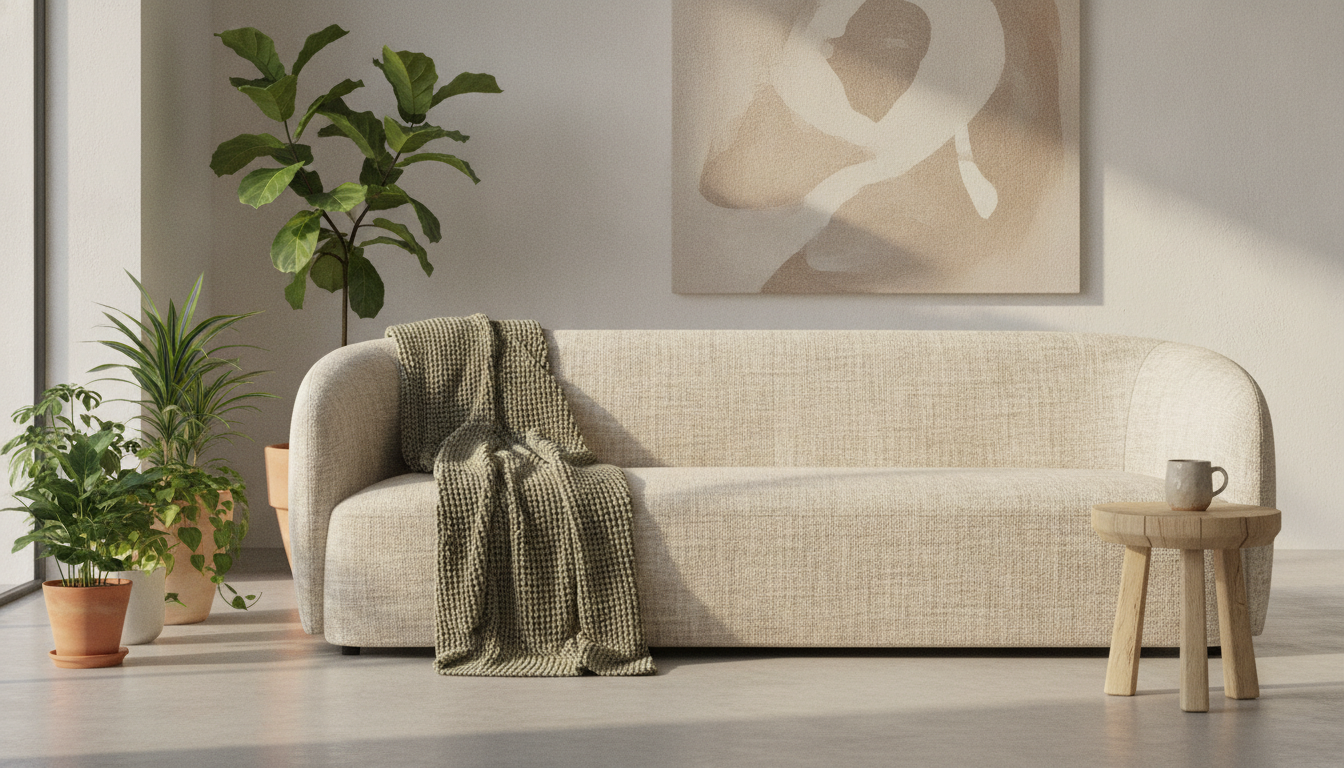
A beautifully crafted bio-textile sofa with natural textures, inviting light, and potted green plants in a sun-drenched minimalist living room.
Comparison: Top Bio-Textile Sofas to Watch in 2026
Here’s a glance at some hypothetical yet representative bio-textile sofa models that encapsulate the 2026 trend, showcasing diversity in material and design:
| Model Name | Primary Bio-Textile | Key Features | Sustainability Highlights | Estimated Price Range |
|---|---|---|---|---|
| The EcoLuxe Cloud Sofa | Organic Cotton Blend | Deep seating, modular design, removable covers, plush feel | GOTS certified fabric, FSC-certified solid wood frame, natural latex core | $$$ |
| Aura Linen Loveseat | Pure Linen | Slim profile, tailored look, natural textured finish, durable | Oeko-Tex 100 linen, low-VOC finishes, recycled steel springs | $$ |
| Hemp Haven Sectional | Hemp & Recycled PET | High durability, stain-resistant finish, robust construction, generous size | Hemp blend from regenerative farms, RPET backing, plant-based foam | $$$ |
| Veridian Vegan Sofa | Piñatex & Organic Cotton | Modern silhouette, leather-like texture, firm support, minimalist design | Piñatex upholstery, organic cotton base, recycled wood frame, no animal products | $$$$ |
Caring for Your Eco-Luxury: Maintenance Tips for Bio-Textile Sofas
To ensure your bio-textile sofas 2026 remain beautiful and extend their lifespan, proper care is essential. While natural fibers are often durable, they do require specific attention:
- Regular Vacuuming: Use a soft brush attachment to vacuum your sofa weekly to remove dust and dirt, preventing buildup that can dull the fabric and cause wear.
- Spot Cleaning: Address spills immediately. Blot, don’t rub, with a clean, damp cloth. Use a mild, pH-neutral, eco-friendly cleaner. Always test on an inconspicuous area first. Avoid harsh chemicals, as they can damage natural fibers and leave residues.
- Professional Cleaning: Depending on usage, consider professional eco-friendly upholstery cleaning every 12-18 months. Ensure the cleaner specializes in natural fibers and uses green cleaning solutions.
- Sunlight Exposure: While natural fibers age gracefully, prolonged direct sunlight can cause fading. Position your sofa away from direct, intense sun or use UV-filtering window treatments.
- Fluff and Rotate Cushions: Regularly fluff cushions to maintain their shape and rotate them (if reversible) to ensure even wear.
For spot cleaning, a good quality Eco-Friendly Fabric Cleaner can be invaluable.
The Future is Now: What to Expect from Bio-Textile Sofas in the Years to Come
The journey of bio-textile sofas is just beginning. As we move beyond 2026, expect even more innovations:
- Advanced Bio-Synthetics: Continued development of lab-grown, performance-oriented bio-materials that mimic synthetics without the environmental cost.
- Hyper-Localized Production: Shorter supply chains and local sourcing of raw materials to reduce transportation emissions and support regional economies.
- AI-Driven Design & Customization: Using AI to optimize material usage and create personalized, sustainable sofa designs.
- Increased Affordability: As production scales and technology advances, bio-textile sofas will likely become more accessible to a broader market, moving from niche luxury to mainstream choice.
The commitment to creating beautiful, comfortable, and environmentally responsible furniture is growing stronger, and bio-textile sofas 2026 are a testament to this exciting evolution.
Frequently Asked Questions About Bio-Textile Sofas
Are bio-textile sofas truly durable?
Absolutely. Many bio-textiles, such as hemp, organic cotton, and linen, are naturally strong and resilient. The durability also depends on the weave, construction quality, and the overall frame of the sofa. A well-constructed bio-textile sofa can last just as long, if not longer, than a conventional sofa, often aging beautifully with proper care.
Do bio-textile sofas cost more?
Generally, yes, bio-textile sofas can have a higher upfront cost due to the ethical sourcing of raw materials, organic farming practices, specialized manufacturing processes, and certifications. However, considering their longevity, reduced environmental impact, and potential health benefits from fewer chemicals, many consider them a worthwhile long-term investment that aligns with their values.
How do I clean a bio-textile sofa?
Cleaning depends on the specific bio-textile. Always refer to the manufacturer’s care instructions. In general, regular vacuuming with a soft brush attachment is recommended. For spills, blot immediately with a clean, dry cloth. Spot clean with a mild, pH-neutral, eco-friendly fabric cleaner, testing on an inconspicuous area first. Professional eco-friendly cleaning is advised periodically.
Are all ‘eco-friendly’ sofas truly sustainable?
The term ‘eco-friendly’ can sometimes be used broadly. True sustainability involves considering the entire lifecycle of a product: material sourcing, manufacturing processes (energy, water, chemicals), transportation, durability, and end-of-life options (recyclability, biodegradability). Look for specific certifications, transparent brand information, and reputable materials (like those discussed for bio-textile sofas) to ensure genuine sustainability claims.
Conclusion
The emergence of bio-textile sofas 2026 signals a powerful shift towards a more conscious way of living. These aren’t just pieces of furniture; they are statements of intent, reflecting a desire for beauty, comfort, and responsibility. By choosing bio-textile sofas, you’re not only investing in your home’s aesthetic and your family’s well-being but also contributing to a healthier planet, one stylish, sustainable seat at a time. Embrace the green future of luxury today!