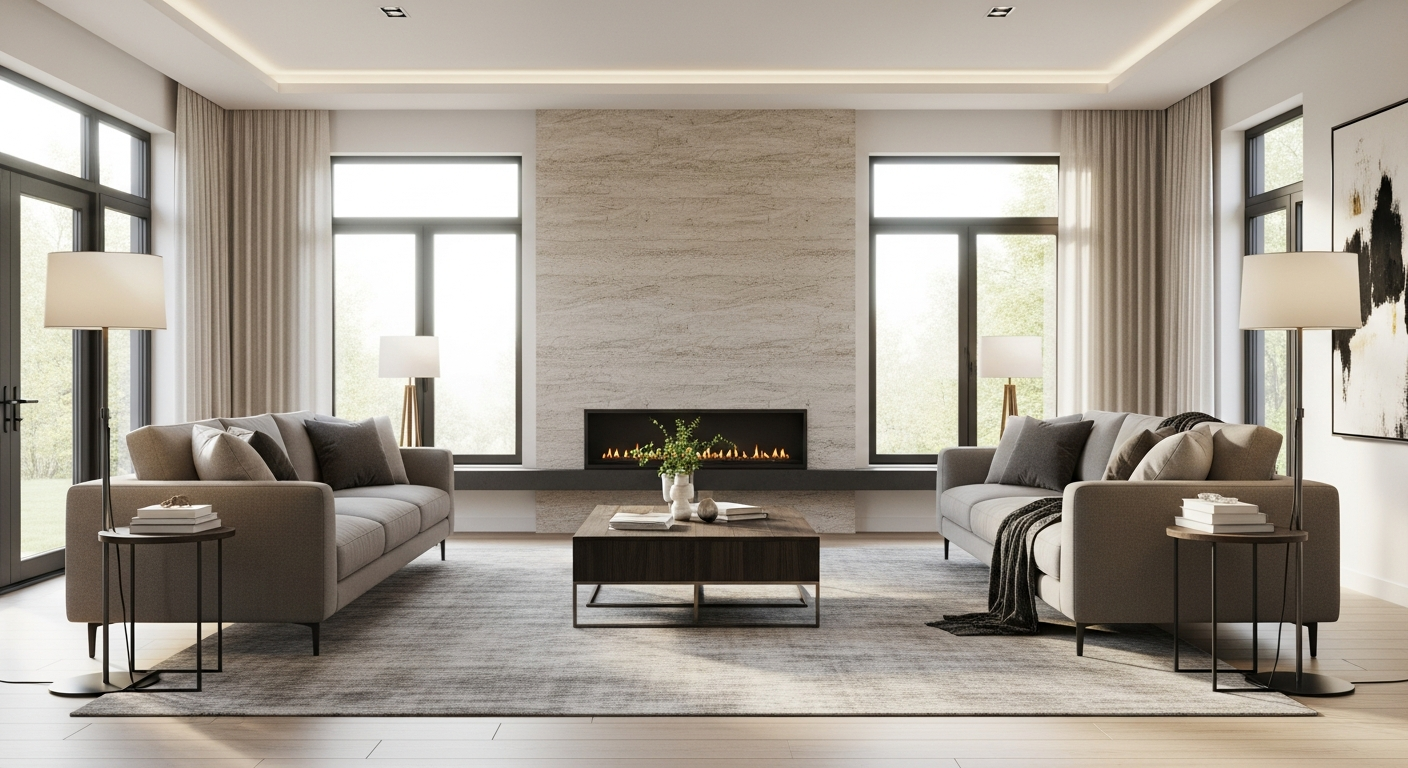
How to Arrange Two Sofas Facing Each Other for Engaging Conversation and Timeless Elegance
The living room is more than just a collection of furniture; it’s the vibrant heart of your home, a sanctuary for relaxation, a stage for entertainment, and, most crucially, a hub for genuine human connection. In an era often dominated by screens and individual pursuits, cultivating spaces that naturally foster dialogue and interaction is more important than ever. While popular choices like L-shaped sectionals or a single sofa paired with accent chairs have their merits, there’s a classic, supremely effective, and often overlooked arrangement that stands out for its unique ability to draw people together: two sofas facing each other. This isn’t merely a design choice; it’s a strategic power move, meticulously crafted to cultivate intimacy, encourage deep conversation, and infuse your space with an air of sophisticated balance.
At lesofa.club, we believe that exceptional furniture should transcend mere aesthetics. It must be profoundly functional, enhancing your lifestyle and enriching your daily experiences. A face-to-face sofa configuration achieves precisely this, creating a naturally balanced, symmetrical aesthetic that irresistibly pulls people into a dedicated conversation zone. It promotes effortless eye contact, making it easy for guests to engage in dialogue without straining or feeling excluded. Beyond its undeniable social benefits, this arrangement radiates sophistication, transforming even the most expansive rooms into intimate, defined havens of comfort and style. If your goal is to reimagine your living space as a dynamic nexus for meaningful interaction, mastering how to arrange two sofas facing each other is your ultimate secret weapon. Join us as we dive deep into the ultimate authority guide to perfecting this enduringly classic layout.
The Enduring Appeal: Why Two Sofas Facing Each Other is the Ultimate Conversation Starter
Before we embark on the practical ‘how-to,’ let’s fully appreciate the profound ‘why.’ The enduring appeal of two sofas facing each other extends far beyond superficial aesthetics. It’s about intentionally designing a space that serves a specific, cherished purpose: to foster connection, warmth, and engaging dialogue.
1. Unrivaled Conversation Promotion
This is arguably the most significant and transformative benefit. By positioning sofas opposite one another, you immediately eliminate the awkward angles, visual barriers, and distances that frequently hinder natural dialogue in other layouts. Everyone is equally engaged, visible, and comfortable, encouraging a lively, free-flowing exchange of ideas and stories. It’s the architectural equivalent of a perfectly set stage for human connection, ensuring no one feels left out of the discourse.
2. Exquisite Symmetry and Visual Balance
A symmetrical layout is inherently pleasing to the human eye, appealing to our innate desire for order and harmony. Two identical or complementary sofas facing each other introduce a powerful sense of structure, balance, and even grandeur to your living room. It’s a hallmark of classic, timeless design that never wanes in style, lending an instant air of refinement and intentionality to your space.
3. Masterful Space Definition in Open Concepts
In the popular realm of open-concept homes, defining distinct functional zones can often be a formidable challenge. Two sofas positioned face-to-face act as natural, elegant room dividers, clearly delineating the conversation area from adjacent functions such as dining, a home office, or an entryway. This is achieved without the need for cumbersome physical walls, maintaining an airy feel while providing clear spatial organization.
4. An Aura of Elegance and Refined Formality
There’s an undeniable air of sophistication and cultivated taste associated with this arrangement. It instantly evokes images of chic Parisian salons, stately English libraries, or grand reception rooms, making your living room feel more refined, upscale, and thoughtfully curated. A carefully selected velvet sofa modern or a pair of classic Chesterfields can elevate this look to truly luxurious heights, transforming your everyday living room into a sophisticated retreat.
5. Remarkable Versatility Across Room Shapes
While often associated with grander, rectangular rooms, this setup demonstrates surprising adaptability. With judicious planning and appropriate furniture choices, it can be successfully adapted for square rooms, or even some smaller, more challenging spaces, proving its flexibility as a core design principle.
Critical Pre-Planning: Essential Considerations Before You Begin Arranging
Successful furniture arrangement is less about impulsive repositioning and more about meticulous planning and thoughtful consideration. Before you even contemplate moving a single piece of furniture, take a deliberate moment to assess these crucial factors:
1. Room Size, Shape, and Architectural Features
The precise dimensions and architectural quirks of your room are paramount. A grand, expansive living room can effortlessly accommodate two generously sized sofas with ample walking space around them. Conversely, smaller or irregularly shaped rooms demand more compact sofas, or perhaps even a full-size sofa facing a complementary loveseat, to maintain visual balance and prevent the space from feeling cramped. Consider the placement of windows, doors, radiators, and any built-in features that might influence your layout.
2. Sofa Style, Scale, and Pairing
The choice of your sofas is foundational. Will you opt for identical pieces, creating a cohesive, formal, and strikingly symmetrical look? Or will you embrace a more eclectic approach with complementary styles and colors, introducing personality and captivating visual interest? Critically, ensure the scale of your chosen sofas is proportionate to the room. An oversized sofa in a diminutive room is a common and easily avoidable design misstep. Consider materials too – plush velvet for luxury, crisp linen for a relaxed feel, or durable leather for a classic, long-lasting appeal.
3. Strategic Traffic Flow and Pathways
Always, without exception, visualize the pathways through your room. You need clear, unobstructed routes to all doors, windows, and other functional areas within the room or adjacent spaces. Avoid creating bottlenecks or forcing people to awkwardly squeeze past furniture. The conversation area should feel inviting, not like an obstacle course.
4. Identifying Your Room’s Focal Point
Every truly successful room design anchors itself around a primary focal point. This could be a majestic fireplace, a large picture window boasting a breathtaking view, a striking piece of art, or a well-placed television. Your two-sofa arrangement should ideally complement, emphasize, or directly relate to this focal point. Typically, the sofas will face each other, with the focal point positioned at one end of this imaginary seating rectangle, drawing the eye and grounding the entire design.
5. Harnessing the Power of Lighting
Both natural and artificial lighting profoundly influence the mood, functionality, and perceived size of a room. Ensure your sofa arrangement doesn’t inadvertently block precious natural light sources. Beyond daylight, plan for a layered lighting scheme: ambient (general room illumination), task (for reading or hobbies), and accent (to highlight art or architectural features) lighting around your seating area. Elegant floor lamps for living room modern or sophisticated table lamps can drastically improve the ambiance and functionality of your space.
6. The Unifying Role of the Area Rug
An area rug is far more than just floor covering; it is often the anchor of a seating arrangement. It defines the conversation zone, injects warmth, and introduces vital layers of color, pattern, and texture. Its size is critically important: ideally, all front legs of both sofas (and any accompanying accent chairs) should comfortably rest on the rug. This creates a cohesive, grounded, and luxurious feel.
7. The Centrality of the Coffee Table
This central piece of furniture is not merely a surface for drinks; it is an integral element that completes the conversation zone. Its size, shape, and height should be carefully considered, ensuring it is proportionate to the space between the sofas and easily accessible from both. A well-chosen coffee table can be a functional workhorse and a significant design statement.
8. The Supporting Cast: Accent Chairs and Ottomans
Don’t overlook these essential supporting actors. Accent chairs and ottomans can be strategically used to fill in corners, provide flexible additional seating, or introduce contrasting elements of color, texture, or style to your otherwise symmetrical sofa setup. They complete the U-shape or square of a well-defined conversation area.
Step-by-Step Mastery: Bringing Your Vision to Life with Precision
With the foundational groundwork established, let’s navigate the practical, step-by-step process of transforming your vision into a beautifully arranged living room.
Step 1: Meticulous Measurement and Floor Planning
Before any furniture is moved, arm yourself with a measuring tape, graph paper (or a digital floor planner app), and a pencil. Accurately measure the length and width of your entire room. Then, measure the length, width (depth), and height of both your sofas. Sketch a basic floor plan to scale, drawing in your sofas and potential focal points. This crucial preparatory step allows you to visualize the arrangement, identify potential issues, and confirm that your chosen pieces will fit comfortably without overcrowding.
Step 2: Pinpoint Your Room’s Primary Focal Point
Re-identify or establish the natural focal point of your room. Is it a grand fireplace that demands attention? A sprawling window offering picturesque views? Or is a television the primary draw? If a TV is involved, decide on its precise placement. The two sofas will typically be arranged to face each other, with the focal point strategically positioned at one end of this seating arrangement, creating a natural and compelling point of interest for everyone seated.
Step 3: Strategic Placement of the First Sofa
Begin by carefully positioning your first sofa. If your room features a dominant long wall, it often works optimally to place one sofa parallel to it, creating an immediate sense of direction and stability. Consider its relationship to your identified focal point; it should generally face it directly or be perpendicular to it, depending on your room’s specific layout. Ensure there’s sufficient space behind it if it’s not against a wall, allowing for essential traffic flow or the placement of a functional console table.
Step 4: Introducing the Second Sofa – The Heart of the Arrangement
Now, meticulously position the second sofa directly opposite the first. This is where the true magic of the conversation arrangement begins to manifest. The distance between the front edges of the two sofas is absolutely critical for fostering comfortable and engaging conversation. Aim for a sweet spot of 5 to 8 feet (approximately 1.5 to 2.4 meters) between them. This distance allows for natural dialogue without shouting, yet provides ample space for a central coffee table and easy movement around the seating area. Too close, and the space feels uncomfortably cramped; too far, and intimacy is irrevocably lost.
Step 5: Integrating the Essential Coffee Table
With your sofas perfectly aligned, place your chosen coffee table precisely in the center of the two facing sofas. It must be easily reachable from both sofas, typically positioned around 18 inches (45 cm) from each. Visually, the coffee table should ideally be roughly two-thirds the length of one sofa to maintain a harmonious and balanced aesthetic. A multi-functional ottoman coffee table with storage can add incredible versatility, offering a soft surface for feet, extra seating, and a discreet way to keep clutter at bay.
Step 6: Grounding the Space with an Area Rug
Unroll and position your carefully selected area rug. As previously emphasized, it must be generously sized – large enough so that at least the front legs of both sofas securely rest upon it. An ideal rug size will extend beyond the outer edges of the sofas and any accompanying accent chairs, truly encompassing and defining the entire conversation area. This powerful design element grounds the arrangement, adds a layer of warmth, and introduces vital color and texture. A large geometric area rug can add a sophisticated modern touch and anchor the entire ensemble.
Step 7: Completing the Ensemble with Accent Furniture
With your primary seating and central elements in place, it’s time to thoughtfully fill in the perimeter and secondary seating. Place one or two accent chairs at either end of the sofa arrangement, perpendicular to the main sofas, effectively completing a U-shape or a soft square. This not only creates additional versatile seating but also clearly defines the elegant boundaries of your dedicated conversation zone. Complement these with side tables next to the accent chairs or at the ends of the sofas, providing convenient surfaces for drinks, books, and ambient lighting.
Step 8: Layering with Lighting, Textiles, and Personal Accessories
The final, crucial step is to infuse your space with personality and warmth through layered lighting and carefully chosen accessories. Introduce table lamps on side tables and strategically placed floor lamps in corners to create a warm, inviting, and functionally layered lighting scheme. Drape plush throw pillows and cozy blankets onto your sofas to add comfort, texture, and strategic pops of color. Finally, incorporate meaningful art, vibrant plants, and decorative objects that truly reflect your personal style and aesthetic. Remember, accessories are the “jewelry” of your room, making it feel complete, deeply personal, and truly lived-in.
Creative Variations and Advanced Design Tips for the Discerning Decorator
While the classic symmetrical setup of two identical sofas is undeniably popular and timeless, don’t shy away from creative experimentation to tailor the arrangement to your unique needs and style:
1. Sofa Facing a Loveseat: The Compact Solution
If your room is on the smaller side or you desire a slightly less formal feel, consider pairing a full-size sofa with a matching or thoughtfully complementary loveseat. This ingenious variation still achieves the highly coveted conversational effect but with a lighter, more adaptable footprint, perfect for apartment living or cozy dens.
2. Mixed Sofa Styles: An Eclectic Statement
While matching sofas exude a formal, cohesive look, introducing two different yet harmonious sofas can infuse your space with rich character and captivating visual depth. For example, a sleek, minimalist modern sofa facing a more traditional, deeply tufted one can create an intriguing eclectic yet profoundly sophisticated vibe. The key is finding common ground in color palette, leg style, or overall scale to maintain cohesion.
3. The Versatile Console Table Integration
If one of your sofas is positioned floating in the middle of the room rather than against a wall, a well-chosen console table behind it can be a truly fantastic and functional addition. It offers an invaluable surface for ambient lamps, cherished books, and decorative accents, while also acting as a subtle spatial divider, further defining your conversation zone.
4. Crafting Multiple Zones in Expansive Rooms
In very generously sized open-concept spaces or grand living rooms, you possess the luxury of creating two distinct, yet complementary, conversation areas. One could feature your elegant two-sofa arrangement, while another might incorporate a comfortable sectional or a grouping of accent chairs around a different focal point, allowing for diverse social interactions.
5. The Dynamic Flexibility of Movable Seating
Enhance the adaptability of your space by incorporating ottomans, poufs, or lightweight side chairs that can be effortlessly moved around. These versatile pieces can quickly accommodate unexpected extra guests, serve as comfortable footrests, or be repositioned to create informal additional seating as needed, offering both flexibility and a touch of relaxed comfort.
Comparison Table: Decoding Popular Living Room Arrangement Styles
To provide a clear perspective, here’s how the ‘two sofas facing each other’ arrangement thoughtfully stacks up against other prevalent living room layouts, helping you make the most informed decision for your home:
| Arrangement Type | Best For | Pros | Cons | Ideal lesofa.club Pairing |
|---|---|---|---|---|
| Two Sofas Facing Each Other | Formal & intimate conversation, symmetrical rooms, defining open spaces, creating a sophisticated ambiance. | Exceptional for direct conversation, highly elegant, visually balanced, timeless aesthetic, powerfully defines zones. | Requires substantial space, can feel more formal, less ideal for primary TV watching (unless TV is main focal point). | Pair of identical “Elegance Tufted Velvet Sofas” or complementary “Modern Classic Leather Sofas.” |
| L-Shape Sectional | Casual lounging, maximizing seating in a corner, comfortable TV watching, informal gatherings. | Extremely comfortable for stretching out, highly efficient use of corner space, excellent for casual group seating. | Can feel bulky and dominating, offers less flexibility for rearrangement, can limit direct conversation between all guests. | A luxurious “Contemporary Cloud Sectional” or a versatile “Modular Family Sectional.” |
| Sofa + Two Accent Chairs | Versatile layouts, smaller to medium rooms, creating visual interest with varied pieces, flexible seating. | Highly flexible and adaptable, allows for distinct styles and textures, good for mixed activities (reading, conversation, TV). | Chairs can sometimes feel less integrated than sofas, might be perceived as less formal for dedicated conversation zones. | A “Signature Linen Sofa” with two “Mid-Century Modern Armchairs.” |
| U-Shape (Sectional or multiple sofas) | Large family gatherings, spacious family rooms, dedicated entertainment areas, maximizing guest capacity. | Maximizes seating capacity, creates an incredibly inclusive and encompassing feel, superb for large families and parties. | Demands a very large room to avoid overcrowding, can feel overwhelming if not properly scaled, often less formal. | A grand “Luxurious Estate U-Sectional” or a combination of “Grand Traditional Sofas and Loveseats.” |
Navigating the Common Pitfalls: Mistakes to Steer Clear Of
Even with the most meticulous planning and the best intentions, certain common missteps can inadvertently undermine your efforts and detract from the overall success of your two-sofa arrangement:
1. Overcrowding the Sacred Space
The single most prevalent mistake is attempting to cram too much furniture into a finite space. Prioritize breathing room around your sofas, tables, and accent pieces. An overcrowded room feels stifling, visually chaotic, and ultimately uncomfortable. Less is often more when it comes to creating an airy and inviting atmosphere.
2. Neglecting and Blocking Crucial Traffic Flow
Always double-check your pathways. If guests (or you!) have to navigate an awkward obstacle course, squeeze past furniture, or feel restricted in their movement, your design is fundamentally flawed. Ensure clear, intuitive routes to all entry/exit points and between different functional zones.
3. Choosing Disproportionate Furniture
Scale and proportion are critical pillars of effective interior design. A minuscule coffee table dwarfed between two grand sofas looks awkward and out of place, just as an enormous rug in a compact space feels overwhelming. Every piece of furniture, from the sofas themselves to the smallest accessory, must be in harmonious proportion to both the room and the surrounding pieces.
4. Ignoring or Misplacing the Focal Point
If your beautifully arranged sofas don’t relate logically to a primary focal point, the entire room can feel aimless, unbalanced, and lacking in cohesion. The focal point provides an anchor, a visual resting place, and a natural orientation for the seating arrangement. Without it, the space can feel disjointed.
5. Underestimating the Impact of Poor Lighting
A truly exquisite furniture arrangement can fall disappointingly flat under the harsh glare of single overhead lighting or, conversely, in dim, poorly lit conditions. A well-planned, layered lighting scheme (ambient, task, and accent) is indispensable for creating a warm, inviting, and functionally adaptable atmosphere that enhances your carefully crafted sofa arrangement.
Frequently Asked Questions (FAQs) About Arranging Facing Sofas
Q1: How much space should I leave between two sofas facing each other for optimal conversation?
A: For ideal and comfortable conversation, aim for a distance of 5 to 8 feet (approximately 1.5 to 2.4 meters) between the front edges of the two sofas. This allows for natural dialogue without any need for shouting, yet also provides sufficient space for a coffee table in the center and easy movement around the seating area. For very intimate settings, you might push it slightly closer to 4-5 feet, but always ensure comfort.
Q2: Can I use two different styles of sofas facing each other, or should they always match?
A: Absolutely, you can! While identical sofas create a strikingly formal and symmetrical look, using two different but complementary styles can introduce significant character, depth, and visual interest to your living room. The key to success is ensuring they share some cohesive elements, such as a similar height, leg style, arm profile, or a harmonious color palette, to maintain an overall sense of balance and intentionality.
Q3: My living room is quite small. Can I still successfully arrange two sofas facing each other?
A: Yes, with careful planning! In a smaller room, consider opting for two smaller-scale sofas (e.g., apartment-sized sofas, settees, or loveseats) or pairing one full-size sofa with a matching or complementary loveseat. Focus on compact designs with minimal arms and lighter colors or open bases to prevent the space from feeling cramped. You might also need to slightly reduce the ideal distance between them, but always prioritize comfortable conversation.
Q4: How do I effectively incorporate a television into a living room with two facing sofas?
A: There are several elegant solutions. The most common is to make the television your primary focal point, placing it on a wall at one end of the sofa arrangement, directly facing one of the sofas (and visible to all). Alternatively, if your TV is not the main focal point (e.g., you have a stunning fireplace), you can place the TV on an adjacent wall, allowing guests to comfortably turn slightly to watch, or utilize a swivel mount for flexibility. Some designers even advocate for no TV in the primary conversation area, reserving it for other rooms to emphasize face-to-face interaction.
Q5: What is the best size and type of area rug to use with this sofa arrangement?
A: A generously sized area rug is paramount for grounding the space. It should be large enough so that at least the front legs of both sofas securely rest on it. Ideally, the rug should extend beyond the outer edges of the sofas and any accent chairs, encompassing the entire conversation zone. This creates a cohesive, defined, and luxurious feel. Choose a rug that harmonizes with your room’s overall color scheme, texture palette, and desired aesthetic, whether it’s a plush wool rug for warmth or a sleek jute rug for natural texture.
Conclusion: Cultivating Connection and Elegance with lesofa.club
Arranging two sofas facing each other is far more than a simple decorating choice; it is a profound statement about how you envision your living space functioning and the values you wish to prioritize within your home. This timeless layout instinctively prioritizes human connection, fosters rich and engaging conversation, and imbues your home with an undeniable sense of elegance, balance, and intentional design.
By thoughtfully considering your room’s unique dimensions, identifying clear focal points, and meticulously planning for seamless traffic flow, you possess the power to create a sophisticated, profoundly inviting, and deeply functional environment where cherished memories are effortlessly made, laughter echoes freely, and conversations flourish. This arrangement transforms your living room into a true sanctuary for shared experiences.
We invite you to take the plunge and reimagine your living room. The profound reward is a space that is not only visually stunning but also deeply functional, authentically serving as the beating heart of your home, a place where people genuinely connect. At lesofa.club, we are dedicated to helping you achieve this perfect harmony of style and purpose.
Ready to elevate your living room design? Explore our curated collection of exquisite sofas and discover more expert guides for design inspiration and refined furniture arrangement tips, tailored for the sophisticated homeowner.