Dopamine Decor: Adding Bold Colors Around a Neutral Couch
In the world of interior design, trends come and go, but some concepts resonate deeply, speaking to our innate desire for comfort, beauty, and joy. Enter Dopamine Decor: a design philosophy centered on creating spaces that actively boost your mood and bring a smile to your face. It’s about injecting personality, vibrancy, and a sense of playfulness into your home. And what better way to embark on this exhilarating journey than by transforming your living room, starting with the ultimate versatile foundation: a neutral couch?
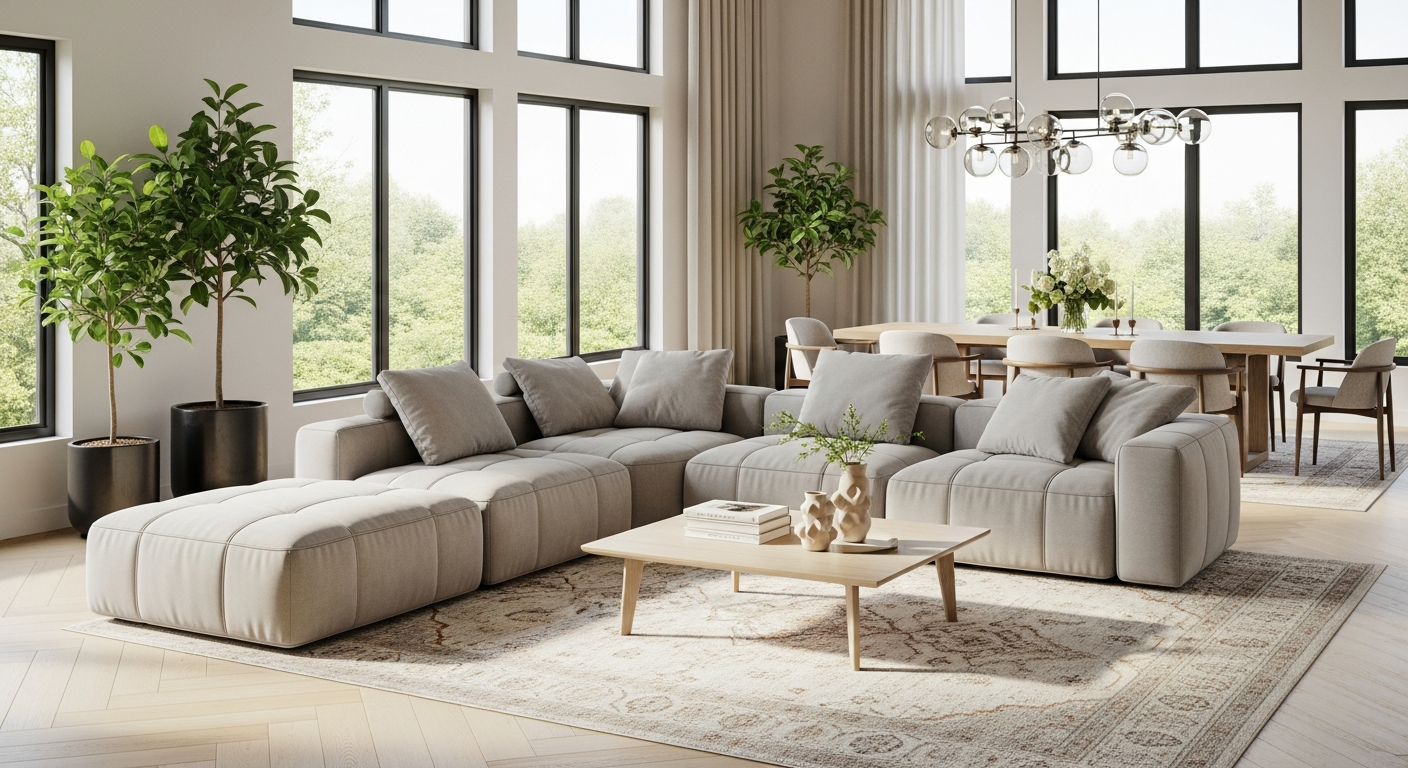
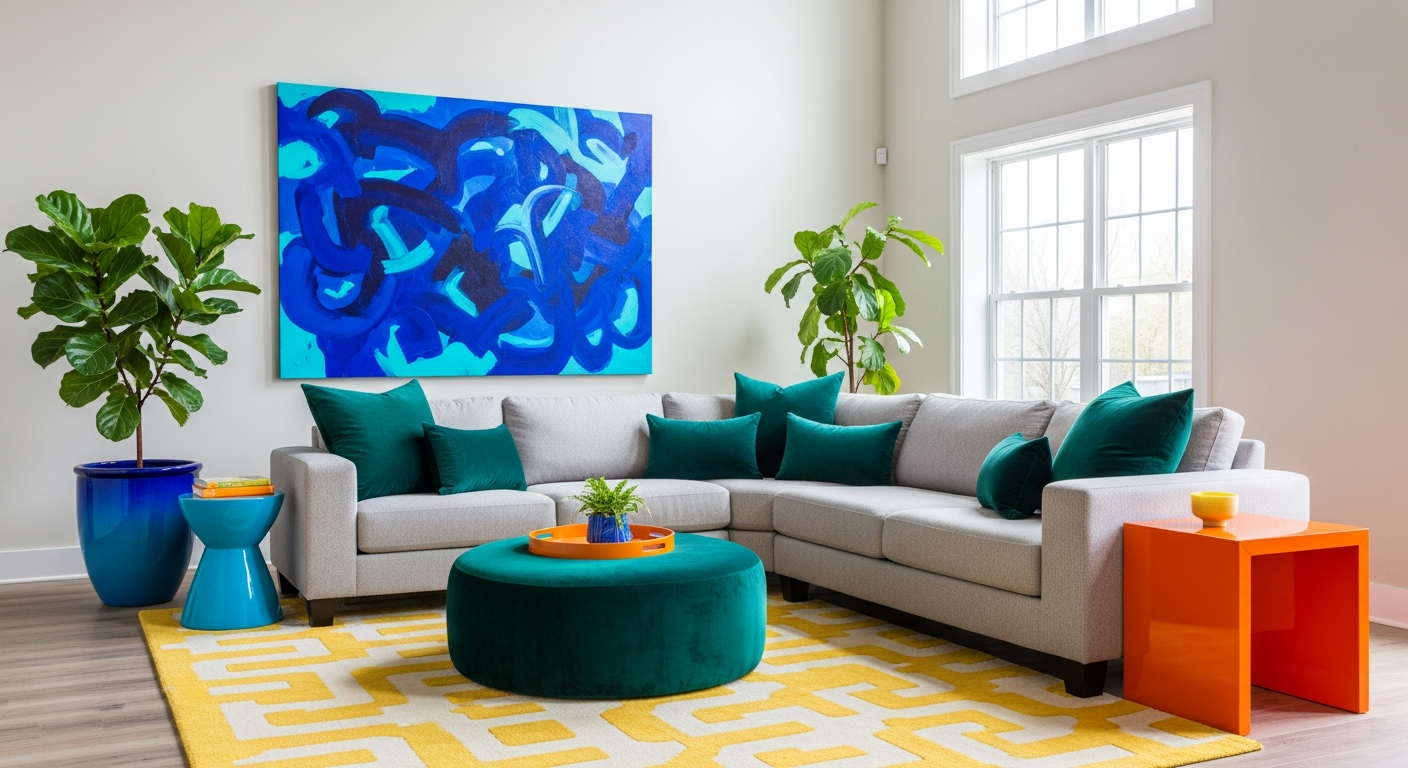
The allure of a neutral sofa – be it a light grey sofa, a classic beige, a serene off-white, or a sophisticated charcoal – lies in its inherent adaptability. It’s a blank canvas, a calming anchor that allows for endless creative expression without the commitment of a brightly colored statement piece. This article will guide you through the exciting process of surrounding your neutral couch with an explosion of bold colors, patterns, and textures, creating a living room that not only looks stunning but genuinely makes you feel good.
The Unsung Hero: Why Your Neutral Couch is Your Best Friend
Before we dive into the colorful world of accents, let’s appreciate the strategic advantage of your neutral couch. A neutral base offers several key benefits in the context of dopamine decor:
- Versatility: It allows you to experiment with various color palettes without fear of clashing. Seasonal changes, evolving tastes, or a spontaneous desire for a new look are easily accommodated.
- Timelessness: Neutral large furniture pieces tend to withstand the test of time, both in terms of style and wear, making them a wise long-term investment.
- Balance: Bold colors can sometimes be overwhelming. A neutral couch provides a necessary visual break, a moment of calm amidst the vibrancy, ensuring your space feels energetic yet harmonious.
- Focus: It lets your carefully chosen colorful accents truly shine. Instead of competing, the couch serves as a grounding element that highlights the beauty of your decor choices.
Think of your neutral couch not as boring, but as the quiet orchestrator of a lively symphony. It sets the stage for a spectacular show of color and personality.
Unleashing the Hues: Where to Add Your Bold Colors
The beauty of dopamine decor lies in its boundless possibilities. With your neutral couch as the anchor, you can strategically introduce bold colors in various elements around the room. Here’s a breakdown of the prime spots to inject vibrancy:
1. Textiles: The Easiest Splash of Color
Textiles are perhaps the most immediate and impactful way to introduce bold colors. They are relatively inexpensive, easy to swap out, and come in an incredible array of colors, patterns, and textures.
- Throw Pillows: This is your go-to for instant gratification. Mix and match patterns, solid brights, and different textures like velvet, linen, or chunky knits. Consider a set of velvet throw pillows in bright colors or some with playful geometric prints to really make your sofa pop.
- Throw Blankets: Drape a vibrant chunky knit throw blanket in a colorful hue over the armrest or back of your couch. It adds warmth, texture, and a significant block of color.
- Area Rugs: A well-chosen rug can define a space and introduce a large dose of color and pattern. A bold geometric patterned area rug or one with an abstract design can dramatically transform the living room, tying all your accent colors together. Ensure it’s large enough to comfortably accommodate your couch and other key furniture pieces.
- Curtains/Drapes: If your living room allows, consider opting for colorful curtains. They frame your windows and can introduce a significant vertical element of color, drawing the eye upwards.
2. Art & Wall Decor: Personal Expressions of Joy
Your walls are a blank canvas waiting for personal expression. Art is an incredibly powerful tool for dopamine decor, allowing you to showcase your taste and inject mood-boosting imagery and colors.
- Statement Artwork: A large, vibrant piece of abstract art or a striking photographic print can become the focal point of your living room. Look for pieces that feature a rich palette of colors that resonate with you.
- Gallery Wall: Create a dynamic gallery wall featuring a mix of colorful prints, framed photographs, and even decorative mirrors with colorful frames. This allows for a curated explosion of personality.
- Shelving Displays: Open shelving or bookshelves offer an opportunity to display colorful objects, books with vibrant spines, and small pieces of art. Arrange items by color for a sophisticated, yet playful, look.
3. Accent Furniture: Functional Pieces with Flair
Don’t underestimate the power of smaller furniture pieces to introduce color and personality.
- Accent Chairs: A single velvet accent chair in a jewel tone like emerald green, sapphire blue, or ruby red can be a stunning addition. It provides extra seating while serving as a standalone piece of art.
- Ottomans & Poufs: These versatile pieces are perfect for adding a pop of color and can serve as extra seating, footrests, or even small coffee tables. Consider a brightly upholstered round storage ottoman in a bright color or a textured pouf.
- Side Tables/Coffee Tables: While often wooden or metallic, some side tables come with colorful lacquered finishes or unique, vibrant designs. Even a simple side table can be adorned with colorful accessories.
4. Lighting: Setting the Mood with a Glow
Lighting is crucial for setting the mood, and colorful light fixtures or lampshades can contribute to your dopamine decor.
- Lampshades: Swap out a neutral lampshade for one in a bold color or a playful pattern. This small change can make a big difference.
- Statement Lamps: A uniquely designed table lamp with a colorful base or a striking floor lamp can act as both a light source and a sculptural piece of art.
5. Decorative Accessories: The Finishing Touches
The smaller details often make the biggest impact when it comes to personalizing a space.
- Vases & Bowls: Display a collection of colorful ceramic vases or glass bowls, even when empty, as decorative accents. Fill them with fresh flowers for an extra burst of natural color.
- Books: Arrange books by color on your shelves or stack them on a coffee table. The spines of books can create a beautiful rainbow effect.
- Candles & Holders: Choose candles in vibrant colors and place them in interesting, colorful holders.
- Trays: Use decorative trays in bold colors or patterns on your coffee table or ottoman to corral remotes and other small items while adding a stylish touch.
6. Plants & Greenery: Nature’s Vibrant Contribution
While often green, plants introduce a lively, organic texture and a natural pop of color that instantly boosts mood. Consider colorful planters or flowering plants like orchids or bromeliads for even more vibrancy.
Crafting Your Dopamine Decor Palette
Choosing your colors is where the real fun begins. While dopamine decor encourages boldness, a thoughtful approach ensures coherence.
- Start with What You Love: What colors make you feel happy, energized, or calm? Don’t just follow trends; pick hues that genuinely resonate with you.
- Consider Color Psychology: Red for passion and energy, yellow for joy and optimism, blue for tranquility, green for nature and balance, orange for enthusiasm.
- Harmonious Combinations:
- Complementary Colors: Colors opposite each other on the color wheel (e.g., blue and orange, yellow and purple) create high contrast and vibrancy.
- Analogous Colors: Colors next to each other on the color wheel (e.g., blues and greens) create a more serene, harmonious look, often with one dominant color and others as accents.
- Triadic Colors: Three colors evenly spaced on the color wheel (e.g., red, yellow, blue) create a bold, balanced, and vibrant scheme.
- One Dominant Accent, Two Supporting: A good rule of thumb is to pick one main bold accent color, and then two secondary accent colors that complement it. This prevents the room from feeling chaotic.
- Neutrals Beyond the Couch: Don’t forget that other neutrals like wood tones, metallics (gold, silver, brass), and even white walls can help ground your bold color choices.
Experimentation is key here. Gather swatches, create a mood board, and don’t be afraid to try different combinations. The beauty of dopamine decor is its personal nature – there’s no right or wrong, only what makes you feel good.
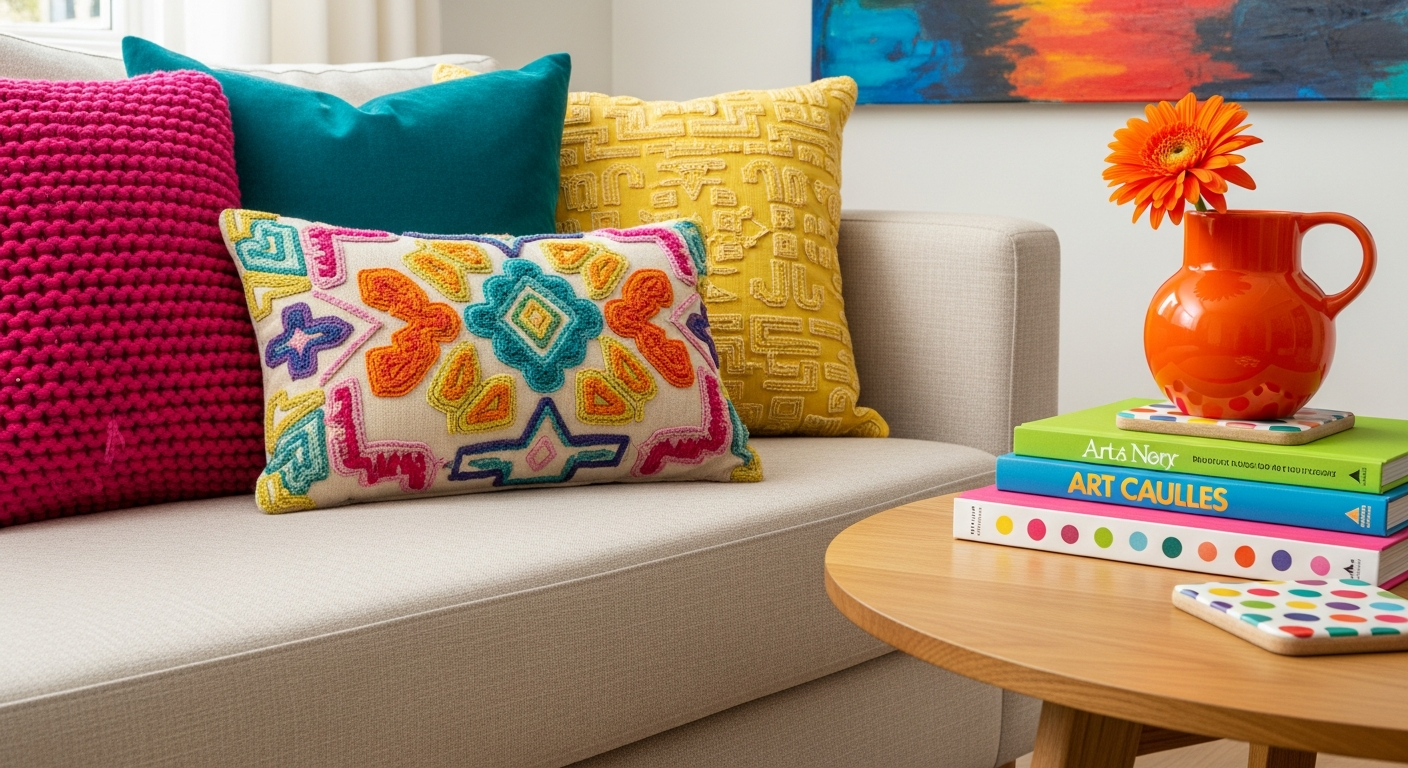
Embrace the vibrant joy of a dopamine decor living room with playful accents and bold colors.
Balancing Boldness with Serenity
While the goal is to add bold colors, the trick is to do so thoughtfully, ensuring your living room feels invigorating rather than overwhelming. The neutral couch acts as your primary balancing agent, but here are other strategies:
- Strategic Placement: Distribute your bold accents throughout the room rather than concentrating them all in one spot. This creates visual interest that moves the eye around the space.
- Vary Intensity: Not every accent needs to be a super-saturated, pure color. Mix in some softer, muted versions of your bold colors, or incorporate patterns that include both bold and neutral tones.
- Texture Play: Use texture to add depth and interest without adding more color. A brightly colored item with an interesting texture (like a ribbed vase or a boucle pillow) adds another layer of sensory pleasure.
- Negative Space: Allow for plenty of white space or neutral areas on walls and between furniture pieces. This gives the eye a place to rest and prevents the room from feeling too busy.
Dopamine Decor Living Room: Making It Your Own
The essence of dopamine decor is personal expression. It’s about surrounding yourself with items that spark joy, evoke happy memories, or simply make you smile. Don’t be afraid to break traditional design rules if it means creating a space that truly reflects who you are.
- Incorporate Personal Treasures: Display souvenirs from travels, cherished family photos, or quirky collectibles that hold special meaning.
- DIY Projects: Consider painting an old piece of furniture a vibrant color, or creating your own abstract artwork. The process of creation can be just as mood-boosting as the result.
- Scent and Sound: Don’t forget the other senses! Introduce mood-boosting scents with essential oil diffusers or scented candles, and curate playlists that bring you joy. A calming lavender or an energizing citrus scent can significantly enhance your space. For easy integration, consider an aromatherapy diffuser with colorful lights.
Comparison Table: Bold Accent Types & Their Impact
| Accent Type | How it Adds Bold Color | Impact & Versatility | Ease of Change |
|---|---|---|---|
| Throw Pillows | Small, concentrated bursts of color and pattern. Can be mixed and matched. | High impact for their size; excellent for testing color combinations. | Very High (easy to swap covers or entire pillows) |
| Area Rugs | Large surface area for color and pattern; defines the space. | Grounds the room; can tie diverse colors together. Major visual anchor. | Medium (requires moving furniture, larger investment) |
| Accent Chairs | Significant block of color and shape; sculptural element. | Creates a secondary focal point; adds depth and comfort. | Low (higher investment, less frequent change) |
| Artwork | Visual narrative and focal point through color and imagery. | Highly personal; sets the mood and theme for the room. | Medium (can be swapped, but requires re-hanging) |
| Decorative Accessories | Small pops of color, texture, and personality on surfaces. | Adds layers of interest and personality; easy to arrange and rearrange. | Very High (inexpensive, easy to move/replace) |
Maintenance & Longevity of Your Dopamine Decor
While dopamine decor is about joy, practicality can’t be ignored. Keeping your colorful accents looking fresh is part of maintaining that good mood. Regular dusting and vacuuming of textiles will keep colors vibrant. For spills on fabrics, having a reliable upholstery spot cleaner on hand can be a lifesaver. For more delicate pieces like artwork, gentle cleaning with a microfiber cloth is usually sufficient.
Remember that while trends may shift, the core idea of dopamine decor – creating a space that makes you feel happy – is timeless. You can always refresh your accessories, swap out a rug, or introduce a new color palette as your preferences evolve, all while keeping your foundational neutral couch.
Frequently Asked Questions About Dopamine Decor
Q1: Can dopamine decor work in small living rooms?
Absolutely! In small spaces, dopamine decor can be even more impactful. Focus on a few key bold accents like throw pillows, a vibrant piece of art, or a colorful area rug. Avoid clutter and ensure your bold choices are intentional to prevent the space from feeling overwhelmed.
Q2: How do I choose a color palette that won’t quickly go out of style?
Instead of chasing fleeting trends, choose colors that genuinely make you happy and are reflective of your personality. While specific ‘on-trend’ shades may change, classic color combinations and colors found in nature tend to have more longevity. Remember, with a neutral couch, you can easily update your accent colors without a major overhaul.
Q3: What if I’m afraid of using too much color?
Start small! Begin with one or two colorful throw pillows or a single vibrant vase. Live with it for a while and see how it feels. Gradually add more elements as you gain confidence. You can also opt for patterns that include a mix of bold and neutral colors to ease into the trend.
Q4: How do I ensure my bold colors don’t clash with each other?
A good starting point is to use a color wheel to understand complementary, analogous, and triadic color schemes. You can also pick one dominant accent color and then choose two secondary colors that either complement it or are analogous to each other. Varying the intensity and saturation of your chosen colors can also prevent clashing.
Q5: Is dopamine decor only for modern or eclectic styles?
Not at all! While often associated with modern or eclectic aesthetics, dopamine decor can be adapted to many styles. A traditional living room could incorporate rich jewel-toned velvets and antique gilded frames with colorful art. A minimalist space could feature a single, striking primary-colored accent. The key is to infuse personality and joy through color and meaningful objects, regardless of the underlying style.
Ready to Infuse Joy?
Your neutral couch is more than just a piece of furniture; it’s the anchor for a living room that expresses joy, personality, and comfort. By thoughtfully introducing bold colors through textiles, art, accent furniture, and decorative accessories, you can transform your space into a vibrant haven that truly elevates your mood. Embrace the spirit of dopamine decor and create a living room that not only looks good but makes you feel good every single day.
Start experimenting with colors and textures today, and watch your living room come alive! Your happy home awaits.