Why Armless and Modular Sofas Are Dominating Open Plan Homes: The Ultimate Guide
The modern home has undergone a remarkable transformation, shifting dramatically from traditional, compartmentalized layouts to expansive, fluid open-plan spaces. This architectural evolution is more than just a passing trend; it reflects a fundamental change in how we live, interact, and perceive our domestic environments. Open-plan living champions connection, maximizes natural light, and cultivates an overwhelming sense of spaciousness, even in smaller footprints. However, this liberation from walls presents a unique, yet exciting, challenge for interior design, particularly when it comes to selecting the perfect furniture.
Traditional sofas, with their often bulky, fixed armrests and unyielding structures, frequently disrupt the seamless visual flow and limit the inherent versatility that open spaces promise. They can act as visual roadblocks, absorbing precious floor space and hindering the fluid movement essential to an open concept. This is where the armless modular sofa enters the stage – not merely adapting to open-plan living, but actively defining its essence. At lesofa.club, we’ve witnessed firsthand how these innovative seating solutions have become the cornerstone of contemporary interior design, offering an unparalleled trifecta of flexibility, aesthetic appeal, and functional brilliance for the discerning modern homeowner.
The Enduring Appeal of Open-Plan Living: A Modern Design Imperative
Open-plan living is far more than an architectural fad; it’s a deliberate lifestyle choice that redefines the heart of the home. By seamlessly integrating living, dining, and kitchen areas into a single, cohesive zone, homeowners unlock a multitude of benefits that cater to contemporary needs:
- Enhanced Natural Light: Without interior walls obstructing the flow, natural light penetrates deeper into the home, creating a brighter, more invigorating, and mood-boosting atmosphere. This reduces the reliance on artificial lighting and connects residents more closely with the rhythms of the day.
- Perceived Spaciousness: Even in homes with modest square footage, the absence of visual barriers makes rooms feel significantly larger and more expansive. This psychological benefit contributes to a feeling of openness and tranquility.
- Fostered Connection and Interaction: Open layouts naturally encourage communication and interaction among family members. Whether someone is cooking, another is doing homework, and a third is relaxing, all can remain connected, turning everyday activities into shared experiences.
- Unparalleled Entertaining Flexibility: Hosts can engage effortlessly with guests while preparing meals, breaking down the traditional segregation of tasks and socializing. This fluidity allows for dynamic gatherings, from intimate dinners to larger parties, where everyone feels part of the action.
- Versatility in Layout: The absence of fixed walls means the space can be reconfigured more easily to suit evolving needs, whether it’s setting up a temporary workspace, a children’s play area, or an expanded dining zone.
This fluid, dynamic environment demands furniture that can not only keep pace with its ever-changing nature but also actively enhance it. The furniture chosen for an open-plan space must contribute to the flow, define zones without creating barriers, and adapt to myriad functions and social scenarios.
Why Traditional Sofas Struggle in Open-Plan Environments
While traditional sofas are undeniably comfortable and hold a timeless appeal, their inherent design often makes them a poor fit for the modern open-plan home. Their limitations become glaringly apparent when placed in a space designed for fluidity and connection:
- Visual Obstruction: Fixed armrests, often bulky and rigid, break up sightlines and create visual blockages. In an open space where an uninterrupted view is prized, these traditional elements can feel like unwelcome barriers, making the room seem smaller and less cohesive.
- Space Inefficiency: The prominent armrests of conventional sofas consume valuable floor space that could otherwise be used for seating or movement. This leads to a less efficient use of the overall footprint, a critical drawback in homes where every square foot counts.
- Static and Inflexible: A traditional, monolithic sofa is a fixed entity. Reconfiguration is typically out of the question, leaving homeowners stuck with a static layout that might not adapt to evolving needs, impromptu social gatherings, or simply a desire for a fresh look. This lack of adaptability contradicts the very essence of open-plan living.
- Difficulty in Defining Zones: In a sprawling open room, a single, large traditional sofa can feel isolated and fail to effectively define distinct functional zones. It might sit squarely in the middle without offering cues for separation, leading to an undefined and somewhat chaotic feel.
- Overwhelming Bulk: The sheer size and bulk of many traditional sofas can overwhelm an open space, making it feel crowded and heavy rather than light, airy, and expansive. This counteracts the psychological benefits of an open layout.
For modern dwellers who prioritize versatility, sophisticated aesthetics, and optimal space utilization, a different approach to seating is not just preferable, but crucial.
Enter the Armless Modular Sofa: A Paradigm Shift for Modern Living
The armless modular sofa emerges as the quintessential solution for open-plan homes, perfectly embodying and amplifying the principles of flexibility, space efficiency, and cutting-edge design. It represents a conceptual leap, breaking free from the rigid constraints of conventional furniture to offer a dynamic and infinitely adaptable approach to seating.
Unparalleled Flexibility and Customization
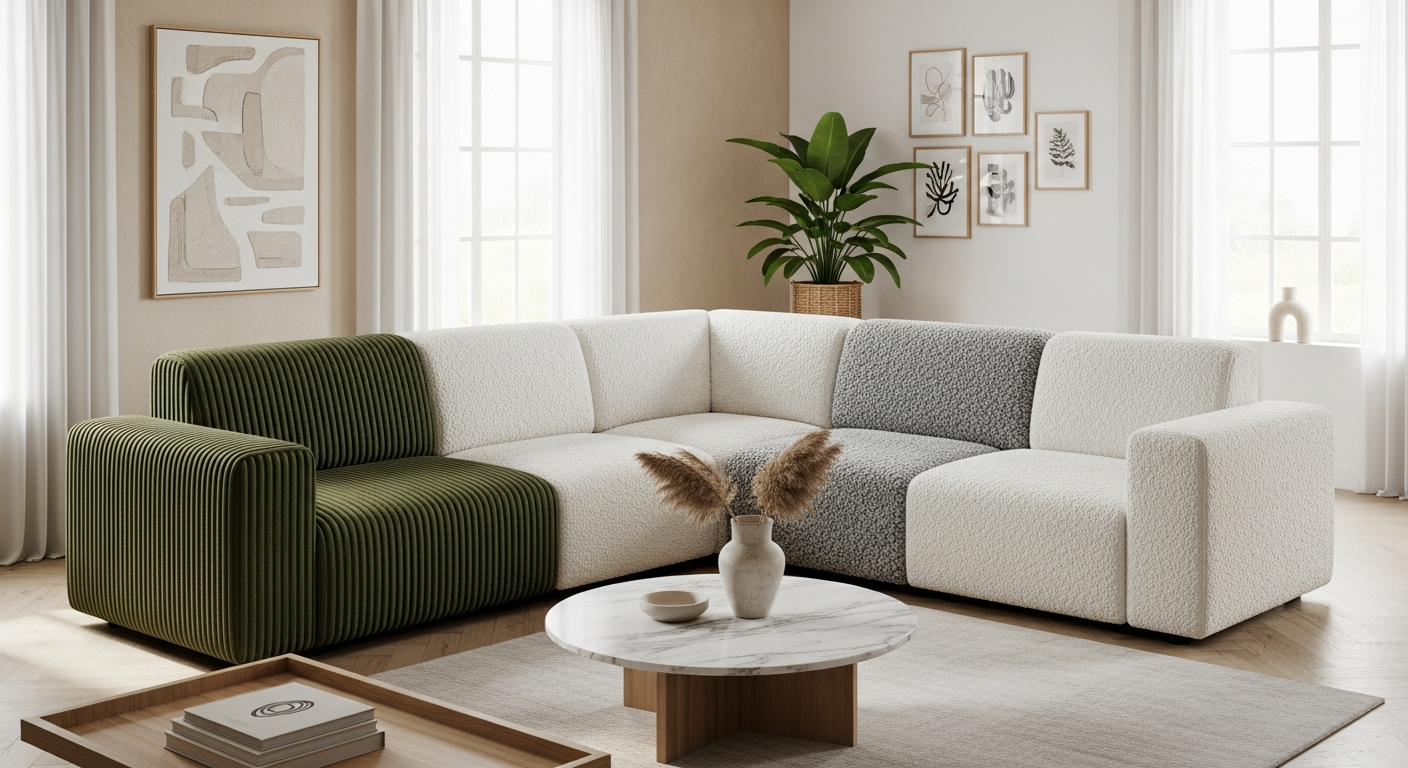
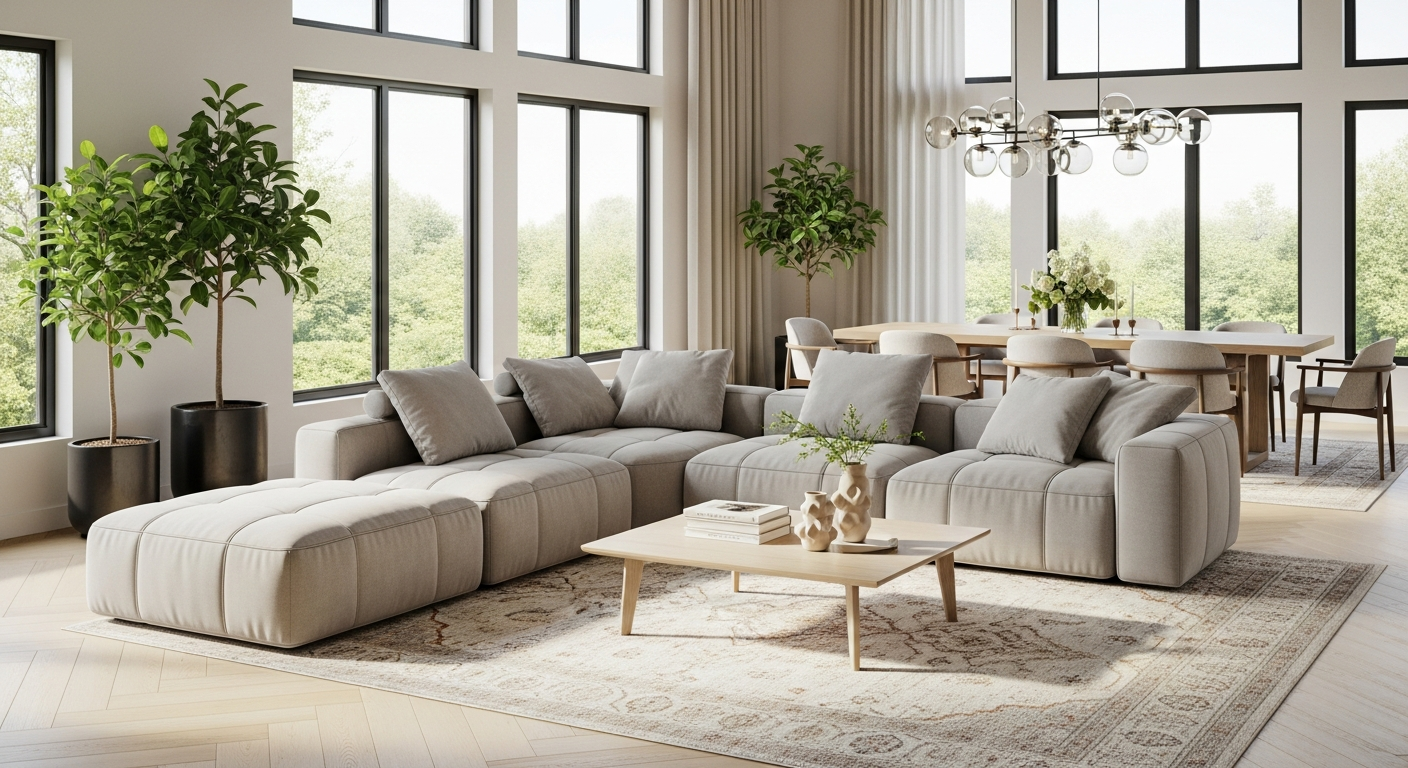
At the very core of the modular sofa’s profound appeal is its extraordinary flexibility. Composed of individual, independent units—such as corner pieces, armless chairs, and ottomans—these sofas can be arranged and rearranged in literally countless configurations. Imagine the ease of transforming a sprawling U-shape, perfect for a cozy family movie night, into two distinct L-shapes for a lively dinner party, or even scattering individual pieces to create intimate conversational nooks around the room. This innate adaptability means your living space can effortlessly evolve with your lifestyle, accommodating everything from a quiet evening with a book to a bustling gathering of friends and family. A versatile configurable sectional sofa offers an almost endless palette of possibilities, ensuring your furniture always serves your current needs.
Maximizing Space and Enhancing Visual Flow
The absence of armrests is not merely an aesthetic choice; it’s a brilliant stroke of genius in terms of both functionality and spatial perception. Armless units instantly present a lighter, more streamlined profile, allowing your eye to sweep uninterrupted across the entire room. This visual continuity is paramount in open-plan spaces, fostering an invaluable sense of expansive flow and preventing the feeling of segmentation. Without bulky arms, you gain precious inches of actual seating area, making the sofa feel more spacious and inviting, a significant advantage in homes where every square foot is a premium. Furthermore, armless designs facilitate seamless integration with other furniture pieces and architectural elements, as there are no hard boundaries to contend with. This design philosophy maximizes both perceived and actual space, a critical advantage in the intelligent planning of modern interiors.
Effortless Adaptability to Evolving Needs and Life Stages
Life is inherently dynamic, and your home should mirror this fluidity. A key, often overlooked, advantage of the armless modular sofa is its profound ability to adapt over time. You might begin with a smaller, more intimate configuration as a young couple. As your family grows or your entertaining needs expand, you can easily add more modules, seamlessly integrating them to create a larger, more inclusive seating arrangement. Conversely, if you downsize, relocate, or simply wish to open up space for a new pursuit, modules can be effortlessly removed, repurposed, or even sold individually. This inherent longevity and adaptability make it a profoundly wise, long-term investment, ensuring your sofa remains relevant, functional, and aesthetically pleasing for decades to come. It’s furniture that truly grows with you, reflecting the narrative of your life rather than remaining a static fixture.
Aesthetic Versatility and Enduring Modern Appeal
The clean lines, understated elegance, and customizable nature of armless modular sofas perfectly complement a vast array of contemporary aesthetics. Whether your personal style leans towards minimalist chic, rugged industrial, calming Scandinavian, vibrant eclectic, or a sophisticated blend of influences, these sofas provide a sleek, uncluttered foundation that enhances rather than dominates your decor. They often serve as a versatile canvas, allowing you to inject personality and warmth through carefully selected cushions, luxurious throws, and complementary accent pieces. Their inherent modernity ensures they never look out of place in a cutting-edge open-plan design, maintaining a fresh and relevant appearance as trends shift. A sleek mid-century modern armless sofa, for instance, can anchor an entire living area with an air of timeless, understated elegance and sophistication.
Key Features to Look for in an Armless Modular Sofa: An Expert Checklist
Investing in an armless modular sofa is a significant decision for your open-plan home. To ensure you select a piece that not only meets your aesthetic desires but also provides lasting comfort and durability, thoughtful consideration of several key features is paramount:
- Robust Frame Material: The foundation of any quality sofa is its frame. Prioritize sturdy construction. Kiln-dried hardwood frames (such as oak, birch, or maple) are highly preferred for their exceptional durability, resistance to warping, and ability to withstand daily use without creaking. Look for frames that are corner-blocked, doweled, or glued and screwed, indicating superior craftsmanship. Metal frames (like steel or aluminum) also offer excellent longevity and can contribute to a more contemporary, industrial aesthetic. Always inquire about the frame’s warranty.
- High-Performance Upholstery: The fabric choice impacts both the sofa’s aesthetics and its practicality in an active home. For high-traffic areas, homes with children, or pets, performance fabrics (e.g., solution-dyed acrylics, Crypton, Sunbrella, certain polyesters) are an excellent choice, offering superior stain, fade, and abrasion resistance. Natural fibers like linen or cotton provide breathability, a softer hand, and a more organic feel but may require more delicate care. Velvet, chenille, or boucle can add a luxurious texture. Consider the fabric’s rub count (Martindale or Wyzenbeek) for durability, especially for commercial-grade resilience.
- Premium Cushioning and Support: Comfort is king. The ideal cushioning often involves a combination of high-density foam for robust support and structure, layered with a down, feather, or synthetic fiber blend for softness, luxurious sink-in feel, and shape retention. Ensure the foam core has a high-resilience (HR) rating for long-term bounce-back. Cushions should be designed to be reversible for even wear, preventing premature sagging and extending their lifespan. Inquire about spring systems (sinuous, eight-way hand-tied) for optimal support.
- Secure and User-Friendly Connectors: For modular pieces, reliable and easy-to-use connectors are absolutely crucial. Look for robust interlocking mechanisms, such as alligator clips, metal brackets, or robust pins that securely hold the modules firmly in place during use, preventing any unwanted shifting or separation. Crucially, these connectors should also allow for effortless engagement and disengagement when you wish to reconfigure your layout.
- Ease of Cleaning and Maintenance: Life happens, and spills are inevitable. Removable, machine-washable covers are a tremendous convenience and a significant plus for busy households. If machine washing isn’t an option, ensure the fabric is easily spot-cleaned with mild solutions or can withstand professional cleaning methods. Always check manufacturer cleaning codes (W for water-based, S for solvent-based, WS for both, X for vacuum only). To keep your upholstery pristine and extend its life, investing in a reliable upholstery cleaner appropriate for your fabric type is an essential tool.
Armless vs. Modular: Understanding the Synergistic Nuances
While often discussed in the same breath, it’s critical to understand that ‘armless’ and ‘modular’ are distinct design characteristics that, when thoughtfully combined, create the ultimate seating solution for open-plan living. Understanding each element clarifies their combined power:
- Armless Sofas: These are simply sofas designed without traditional armrests. They can be fixed-length sofas, sectionals, or individual chairs that are not necessarily modular in nature. Their primary benefits are a streamlined visual aesthetic, a lighter footprint, and maximized seating space relative to their overall dimensions. They promote an open feel but lack the reconfigurability of modular units.
- Modular Sofas: These are sofas constructed from individual, separable units that can be arranged and rearranged in countless ways. A modular sofa *can* have arms on some of its units (for example, an end piece might have one arm) or be entirely armless. Their primary benefit is unparalleled flexibility and customization, allowing for dynamic changes to the layout.
The true magic, however, unfolds when these two powerful concepts converge. An armless modular sofa delivers the unhindered visual flow, the maximum seating area, and the streamlined profile characteristic of an armless design. This is then synergistically combined with the unparalleled reconfigurability, adaptability, and long-term versatility inherent in modular units. This potent combination is precisely what makes them the undisputed champions for the fluid, dynamic, and ever-evolving demands of modern open-plan homes, creating zones without barriers and adapting to every occasion.
Comparison Table: Sofa Types in Open Plan Homes
| Feature | Traditional Fixed Sofa | Armless Fixed Sofa | Armless Modular Sofa |
|---|---|---|---|
| Flexibility/Reconfigurability | Very Low (fixed structure) | Low (fixed, but easier to move) | Very High (endless arrangements, grows with needs) |
| Space Efficiency | Low (arms consume considerable space) | Medium-High (no arms, maximises seating width) | Very High (no arms, adaptable footprint, multi-functional) |
| Visual Flow in Open Plan | Can be highly obstructive, breaks sightlines | Good, streamlined, maintains flow | Excellent, seamless, enhances spaciousness |
| Aesthetic Adaptability | Classic, often less versatile with modern decor | Modern, minimalist, but static | Highly versatile, modern, adaptable to many styles |
| Ability to Zone Spaces | Limited (can act as a static barrier) | Limited (can define a static area) | Excellent (create distinct, fluid areas without walls) |
| Investment (typically) | Medium to High | Medium to High | High (due to design, engineering, and long-term value) |
| Future-Proofing | Low (becomes obsolete as needs change) | Medium (style endures, but not adaptable) | Very High (grows, shrinks, and adapts with life’s changes) |
| Comfort Experience | Can be very comfortable, but confined | Comfortable, more freedom of movement | Highly comfortable, offers diverse lounging options |
Design Tips for Integrating Armless Modular Sofas in Open Plan Homes: Master Your Space
To truly harness the transformative power of your armless modular sofa in an open-plan environment, strategic design is key. These expert tips will help you create a harmonious, functional, and aesthetically pleasing space:
- Define Zones with Purposeful Anchors: Beyond just a rug, think about how elements work together. Use a stylish large area rug to physically and visually anchor your sofa configuration, clearly delineating the living area from the dining or kitchen space. Complement this with a low-profile console table behind a floating sofa, or a strategically placed bookshelf that offers subtle separation without building a wall.
- Complementary Furniture for Flow: Pair your sofa with low-profile coffee tables and lightweight side tables that maintain open sightlines and don’t visually compete with the sofa. Nesting tables are an excellent choice for versatility, offering expandable surfaces when needed and compact storage when not. Consider translucent or reflective materials like glass, acrylic, or polished metal to further enhance the open feel.
- Strategic Placement as a Room Divider: While modular sofas can be placed against a wall, their true power in open plans shines when they are floated in the middle of the room. This allows the sofa to act as a natural, soft room divider, defining pathways and creating distinct ‘rooms’ within the larger layout without the need for walls. Consider placing a console table behind it for added functionality and visual interest.
- Pops of Color, Texture, and Personality: Since armless modular sofas often feature clean, neutral lines, they provide the perfect canvas for expressing your personal style. Use accent pillows, luxurious throws, vibrant artwork, and lush indoor plants to introduce color, pattern, and texture. This adds warmth, depth, and personality without interrupting the seamless visual flow created by the sofa itself.
- Layered Lighting for Ambiance and Function: Incorporate various lighting sources to enhance the mood and function of different areas around your sofa. Ambient overhead lighting provides general illumination, task lighting (like a floor lamp over a reading nook) serves specific purposes, and accent lighting (like table lamps or picture lights) highlights features and adds warmth. Dimmers are crucial for creating varied atmospheres throughout the day and evening.
- Consider Acoustics: Open plans can sometimes echo. Your armless modular sofa, along with rugs, curtains, and other soft furnishings, plays a vital role in absorbing sound and improving the acoustics of the space. Consider acoustic panels or strategically placed soft elements if echoes are a concern.
Maintenance and Care for Your Modern Sofa: Ensuring Longevity
To ensure your armless modular sofa remains a stunning centerpiece and comfortable haven for many years to come, proper care and maintenance are essential. Tailoring your approach to the specific upholstery fabric is key:
- Regular Vacuuming: Utilize your vacuum cleaner’s upholstery attachment to regularly remove dust, crumbs, pet hair, and airborne particles. This prevents dirt from embedding deep into the fabric fibers, which can cause premature wear and dullness.
- Immediate Spot Cleaning: Address spills and stains immediately! Blot, do not rub, with a clean, white, absorbent cloth to prevent the spill from spreading or setting. Always test any cleaning solution on an inconspicuous area first (e.g., the underside of a cushion) to ensure it doesn’t cause discoloration or damage. Follow the manufacturer’s specific cleaning instructions for your fabric type (W, S, WS, X codes).
- Cushion Rotation and Fluffing: Frequently rotate and fluff all seat and back cushions. This helps to maintain their shape, prevents premature sagging, ensures even wear across all surfaces, and keeps the sofa looking fresh and inviting.
- Protect from Direct Sunlight: Prolonged exposure to direct sunlight can cause fabrics to fade and weaken over time. Position your sofa away from direct sun, or use curtains, blinds, or UV-protective window films to shield it during peak sunlight hours.
- Professional Cleaning: Depending on the fabric type, your lifestyle, and the amount of use, consider professional deep cleaning every 12-18 months. Professionals have specialized equipment and knowledge to safely and effectively refresh upholstery, extending its life and maintaining its appearance.
FAQs About Armless Modular Sofas: Your Questions Answered
Q1: Are armless modular sofas comfortable without traditional armrests?
A1: Absolutely! Modern armless modular sofas are meticulously designed with comfort as a top priority. Many feature plush, ergonomically shaped backrests and deep, supportive seats engineered for maximum relaxation. The absence of fixed arms often allows for greater freedom of movement and more flexible seating positions, letting you stretch out more freely or curl up in any direction. You can also strategically place decorative pillows for additional lumbar or side support, or configure an ottoman or another armless unit next to a seat to create an expansive chaise-like lounging experience.
Q2: How do armless modular sofa units stay connected and prevent shifting?
A2: Most high-quality modular sofa units come equipped with cleverly integrated connectors, typically located underneath or on the sides of the individual frames. These can range from robust alligator clips, sturdy metal brackets, simple interlocking mechanisms, or secure pin-and-slot systems. These connectors are designed to securely hold the pieces firmly together, preventing any unwanted shifting or separation during use. They are usually engineered for ease of use, allowing for effortless engagement and disengagement when you wish to reconfigure your layout.
Q3: Can I add or remove modules from my armless modular sofa later if my needs change?
A3: Yes, this is one of the foundational and most celebrated benefits of investing in a modular system! As long as the manufacturer continues to offer individual modules for sale, you can typically expand, reduce, or completely reconfigure your sofa arrangement over time. This makes it an incredibly future-proof investment. It’s always a prudent idea to check with the retailer or manufacturer about long-term module availability and compatibility before your initial purchase, especially regarding potential fabric dye lot variations if you plan to expand significantly later.
Q4: Are armless modular sofas more expensive than traditional fixed sofas?
A4: The price of an armless modular sofa can vary quite widely depending on the brand’s prestige, the quality of materials used (frame, upholstery, cushioning), and the total number of modules you choose. While a single armless module might be comparable in price to a piece of a traditional sofa, building a large, complex, and highly customizable modular configuration can indeed represent a significant upfront investment. However, when considering their unparalleled longevity, adaptability, versatility, and the immense value they add to an open-plan space, many homeowners find them to be a profoundly cost-effective and smart choice in the long run.
Q5: How do I choose the right size and configuration for my specific open-plan home?
A5: Start by meticulously measuring your available space. Then, use painter’s tape directly on the floor to visualize different configurations and footprints. This tactile approach helps you understand how various layouts will interact with your existing architecture, furniture, and, critically, your home’s traffic flow. Consider how the sofa will delineate zones and ensure there’s ample room for comfortable movement around it. Remember the inherent flexibility – you can always begin with a smaller, core configuration and add modules as your understanding of the space or your needs evolve.
Q6: What design styles best complement an armless modular sofa?
A6: Armless modular sofas are incredibly versatile and can seamlessly integrate into a wide range of design styles. Their clean lines and understated profiles make them perfect for modern, minimalist, Scandinavian, contemporary, and industrial aesthetics. They also work beautifully in transitional spaces, providing a sleek anchor that can be dressed up or down with various accent pieces, textures, and colors to match more eclectic or even subtly bohemian styles. Their adaptability means they can be a foundational piece regardless of your overarching design theme.
Conclusion: Embrace the Future of Flexible Living with lesofa.club
The ascendancy of the armless modular sofa in open-plan homes is far from a mere coincidence. It is a thoughtful, intelligent, and necessary response to the evolving needs and dynamic demands of modern living. This innovative seating solution offers an unparalleled blend of aesthetic elegance, supreme flexibility, and clever space utilization that traditional fixed furniture simply cannot match. For homeowners aspiring to create dynamic, adaptable, and visually harmonious environments that truly reflect their lifestyle, the armless modular sofa provides the ultimate foundation upon which to build. At lesofa.club, we wholeheartedly believe that an armless modular sofa isn’t merely a piece of furniture; it’s a strategic investment in a more fluid, functional, and profoundly aesthetically pleasing lifestyle. It’s an embrace of flexibility, a commitment to modern design, and a testament to intelligent living. Explore the boundless possibilities with us and redefine your living space today!
Ready to transform your open-plan home into a masterpiece of modern living and flexible design? Browse lesofa.club’s curated selection of premium armless modular sofas and discover the perfect configuration to elevate your space, reflecting your unique style and dynamic life!