The Best Murphy Beds and Sofa Beds for Studio Apartments

Living in a studio apartment offers a unique blend of urban convenience and cozy intimacy. However, it also presents the ultimate challenge in space management. Every square foot counts, and the furniture you choose needs to work overtime. The key to unlocking the full potential of a small living area lies in multi-functional pieces, with sofa beds for studio apartments and Murphy beds leading the charge. These innovative solutions transform your space from a daytime living area into a nighttime sleeping sanctuary, ensuring comfort without compromise.

The Best Murphy Beds and Sofa Beds for Studio Apartments

At lesofa.club, we understand the art of small space living. We’ve delved deep into the world of convertible furniture to bring you a comprehensive guide to selecting the perfect Murphy bed or sofa bed for your studio. From maximizing square footage to enhancing your aesthetic, we’ve got you covered.

Why Small Spaces Demand Smart Solutions

A studio apartment, by definition, combines your living room, bedroom, and often your dining area into one cohesive space. This open-concept layout requires furniture that is not only functional but also adaptable. Traditional beds and sofas can quickly overwhelm a small room, making it feel cramped and cluttered. This is where the magic of convertible furniture comes in.

Imagine having a comfortable sofa for entertaining friends during the day, which seamlessly transitions into a restful bed for a good night’s sleep. Or a discreet wall unit that hides your bed until you’re ready to retire. These solutions aren’t just about saving space; they’re about creating a more versatile, organized, and enjoyable living environment. They allow you to define different zones within your studio, even if those zones share the same footprint at different times of the day.

Understanding Your Options: Murphy Beds vs. Sofa Beds

While both Murphy beds and sofa beds aim to solve the same problem – providing sleeping and seating in limited spaces – they approach it in fundamentally different ways. Understanding these differences is crucial for making the right choice for your lifestyle.

Murphy Beds: The Wall-Mounted Wonder

A Murphy bed, also known as a wall bed, is a bed that folds up vertically or horizontally into a cabinet or against a wall, typically freeing up significant floor space when not in use. Originally invented by William Lawrence Murphy in the late 19th century, these beds have evolved from simple hinged designs to sophisticated systems often integrated with shelving, desks, or even sofas.

Pros of Murphy Beds:

  • Maximum Space Saving: When folded away, the entire floor area where the bed would normally sit is completely clear, making them unparalleled for freeing up space.
  • Superior Sleeping Comfort: Unlike many sofa beds, Murphy beds often accommodate a standard mattress (e.g., a queen size memory foam mattress), offering the comfort of a traditional bed.
  • Integrated Functionality: Many modern Murphy beds come with built-in desks, bookshelves, or even integrated sofas, making them true multi-functional units.
  • Clean Aesthetic: When closed, they present a sleek, unobtrusive cabinet appearance that can blend seamlessly with your decor.

Cons of Murphy Beds:

  • Installation Complexity: Most Murphy beds require professional installation or a competent DIYer, as they need to be securely anchored to a wall.
  • Higher Initial Cost: Generally, Murphy beds tend to be more expensive than sofa beds, especially those with additional features.
  • Less Seating: If not combined with a sofa, a traditional Murphy bed doesn’t offer seating when folded up.
  • Permeance: Once installed, moving a Murphy bed can be a significant undertaking.

Types of Murphy Beds:

  • Vertical: The most common type, where the bed folds up with the headboard at the bottom.
  • Horizontal: Ideal for rooms with low ceilings or narrow walls, the bed folds up lengthwise.
  • Desk Combo: Features a desk that remains level as the bed is lowered, so you don’t have to clear your workspace.
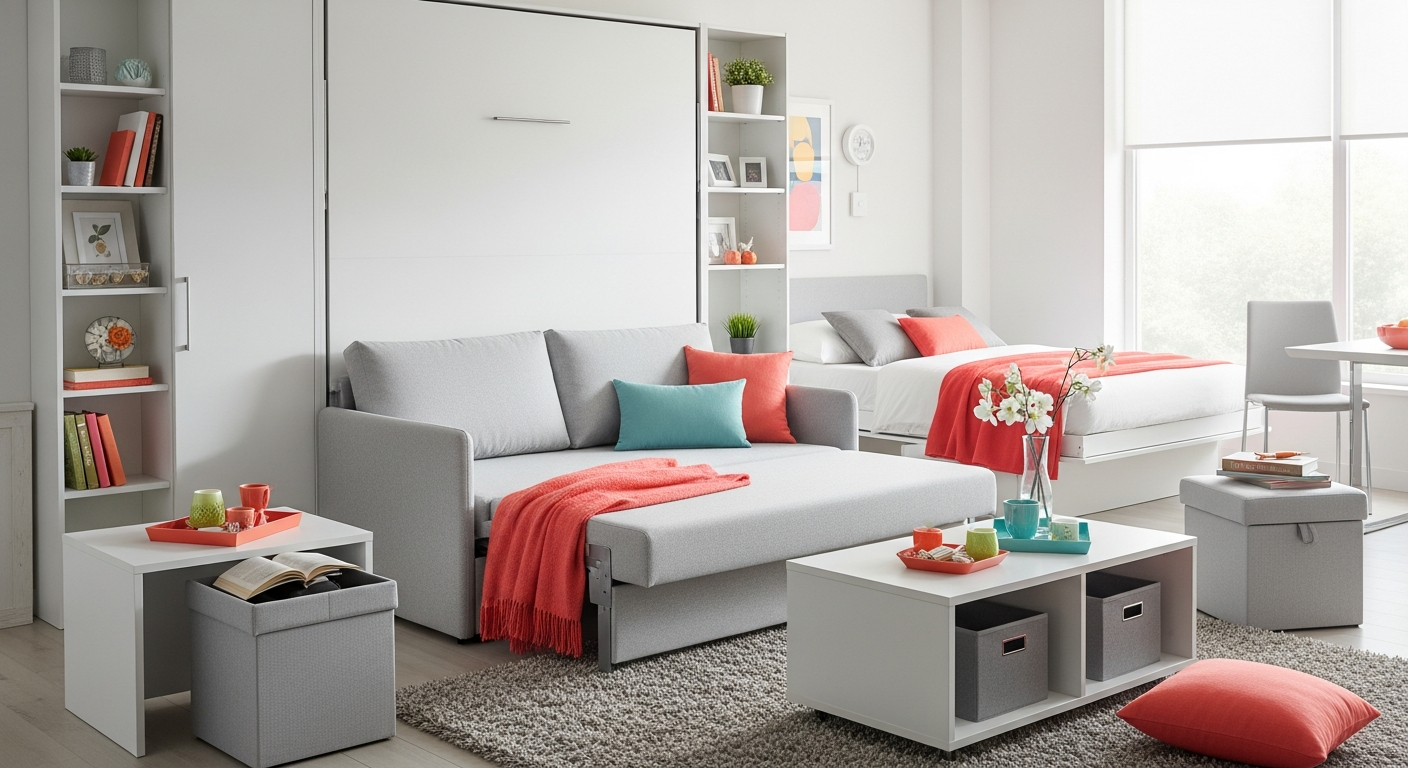
  • Sofa Combo: A sofa sits in front of the bed, which folds down over the sofa (often the sofa back folds down to make room).

Sofa Beds: The Dual-Purpose Dynamo

A sofa bed, or sleeper sofa, is a piece of furniture that functions as a sofa during the day and can be converted into a bed for sleeping. They come in various styles and mechanisms, making them a popular choice for guest rooms and small living spaces alike.

Pros of Sofa Beds:

  • Dual Functionality: Offers both comfortable seating and a bed in one unit, perfect for maximizing utility in a studio.
  • No Installation Required: Simply unbox and place; no wall mounting necessary.
  • Versatility: Available in a vast array of styles, colors, and sizes to match any decor.
  • Often More Affordable: Generally, sofa beds are less expensive than Murphy beds.

Cons of Sofa Beds:

  • Less Sleeping Comfort: While modern sofa beds have improved significantly, the mattress quality often doesn’t match a traditional bed, especially for daily use.
  • Takes Up Floor Space: Even when converted to a bed, the sofa bed still occupies a large footprint, and the frame remains visible.
  • Heavier to Move: The mechanisms can make them heavy and cumbersome to rearrange.
  • Can Be Cumbersome to Convert: Depending on the mechanism, transforming a sofa into a bed (and vice-versa) can be a daily chore.

Types of Sofa Beds:

  • Pull-Out/Traditional: Features a hidden mattress that pulls out from under the cushions and unfolds.
  • Futon: A simple mattress that folds to form a sofa and lays flat for a bed. Often less comfortable for seating and sleeping.
  • Click-Clack/Convertible: The back of the sofa reclines or clicks into various positions, eventually laying flat to form a bed. These are often compact.
  • Daybed: Designed as a bed that doubles as a sofa with back and armrests, ideal for a more permanent bed solution with seating capability.

Key Factors to Consider When Choosing

Selecting between a Murphy bed and a sofa bed, or even deciding on a specific model, requires careful consideration of several factors pertinent to your lifestyle and space.

Space Availability

Measure, measure, measure! Not just the footprint when the bed is open, but also the clearance required around it. A Murphy bed clears the floor entirely, offering more open space. A sofa bed still occupies floor space when open, and you need room for it to extend.

Frequency of Use

Will this be your primary bed for daily use, or an occasional guest bed? For daily sleeping, the comfort of a Murphy bed with a traditional mattress is usually superior. For occasional use, a comfortable pull-out sleeper sofa might suffice.

Comfort

This applies to both sleeping and seating. Test them out if possible. For sofa beds, look for high-density foam cushions and a mattress that’s at least 4-5 inches thick. For Murphy beds, remember you can often choose your own mattress, giving you more control over sleep comfort.

Budget

Prices vary widely. Set a realistic budget that accounts for not just the unit itself but also potential installation costs for Murphy beds.

Aesthetics and Style

Your convertible furniture should complement your studio’s decor. Murphy beds offer a clean, built-in look, while sofa beds come in countless designs, from modern minimalist to classic traditional. Consider the fabric, color, and overall design.

Top Picks: The Best Sofa Beds for Studio Apartments

When it comes to sofa beds for studio apartments, the goal is often finding that perfect balance of compact size, comfortable seating, and a decent sleeping surface. Here are some categories and features to look for:

  • Compact Click-Clack Sofas: These are excellent for tiny studios. They often feature a simple mechanism where the back clicks down to create a flat sleeping surface. Look for models with sturdy metal frames and thick, supportive foam. Some even offer split-back designs, allowing independent recline for different users.
  • Small Pull-Out Sleepers: While traditional pull-outs can be bulky, many manufacturers now offer scaled-down versions perfect for apartments. Focus on those with high-quality innerspring or memory foam mattresses that are at least 4-5 inches thick. The transformation mechanism should be smooth and easy to operate.
  • Futons with Style: Modern futons have come a long way from their dorm-room predecessors. You can find sophisticated designs with hardwood frames and plush mattresses that offer respectable comfort for both sitting and sleeping. They are generally very easy to convert.
  • Daybeds with Trundle: If your studio allows for a more permanent bed presence, a daybed is an excellent option. It functions as a sofa during the day and a twin bed at night. Many come with a trundle bed underneath, offering an extra sleeping spot for guests without taking up much more space.

Consider a small velvet sleeper sofa if you want to add a touch of luxury and sophistication to your studio while retaining crucial functionality. The plush fabric can make your small space feel more inviting and upscale.

Top Picks: The Best Murphy Beds for Studio Apartments

For those prioritizing floor space above all else, a Murphy bed is often the optimal choice. The market offers a wide range of designs, from minimalist to those with extensive storage and integrated features.

  • Basic Wall Beds: These are straightforward units that hide a full or queen-size bed within a simple cabinet. Look for robust piston or spring mechanisms that ensure smooth and safe operation.
  • Desk/Table Combo Murphy Beds: Perfect for a home office in a studio. These units integrate a desk that stays level as the bed lowers, allowing you to use your desk right up until bedtime. This is a game-changer for productivity in a small space.
  • Murphy Beds with Storage: Many models come with flanking bookshelves, drawers, or wardrobe cabinets. These provide invaluable storage for clothing, books, and other essentials, further decluttering your studio.
  • Sofa & Murphy Bed Combos: The ultimate in multi-functionality. These units feature a sofa that sits permanently in front of the Murphy bed. When you’re ready to sleep, the bed folds down over or around the sofa. This gives you comfortable seating during the day and a real bed at night, without having to move furniture.

When purchasing a Murphy bed, always check the mattress compatibility. Most can accommodate standard mattresses, but some have depth limitations. An excellent option for a compact studio is a full-size horizontal Murphy bed, which can be ideal for narrower walls or rooms with lower ceilings, providing a comfortable sleep surface without dictating too much of your wall space.

Comparison Table: Murphy Beds vs. Sofa Beds for Studio Apartments

Feature Murphy Bed Sofa Bed
Space Saving (Day) Excellent (clears floor entirely) Good (compact seating)
Space Saving (Night) N/A (bed is down) Fair (occupies significant floor space)
Sleeping Comfort Generally Excellent (accommodates standard mattress) Variable (can be good, but often less than traditional bed)
Seating Comfort Only if integrated with sofa/desk Generally Excellent (designed as a sofa)
Ease of Transformation Often smooth & quick (piston/spring assisted) Varies by mechanism (pull-out can be heavy, click-clack easy)
Installation Requires secure wall mounting (professional recommended) No installation required (ready to use)
Price Range Higher ($800 – $4000+) Lower to Mid ($300 – $2000)
Aesthetics Sleek, integrated cabinet look Wide range of sofa styles and fabrics

Maximizing Your Studio Apartment Space

Beyond selecting the right convertible furniture, there are other strategies to make your studio apartment feel larger and more functional:

  • Vertical Storage: Utilize walls with shelving units, floating shelves, and tall, narrow bookcases.
  • Multi-Functional Furniture: Ottomans with storage, coffee tables that lift to become dining tables, and nesting tables are your best friends.
  • Strategic Lighting: Use layers of lighting (ambient, task, accent) to brighten the space and create depth. Wall-mounted or floor lamps save valuable surface area.
  • Mirrors: A well-placed large mirror can reflect light and create the illusion of a larger room.
  • Declutter Relentlessly: Less stuff means more space. Regularly go through your belongings and donate or discard what you don’t need.
  • Area Rugs: Define zones within your open-plan studio. A large geometric area rug can delineate the living area from the kitchen or sleeping zone, adding warmth and style.

Maintenance and Care

To ensure your Murphy bed or sofa bed lasts for years, regular maintenance is key:

  • Sofa Beds: Vacuum regularly to prevent dust and debris buildup. Spot clean spills immediately with a mild upholstery fabric cleaner suitable for your fabric type. Rotate cushions to ensure even wear.
  • Murphy Beds: Periodically check all hardware, screws, and mechanisms to ensure they are tight and functioning smoothly. Lubricate moving parts if recommended by the manufacturer. Keep the mattress clean by vacuuming and using a mattress protector.

Frequently Asked Questions (FAQs)

Q: Are sofa beds comfortable enough for daily sleeping?

A: Modern sofa beds have improved significantly. While still generally not as comfortable as a traditional bed with a high-quality mattress, many models now offer gel memory foam or innerspring mattresses that are suitable for daily use. Look for mattress thickness of at least 4-5 inches.

Q: How difficult is it to install a Murphy bed?

A: Installation difficulty varies by model. Basic models might be manageable for an experienced DIYer, but many, especially those with complex mechanisms or integrated cabinets, require professional installation to ensure safety and proper functionality. They must be securely anchored to wall studs.

Q: Can I use my own mattress with a Murphy bed?

A: Most Murphy beds are designed to accommodate a standard mattress, but there are usually limits on thickness and weight. Always check the manufacturer’s specifications before purchasing a mattress.

Q: Do sofa beds damage my floors when I pull them out?

A: Modern sofa bed mechanisms are typically designed with wheels or glides that minimize floor damage. However, it’s always a good idea to place a rug or felt pads under the sofa’s feet and under any parts that make contact with the floor during conversion, especially on hardwood floors.

Q: How much space do I need for a full-size Murphy bed?

A: When closed, a full-size Murphy bed cabinet typically requires a wall space of about 54-60 inches wide and 80-86 inches high, with a depth of 15-20 inches. When open, it will extend about 80-86 inches into the room. Always consult specific product dimensions.

Conclusion

Choosing the best Murphy bed or sofa bed for your studio apartment is a decision that can dramatically improve your quality of life in a small space. Whether you prioritize clearing every inch of floor space with a sleek Murphy bed or prefer the dual functionality and easy setup of a sofa bed, there’s a perfect solution waiting for you.

By carefully considering your needs, budget, and aesthetic preferences, you can transform your studio into a highly functional, comfortable, and stylish haven. Embrace the versatility, reclaim your space, and enjoy the smart living that these ingenious furniture pieces offer. Happy decorating!

Explore our curated selections and find the perfect fit for your compact home today!
7 Best Curved Sofas to Soften a Boxy Studio Apartment: An Authority Guide

Studio apartments, with their urban charm and often coveted prime locations, frequently present a unique design challenge: their inherent boxiness. The stark reality of straight walls, sharp corners, and an often-undifferentiated layout can make a compact living area feel restrictive, uninviting, and surprisingly smaller than it actually is. In such spaces, traditional straight-line furniture often exacerbates the problem, creating a visually dense and rigid environment. But what if you could introduce a design element that not only elegantly breaks up these harsh lines but also significantly enhances flow, comfort, and the overall aesthetic appeal of your home?

7 Best Curved Sofas to Soften a Boxy Studio Apartment

Enter the curved sofa. More than just a fleeting trend, a curved sofa for a small apartment is a strategic design choice, a masterstroke in interior planning that can profoundly transform your living experience. Its sinuous silhouette is engineered to soften the edges of your space, create a more organic and welcoming feel, and, perhaps most surprisingly, even make your room feel considerably larger. At lesofa.club, we understand the intricate nuances of small space living and the desire to maximize both form and function. This comprehensive guide will equip you with the knowledge and inspiration to select the perfect curved sofa, turning your boxy studio into a sophisticated, inviting, and truly optimized sanctuary.

The Transformative Power: Why Curved Sofas Are a Game-Changer for Small Spaces

Before we delve into our top selections, let’s explore in detail why these elegantly sinuous beauties are particularly well-suited for compact living environments. Their unique geometry offers a multitude of benefits that traditional straight sofas simply cannot match.

1. Breaks Monotony and Introduces Visual Interest

In a room overwhelmingly dominated by straight lines – from walls and windows to rugs and other furniture – a curve offers a refreshing and vital visual break. It acts as an artistic counterpoint, introducing dynamism, movement, and an immediate sense of sophisticated design. This prevents the space from feeling too rigid, sterile, or predictable, instead imbuing it with personality and character. The eye is naturally drawn to the unexpected form, creating a focal point that is both stylish and functional.

2. Enhances Flow and Movement

One of the most powerful attributes of curves in design is their ability to guide the eye smoothly and effortlessly through a room. Unlike straight lines that can create visual barriers, the continuous arc of a curved sofa fosters a sense of fluidity and openness. This visual continuity makes a small apartment feel less compartmentalized and more expansive, allowing energy and light to flow freely. It creates an intuitive path, making the space feel more navigable and less enclosed.

3. Softens Hard Edges and Angles

The gentle arc of a curved sofa literally softens the harsh angles of walls, doorways, and other rectilinear furniture. This immediate visual effect contributes significantly to a more relaxed, comfortable, and psychologically inviting atmosphere. It reduces the starkness of a boxy room, replacing rigidity with a sense of embrace and ease, crucial for a space intended for relaxation and personal comfort.

4. Creates Intimacy and Defines Zones

In an open-plan studio, defining distinct functional zones can be challenging. Curved seating naturally encourages conversation and closeness, making it ideal for creating cozy, intimate nooks within a larger, undefined area. The inward-facing curve fosters a sense of connection among those seated, perfect for entertaining or enjoying quiet, contemplative moments. It can subtly delineate a living area from a sleeping or dining zone without the need for physical barriers.

5. Perceived Space and Maximized Footprint

While seemingly counter-intuitive, a strategically placed curved sofa can indeed make a room feel larger. Its non-linear form doesn’t block sightlines as harshly as a straight sofa might, allowing the eye to travel further. The negative space it creates around its unique shape adds depth and intrigue. Furthermore, in certain corner configurations or when pulled slightly away from a wall, a curved sofa can sometimes fit more seating capacity into a tighter footprint than a straight alternative, maximizing usable space efficiently.

Mastering the Selection: Factors to Consider When Choosing a Curved Sofa for a Small Apartment

Selecting the perfect curved sofa is a delicate balance of aesthetics, practicality, and meticulous planning, especially in a compact living environment. Here’s a deeper dive into the essential factors to keep in mind:

1. Size and Scale: The Absolute Priority

This is paramount. Measure your space meticulously – not just the length and width of the wall you intend to place it against, but also the total available floor area, accounting for walking paths and other furniture. Look for sofas with shallower depths (often under 35 inches) and shorter lengths. A common and detrimental mistake is choosing a sofa that’s too deep or long, which will overwhelm the room and restrict movement. Consider the sofa’s overall footprint, including any armrests, backrests, or protruding elements. Use painter’s tape on your floor to visualize the exact dimensions and ensure adequate clearance.

2. Material and Upholstery: Durability Meets Aesthetics

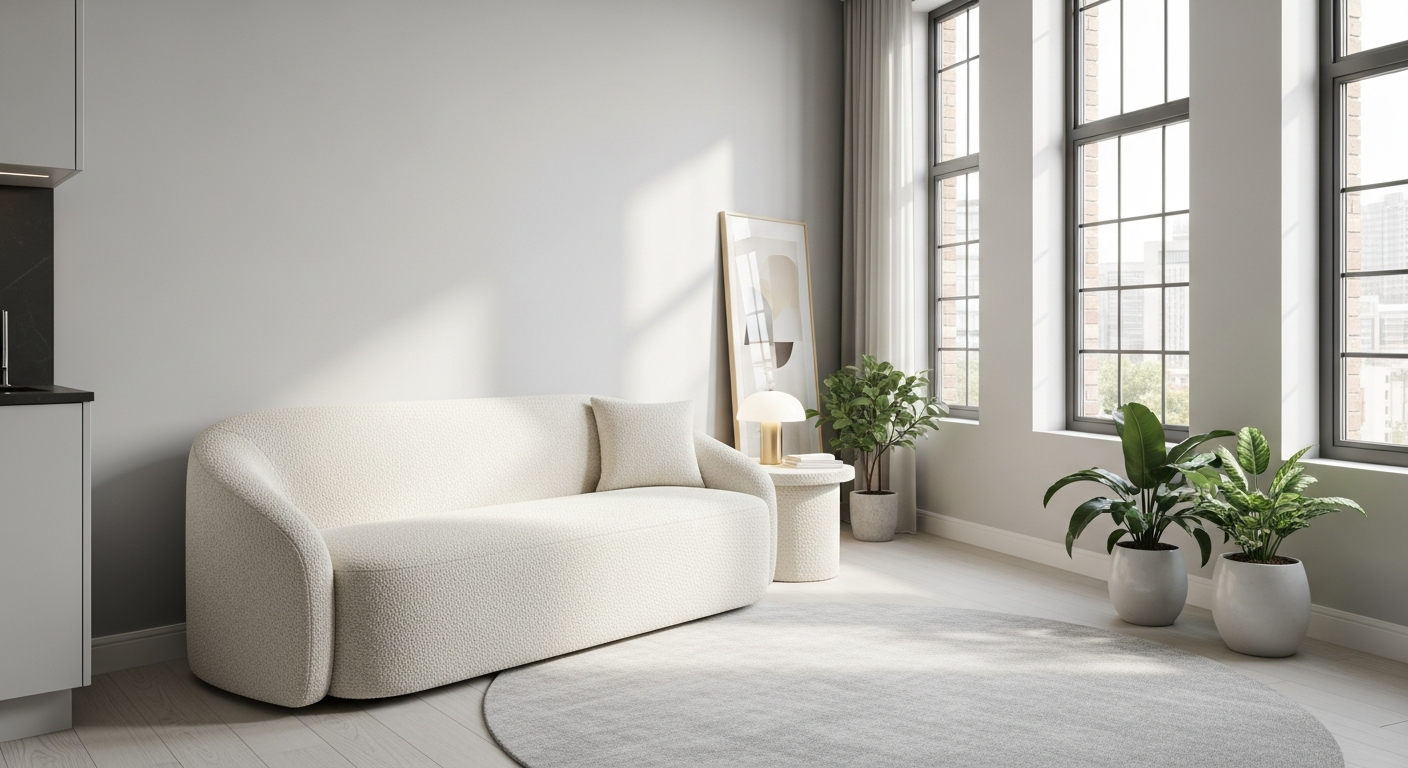
The fabric choice significantly impacts both the sofa’s durability and its visual weight. In a small space, you want materials that feel light and airy but are robust enough for daily use. Light-colored boucle fabric sofas or natural linen can feel incredibly airy, adding texture without heaviness. Conversely, a plush velvet curved sofa can introduce a touch of luxury and depth, provided the color is not too dark or overwhelming. Opt for durable, easy-to-clean performance fabrics like microfiber, solution-dyed acrylics, or tightly woven blends, especially if your studio is a high-traffic area or you have pets.

3. Legs and Base: The Illusion of Space

Sofas with slender, tapered legs (metal or wood) or a raised profile tend to look lighter and occupy less visual space than those with a solid, floor-skimming base. The ability to see the floor beneath the sofa creates an invaluable illusion of openness and continuity, making the room feel less cluttered and more expansive. Avoid chunky, heavy bases that anchor the sofa too firmly to the floor in a small apartment.

4. Design and Style: Harmonizing with Your Aesthetic

From minimalist modern arcs to more playful, retro curves, choose a style that seamlessly complements your existing decor. In small spaces, a clean, streamlined design often works best to avoid visual clutter. Consider the overall architectural style of your building and your personal taste. A simple, elegant curve can be a powerful statement without overwhelming the senses, while overly ornate or heavily tufted designs might feel too ‘busy’ for a studio.

5. Functionality and Versatility: Maximizing Every Inch

In a studio, every piece of furniture should ideally earn its keep. Can the sofa serve multiple purposes? Some curved sofas offer hidden storage beneath the cushions, providing invaluable space for blankets, books, or extra linens. Others might feature reversible chaises, modular components that can be reconfigured, or even convert into a comfortable bed for guests. This dual or multi-functionality can be a game-changer, making your living space incredibly efficient.

6. Construction Quality and Durability

A sofa is a significant investment. Look for sturdy frame construction (hardwood is ideal), high-density foam cushions that retain their shape, and robust joinery. In a small apartment, your sofa will likely see more intensive use, so longevity is crucial. Read reviews and inquire about warranties.

7. Delivery and Access

Don’t overlook the practicalities of getting the sofa into your apartment. Measure doorways, hallways, stairwells, and elevator dimensions. Some curved sofas, especially modular ones, are designed to be delivered in smaller, easier-to-maneuver pieces, which can be a lifesaver in tight urban spaces.

The 7 Best Curved Sofas to Soften a Boxy Studio Apartment: Our Curated Picks

Now, let’s dive into our top recommendations, each rigorously selected for its ability to combine impeccable style, unparalleled comfort, and ingenious space-saving design, perfectly tailored for the modern studio apartment dweller.

1. The “Zenith” Compact Arc Loveseat: Elegance in Miniature

Ideal for: Tiny studios, defining intimate reading nooks, or adding a sophisticated accent to an entryway.

This petite, gently arched loveseat is the epitome of elegance in a small package. Its modest dimensions (typically under 70 inches in length and 30 inches in depth) ensure it won’t overwhelm even the most limited footprint, while its subtle, inviting curve introduces that much-needed softness to a rectilinear space. Often upholstered in a light, textured linen, a soft, neutral-toned boucle, or a refined performance fabric, the Zenith offers comfortable, stylish seating for two without sacrificing precious floor area. Its defining feature is often its raised, slender legs – be it sleek metal or warm tapered wood – which elevate the piece, contributing to an airy feel and allowing your floor space to appear larger and uninterrupted. The low back design further ensures open sightlines, enhancing the spaciousness of your studio.

2. The “Luna” Modular Semicircle Sectional: Adaptable Design for Dynamic Living

Ideal for: Adaptable layouts, separating living zones, or accommodating varying guest numbers.

Flexibility is the cornerstone of successful small-space living, and the Luna delivers this with remarkable grace. This innovative modular option typically comes in two or three distinct pieces – often a curved corner unit, a single armless chair, and an ottoman. These can be effortlessly arranged as a full semicircle for a striking, cohesive focal point, or separated to create a smaller curved loveseat, an individual lounge chair, and a versatile ottoman that doubles as a side table or extra seating. This unparalleled adaptability means you can reconfigure your living area to suit different needs, whether you’re hosting a small gathering, enjoying a quiet evening, or simply seeking a fresh arrangement. Look for versions with low backs and clean lines to maintain open sightlines and prevent the sectional from feeling too bulky.

3. The “Oasis” Mid-Century Modern Curve: Timeless Sophistication

Ideal for: Adding vintage charm, timeless appeal, and a touch of design history.

Drawing deep inspiration from the iconic designs of the 1950s and 60s, the Oasis brings sophisticated charm with its clean lines, organic form, and understated elegance. A mid-century modern curved sofa often features sleek, slender wooden or metal legs that lift it gracefully off the floor, contributing to a vital sense of openness and lightness. Upholstered in refined muted tones of tweed, durable wool, or a luxurious yet resilient velvet, it’s a statement piece that doesn’t dominate but rather enhances a small space with its refined elegance. Its gentle curve often incorporates subtle tufting or elegant piping, adding texture and visual interest without excess bulk, making it perfect for injecting personality into a minimalist studio.

4. The “Cozy Nook” Sculptural Chaise: Personalized Luxury

Ideal for: Solo dwellers seeking a dedicated lounge spot, adding artistic flair, or maximizing comfort in minimal space.

Sometimes, a full-sized sofa isn’t necessary or even desirable. A curved chaise lounge offers a luxurious, single-person lounging experience that maximizes comfort in a compact footprint. Its sculptural form acts as a piece of art in itself, drawing the eye and adding an undeniable element of high design to your studio. Perfect for indulging in reading, deep relaxation, or simply adding a dramatic and elegant flair to an otherwise utilitarian space, the Cozy Nook chaise is an investment in personal comfort and style. Look for options with a low profile and an ergonomic curve that cradles the body, keeping the room feeling open and expansive while providing an inviting haven.

5. The “Cleo” Storage-Savvy Curved Bench: Functional Elegance

Ideal for: Maximizing functionality, minimizing clutter, and discreetly storing essentials.

Storage is an absolute premium in any small apartment, and the Cleo brilliantly addresses this need by combining the elegant lines of a curved sofa with the practical benefits of hidden storage. Often designed with a slightly more rigid, bench-like structure, it can serve as both primary seating and a discreet, ample place to tuck away blankets, seasonal clothing, books, or extra linens. This dual functionality makes it an invaluable addition to a studio apartment where every inch and every piece of furniture must serve multiple purposes. Its design, while often robust, maintains a sophisticated aesthetic, proving that practicality doesn’t have to compromise style. Upholstered in a durable, easy-to-clean fabric, the Cleo is a true workhorse of smart design.

6. The “Cloud” Petite Sectional with a Curve: Unexpected Spacious Seating

Ideal for: More seating capacity without overwhelming the space, defining larger zones, or comfortable sprawling.

Think a sectional is inherently too big for a studio? Think again. The Cloud is a meticulously scaled-down sectional featuring a gentle, sweeping curve on one end, or a distinct C-shape configuration. This ingenious design provides surprisingly ample seating for multiple guests or allows for luxurious sprawling for one, all while maintaining the visual softness and flow that only a curve can offer. Its soft, rounded edges and plush, inviting cushions create an irresistible aesthetic, making it feel less imposing and more welcoming than its straight-lined counterparts. This sectional is perfect for creating a distinct, comfortable living zone within an open-plan studio, fostering both relaxation and social interaction.

7. The “Dreamscape” Convertible Curved Sleeper: The Ultimate Multifunctional Hero

Ideal for: Multifunctional living, accommodating overnight guests, and optimizing every square foot.

For studio dwellers, a sofa that doubles as a comfortable bed is often not just a convenience, but an absolute necessity. The Dreamscape brings this essential functionality with an unexpected and graceful curve. Unlike traditional, often boxy pull-out sleepers, these modern versions feature a sleek, subtly curved design that looks intentional and stylish as a standalone sofa. When converted, it provides a surprisingly comfortable sleeping surface, making it an indispensable piece for hosting overnight guests without sacrificing an ounce of style or precious square footage. A convertible curved sleeper sofa is a true space-saving hero, offering maximum utility with maximum aesthetic appeal.

Comparison Table: Curved Sofas for Small Apartments

Sofa Model Key Feature Best For Style Price Range (Est.) Dimensions (Avg.)
Zenith Compact Arc Loveseat Minimal Footprint, Raised Legs Tiny Studios, Reading Nooks Modern Minimalist, Airy $$ L 60-70″, D 28-32″
Luna Modular Semicircle Configurable Design, Adaptable Flexible Layouts, Zone Delineation Contemporary, Versatile $$$ L 80-100″ (configured), D 32-36″
Oasis Mid-Century Modern Timeless Elegance, Slender Profile Vintage Lovers, Style Statements Mid-Century, Refined Retro $$$$ L 75-85″, D 30-34″
Cozy Nook Sculptural Chaise Luxurious Solo Lounge, Artistic Form Individual Comfort, Dramatic Flair Avant-Garde, Modern Art $$ L 60-70″, W 28-32″
Cleo Storage-Savvy Bench Hidden Storage, Dual Function Clutter-Free Living, Practicality Practical Modern, Streamlined $$$ L 70-80″, D 30-34″
Cloud Petite Sectional Maximized Seating, Inviting Curve Socializing, Defined Zones Plush, Contemporary Comfort $$$ L 90-110″ (configured), D 34-38″
Dreamscape Convertible Sleeper Sofa & Bed in One, Graceful Curve Guest Accommodations, Multi-Use Sleek, Functional Modern $$$$ L 75-85″, D 35-40″

Price Range Guide: $: Under $500, $$: $500-$1000, $$$: $1000-$2000, $$$$: $2000+ (Estimates based on typical market offerings)

Styling Your Curved Sofa: Elevating Your Studio Apartment

Once you’ve chosen your perfect curved sofa, the next step is to integrate it seamlessly and stylishly into your studio apartment. Thoughtful styling can amplify its impact and enhance the overall functionality of your space.

1. Strategic Placement: Floating vs. Against a Wall

While a curved sofa can look stunning floating in the middle of a larger room, defining an open space, in a studio, it often works best positioned with its back gently pulled away from a straight wall. This creates a subtle ‘breathing room’ that emphasizes the curve without eating up too much precious floor space. Experiment with angling it slightly in a corner to create an inviting, natural flow around it. If placed centrally, ensure enough clearance for comfortable movement around its entire perimeter.

2. Complementary Curves: Echoing the Form

Enhance the curvilinear theme with other round or oval elements throughout your studio. A large round area rug can beautifully ground the seating area, defining the zone while echoing the sofa’s soft lines. A round coffee table or a set of nesting oval side tables can continue the elegant visual rhythm. Avoid sharp, angular tables that might clash with the sofa’s organic feel.

3. Strategic Lighting: Setting the Mood and Functionality

Lighting is crucial in small spaces. Use floor lamps with graceful arched arms that can reach over the sofa, providing targeted task lighting for reading or a soft ambient glow, all without requiring a large footprint next to the sofa. Dimmable lighting, layered with strategically placed table lamps on slender side tables, can create different moods, soften the ambiance, and make your studio feel more expansive at different times of the day.

4. Pillows and Throws: Texture, Color, and Comfort

Layering with textured decorative throw pillows and soft, luxurious blankets can add immense depth, comfort, and visual appeal, making your curved sofa even more inviting. Choose colors and textures that complement your overall palette – think plush velvets, chunky knits, or woven linens. Varying the sizes and shapes of pillows can add an extra layer of curated design.

5. Mirrors and Art: Expanding Visual Horizons

Leverage the power of mirrors to visually expand your space. A large mirror placed strategically opposite a window will bounce light around the room, making it feel brighter and more open. Curated wall art, hung at eye level above or beside the sofa, can draw the eye upwards, adding personality and vertical interest without occupying valuable floor space. Choose pieces that resonate with the soft elegance of your curved sofa.

6. Thoughtful Accessorizing: Less is More

In a small studio, resist the urge to over-accessorize. Select a few impactful, high-quality decorative items that enhance the space rather than clutter it. Think about sculptural vases, elegant trays for organizing remotes, or a small collection of books. Keep surfaces clear to maintain an uncluttered and airy feel around your elegant curved sofa.

7. Maintain Cleanliness: The Foundation of Good Design

A clean, well-maintained sofa always looks its best and contributes significantly to the overall perception of your space. Invest in an eco-friendly fabric cleaner suitable for your sofa’s material and make regular cleaning a part of your routine. A fresh, new-looking sofa elevates the entire room.

Conclusion: Embrace the Curves, Elevate Your Studio

Don’t let the perceived limitations of a boxy studio apartment stifle your design aspirations. The right curved sofa is more than just a piece of furniture; it’s a transformative design element, offering not just a supremely comfortable place to relax, but also an ingenious solution to soften harsh lines, create effortless visual flow, and make your small space feel significantly larger, more inviting, and undeniably sophisticated. By carefully considering size, material, functionality, and integrating it with thoughtful styling, you can find a curved sofa that perfectly complements your lifestyle and elevates your home to new heights of design.

At lesofa.club, we believe that every home, regardless of its size, deserves to be a reflection of comfort and style. Embrace the curves, defy the box, and unlock the full, elegant potential of your studio apartment. Your dream living space awaits!

Frequently Asked Questions (FAQs)

Q1: Are curved sofas truly practical for small spaces, or are they just a stylish novelty?

Absolutely practical! While they may seem counter-intuitive at first glance, curved sofas introduce visual softness and a sense of flow that can make a small space feel less rigid and more expansive. The key is strategic selection: opting for compact, scaled-down versions with features like raised legs, low profiles, or modular designs that offer unparalleled flexibility. Their ability to soften hard angles and create intimate zones makes them incredibly effective in optimizing the feel and function of a studio.

Q2: How do I accurately measure for a curved sofa in a small apartment to avoid delivery or fit issues?

Measuring for a curved sofa requires a bit more nuance than a straight one. First, measure the maximum length and depth you can physically accommodate, including considerations for doorways, hallways, stairwells, and elevator dimensions for delivery. For the curved sofa itself, you’ll need its ‘chord’ (the straight-line distance between the two furthest points of the arc) and its ‘arc length’ (the distance along the curve itself). The depth at its widest point is also critical. A highly effective technique is to use painter’s tape or newspaper cutouts on your floor to visualize the exact footprint of the sofa within your space before making a purchase. Also, ensure there’s enough room to walk around it comfortably.

Q3: What materials are best for a curved sofa in a high-traffic studio apartment?

For optimal durability and longevity in a high-traffic studio where your sofa might serve multiple functions, look for performance fabrics. Tightly woven bouclé, sturdy microfiber, solution-dyed acrylics, or durable, treated velvet are excellent choices. These materials are often resistant to spills, fading, and general wear and tear. Consider fabrics with a higher ‘rub count’ (a measure of durability) if available. For easy maintenance, darker colors or patterns can be more forgiving, but modern performance fabrics also come in lighter hues that are surprisingly resilient.

Q4: Can I successfully place a curved sofa against a straight wall, or does it always need to float?

Yes, you absolutely can, and often should, place a curved sofa against a straight wall in a studio! While a curved sofa can float beautifully in larger, open-plan rooms, in a studio, placing it with its back subtly pulled away (a few inches) from a straight wall works exceptionally well. This creates a gentle ‘breathing room’ and emphasizes the curve without wasting valuable floor space. The slight gap prevents the room from feeling cramped and highlights the sofa’s unique form, rather than having it awkwardly butt up against the wall.

Q5: What other furniture pieces pair well with a curved sofa in a studio to enhance the overall design?

To enhance the curvilinear theme and maximize functionality in a studio, complement your curved sofa with other thoughtfully chosen pieces. Round or oval coffee tables and side tables are ideal for echoing the sofa’s soft lines. Slim-profile accent chairs (perhaps with a subtle curve themselves) or armless designs can provide additional seating without visual bulk. Floor lamps with an arched arm are perfect for task lighting, and wall-mounted shelves or floating credenzas can offer storage and display space without occupying floor area. Avoid overly bulky or sharp-angled furniture that would contradict the graceful softness of the curved sofa.

Q6: How can a curved sofa help define zones in an open-plan studio?

A curved sofa is exceptional at subtly defining zones without the need for physical barriers. Its organic shape naturally creates an enclosed, intimate seating area, immediately signaling a ‘living room’ space within the larger studio. By orienting the curve inwards or towards a specific focal point (like a TV or window view), it draws attention and creates a sense of boundary for the seating zone. This visual segmentation is vital in studios, helping to make the space feel more organized and functional, rather than one large, undifferentiated room.

Ready to Redefine Your Studio?

Explore our curated selections at lesofa.club and discover the perfect curved sofa to bring elegance, comfort, and unparalleled style to your small apartment. Your dream living space awaits!