The Best Murphy Beds and Sofa Beds for Studio Apartments
Living in a studio apartment offers a unique blend of urban convenience and cozy intimacy. However, it also presents the ultimate challenge in space management. Every square foot counts, and the furniture you choose needs to work overtime. The key to unlocking the full potential of a small living area lies in multi-functional pieces, with sofa beds for studio apartments and Murphy beds leading the charge. These innovative solutions transform your space from a daytime living area into a nighttime sleeping sanctuary, ensuring comfort without compromise.
At lesofa.club, we understand the art of small space living. We’ve delved deep into the world of convertible furniture to bring you a comprehensive guide to selecting the perfect Murphy bed or sofa bed for your studio. From maximizing square footage to enhancing your aesthetic, we’ve got you covered.
Why Small Spaces Demand Smart Solutions
A studio apartment, by definition, combines your living room, bedroom, and often your dining area into one cohesive space. This open-concept layout requires furniture that is not only functional but also adaptable. Traditional beds and sofas can quickly overwhelm a small room, making it feel cramped and cluttered. This is where the magic of convertible furniture comes in.
Imagine having a comfortable sofa for entertaining friends during the day, which seamlessly transitions into a restful bed for a good night’s sleep. Or a discreet wall unit that hides your bed until you’re ready to retire. These solutions aren’t just about saving space; they’re about creating a more versatile, organized, and enjoyable living environment. They allow you to define different zones within your studio, even if those zones share the same footprint at different times of the day.
Understanding Your Options: Murphy Beds vs. Sofa Beds
While both Murphy beds and sofa beds aim to solve the same problem – providing sleeping and seating in limited spaces – they approach it in fundamentally different ways. Understanding these differences is crucial for making the right choice for your lifestyle.
Murphy Beds: The Wall-Mounted Wonder
A Murphy bed, also known as a wall bed, is a bed that folds up vertically or horizontally into a cabinet or against a wall, typically freeing up significant floor space when not in use. Originally invented by William Lawrence Murphy in the late 19th century, these beds have evolved from simple hinged designs to sophisticated systems often integrated with shelving, desks, or even sofas.
Pros of Murphy Beds:
- Maximum Space Saving: When folded away, the entire floor area where the bed would normally sit is completely clear, making them unparalleled for freeing up space.
- Superior Sleeping Comfort: Unlike many sofa beds, Murphy beds often accommodate a standard mattress (e.g., a queen size memory foam mattress), offering the comfort of a traditional bed.
- Integrated Functionality: Many modern Murphy beds come with built-in desks, bookshelves, or even integrated sofas, making them true multi-functional units.
- Clean Aesthetic: When closed, they present a sleek, unobtrusive cabinet appearance that can blend seamlessly with your decor.
Cons of Murphy Beds:
- Installation Complexity: Most Murphy beds require professional installation or a competent DIYer, as they need to be securely anchored to a wall.
- Higher Initial Cost: Generally, Murphy beds tend to be more expensive than sofa beds, especially those with additional features.
- Less Seating: If not combined with a sofa, a traditional Murphy bed doesn’t offer seating when folded up.
- Permeance: Once installed, moving a Murphy bed can be a significant undertaking.
Types of Murphy Beds:
- Vertical: The most common type, where the bed folds up with the headboard at the bottom.
- Horizontal: Ideal for rooms with low ceilings or narrow walls, the bed folds up lengthwise.
- Desk Combo: Features a desk that remains level as the bed is lowered, so you don’t have to clear your workspace.
- Sofa Combo: A sofa sits in front of the bed, which folds down over the sofa (often the sofa back folds down to make room).
Sofa Beds: The Dual-Purpose Dynamo
A sofa bed, or sleeper sofa, is a piece of furniture that functions as a sofa during the day and can be converted into a bed for sleeping. They come in various styles and mechanisms, making them a popular choice for guest rooms and small living spaces alike.
Pros of Sofa Beds:
- Dual Functionality: Offers both comfortable seating and a bed in one unit, perfect for maximizing utility in a studio.
- No Installation Required: Simply unbox and place; no wall mounting necessary.
- Versatility: Available in a vast array of styles, colors, and sizes to match any decor.
- Often More Affordable: Generally, sofa beds are less expensive than Murphy beds.
Cons of Sofa Beds:
- Less Sleeping Comfort: While modern sofa beds have improved significantly, the mattress quality often doesn’t match a traditional bed, especially for daily use.
- Takes Up Floor Space: Even when converted to a bed, the sofa bed still occupies a large footprint, and the frame remains visible.
- Heavier to Move: The mechanisms can make them heavy and cumbersome to rearrange.
- Can Be Cumbersome to Convert: Depending on the mechanism, transforming a sofa into a bed (and vice-versa) can be a daily chore.
Types of Sofa Beds:
- Pull-Out/Traditional: Features a hidden mattress that pulls out from under the cushions and unfolds.
- Futon: A simple mattress that folds to form a sofa and lays flat for a bed. Often less comfortable for seating and sleeping.
- Click-Clack/Convertible: The back of the sofa reclines or clicks into various positions, eventually laying flat to form a bed. These are often compact.
- Daybed: Designed as a bed that doubles as a sofa with back and armrests, ideal for a more permanent bed solution with seating capability.
Key Factors to Consider When Choosing
Selecting between a Murphy bed and a sofa bed, or even deciding on a specific model, requires careful consideration of several factors pertinent to your lifestyle and space.
Space Availability
Measure, measure, measure! Not just the footprint when the bed is open, but also the clearance required around it. A Murphy bed clears the floor entirely, offering more open space. A sofa bed still occupies floor space when open, and you need room for it to extend.
Frequency of Use
Will this be your primary bed for daily use, or an occasional guest bed? For daily sleeping, the comfort of a Murphy bed with a traditional mattress is usually superior. For occasional use, a comfortable pull-out sleeper sofa might suffice.
Comfort
This applies to both sleeping and seating. Test them out if possible. For sofa beds, look for high-density foam cushions and a mattress that’s at least 4-5 inches thick. For Murphy beds, remember you can often choose your own mattress, giving you more control over sleep comfort.
Budget
Prices vary widely. Set a realistic budget that accounts for not just the unit itself but also potential installation costs for Murphy beds.
Aesthetics and Style
Your convertible furniture should complement your studio’s decor. Murphy beds offer a clean, built-in look, while sofa beds come in countless designs, from modern minimalist to classic traditional. Consider the fabric, color, and overall design.
Top Picks: The Best Sofa Beds for Studio Apartments
When it comes to sofa beds for studio apartments, the goal is often finding that perfect balance of compact size, comfortable seating, and a decent sleeping surface. Here are some categories and features to look for:
- Compact Click-Clack Sofas: These are excellent for tiny studios. They often feature a simple mechanism where the back clicks down to create a flat sleeping surface. Look for models with sturdy metal frames and thick, supportive foam. Some even offer split-back designs, allowing independent recline for different users.
- Small Pull-Out Sleepers: While traditional pull-outs can be bulky, many manufacturers now offer scaled-down versions perfect for apartments. Focus on those with high-quality innerspring or memory foam mattresses that are at least 4-5 inches thick. The transformation mechanism should be smooth and easy to operate.
- Futons with Style: Modern futons have come a long way from their dorm-room predecessors. You can find sophisticated designs with hardwood frames and plush mattresses that offer respectable comfort for both sitting and sleeping. They are generally very easy to convert.
- Daybeds with Trundle: If your studio allows for a more permanent bed presence, a daybed is an excellent option. It functions as a sofa during the day and a twin bed at night. Many come with a trundle bed underneath, offering an extra sleeping spot for guests without taking up much more space.
Consider a small velvet sleeper sofa if you want to add a touch of luxury and sophistication to your studio while retaining crucial functionality. The plush fabric can make your small space feel more inviting and upscale.
Top Picks: The Best Murphy Beds for Studio Apartments
For those prioritizing floor space above all else, a Murphy bed is often the optimal choice. The market offers a wide range of designs, from minimalist to those with extensive storage and integrated features.
- Basic Wall Beds: These are straightforward units that hide a full or queen-size bed within a simple cabinet. Look for robust piston or spring mechanisms that ensure smooth and safe operation.
- Desk/Table Combo Murphy Beds: Perfect for a home office in a studio. These units integrate a desk that stays level as the bed lowers, allowing you to use your desk right up until bedtime. This is a game-changer for productivity in a small space.
- Murphy Beds with Storage: Many models come with flanking bookshelves, drawers, or wardrobe cabinets. These provide invaluable storage for clothing, books, and other essentials, further decluttering your studio.
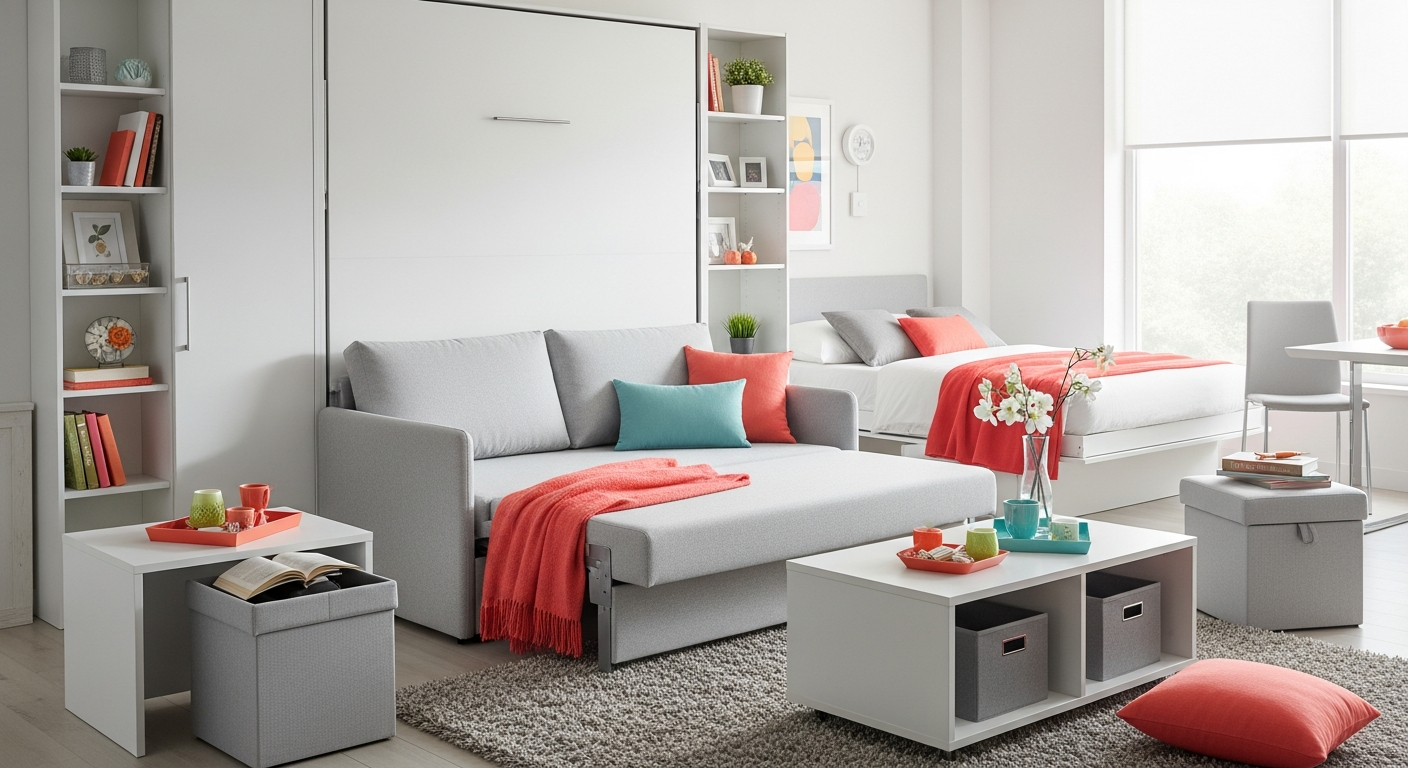
- Sofa & Murphy Bed Combos: The ultimate in multi-functionality. These units feature a sofa that sits permanently in front of the Murphy bed. When you’re ready to sleep, the bed folds down over or around the sofa. This gives you comfortable seating during the day and a real bed at night, without having to move furniture.
When purchasing a Murphy bed, always check the mattress compatibility. Most can accommodate standard mattresses, but some have depth limitations. An excellent option for a compact studio is a full-size horizontal Murphy bed, which can be ideal for narrower walls or rooms with lower ceilings, providing a comfortable sleep surface without dictating too much of your wall space.
Comparison Table: Murphy Beds vs. Sofa Beds for Studio Apartments
| Feature | Murphy Bed | Sofa Bed |
|---|---|---|
| Space Saving (Day) | Excellent (clears floor entirely) | Good (compact seating) |
| Space Saving (Night) | N/A (bed is down) | Fair (occupies significant floor space) |
| Sleeping Comfort | Generally Excellent (accommodates standard mattress) | Variable (can be good, but often less than traditional bed) |
| Seating Comfort | Only if integrated with sofa/desk | Generally Excellent (designed as a sofa) |
| Ease of Transformation | Often smooth & quick (piston/spring assisted) | Varies by mechanism (pull-out can be heavy, click-clack easy) |
| Installation | Requires secure wall mounting (professional recommended) | No installation required (ready to use) |
| Price Range | Higher ($800 – $4000+) | Lower to Mid ($300 – $2000) |
| Aesthetics | Sleek, integrated cabinet look | Wide range of sofa styles and fabrics |
Maximizing Your Studio Apartment Space
Beyond selecting the right convertible furniture, there are other strategies to make your studio apartment feel larger and more functional:
- Vertical Storage: Utilize walls with shelving units, floating shelves, and tall, narrow bookcases.
- Multi-Functional Furniture: Ottomans with storage, coffee tables that lift to become dining tables, and nesting tables are your best friends.
- Strategic Lighting: Use layers of lighting (ambient, task, accent) to brighten the space and create depth. Wall-mounted or floor lamps save valuable surface area.
- Mirrors: A well-placed large mirror can reflect light and create the illusion of a larger room.
- Declutter Relentlessly: Less stuff means more space. Regularly go through your belongings and donate or discard what you don’t need.
- Area Rugs: Define zones within your open-plan studio. A large geometric area rug can delineate the living area from the kitchen or sleeping zone, adding warmth and style.
Maintenance and Care
To ensure your Murphy bed or sofa bed lasts for years, regular maintenance is key:
- Sofa Beds: Vacuum regularly to prevent dust and debris buildup. Spot clean spills immediately with a mild upholstery fabric cleaner suitable for your fabric type. Rotate cushions to ensure even wear.
- Murphy Beds: Periodically check all hardware, screws, and mechanisms to ensure they are tight and functioning smoothly. Lubricate moving parts if recommended by the manufacturer. Keep the mattress clean by vacuuming and using a mattress protector.
Frequently Asked Questions (FAQs)
Q: Are sofa beds comfortable enough for daily sleeping?
A: Modern sofa beds have improved significantly. While still generally not as comfortable as a traditional bed with a high-quality mattress, many models now offer gel memory foam or innerspring mattresses that are suitable for daily use. Look for mattress thickness of at least 4-5 inches.
Q: How difficult is it to install a Murphy bed?
A: Installation difficulty varies by model. Basic models might be manageable for an experienced DIYer, but many, especially those with complex mechanisms or integrated cabinets, require professional installation to ensure safety and proper functionality. They must be securely anchored to wall studs.
Q: Can I use my own mattress with a Murphy bed?
A: Most Murphy beds are designed to accommodate a standard mattress, but there are usually limits on thickness and weight. Always check the manufacturer’s specifications before purchasing a mattress.
Q: Do sofa beds damage my floors when I pull them out?
A: Modern sofa bed mechanisms are typically designed with wheels or glides that minimize floor damage. However, it’s always a good idea to place a rug or felt pads under the sofa’s feet and under any parts that make contact with the floor during conversion, especially on hardwood floors.
Q: How much space do I need for a full-size Murphy bed?
A: When closed, a full-size Murphy bed cabinet typically requires a wall space of about 54-60 inches wide and 80-86 inches high, with a depth of 15-20 inches. When open, it will extend about 80-86 inches into the room. Always consult specific product dimensions.
Conclusion
Choosing the best Murphy bed or sofa bed for your studio apartment is a decision that can dramatically improve your quality of life in a small space. Whether you prioritize clearing every inch of floor space with a sleek Murphy bed or prefer the dual functionality and easy setup of a sofa bed, there’s a perfect solution waiting for you.
By carefully considering your needs, budget, and aesthetic preferences, you can transform your studio into a highly functional, comfortable, and stylish haven. Embrace the versatility, reclaim your space, and enjoy the smart living that these ingenious furniture pieces offer. Happy decorating!
Explore our curated selections and find the perfect fit for your compact home today!