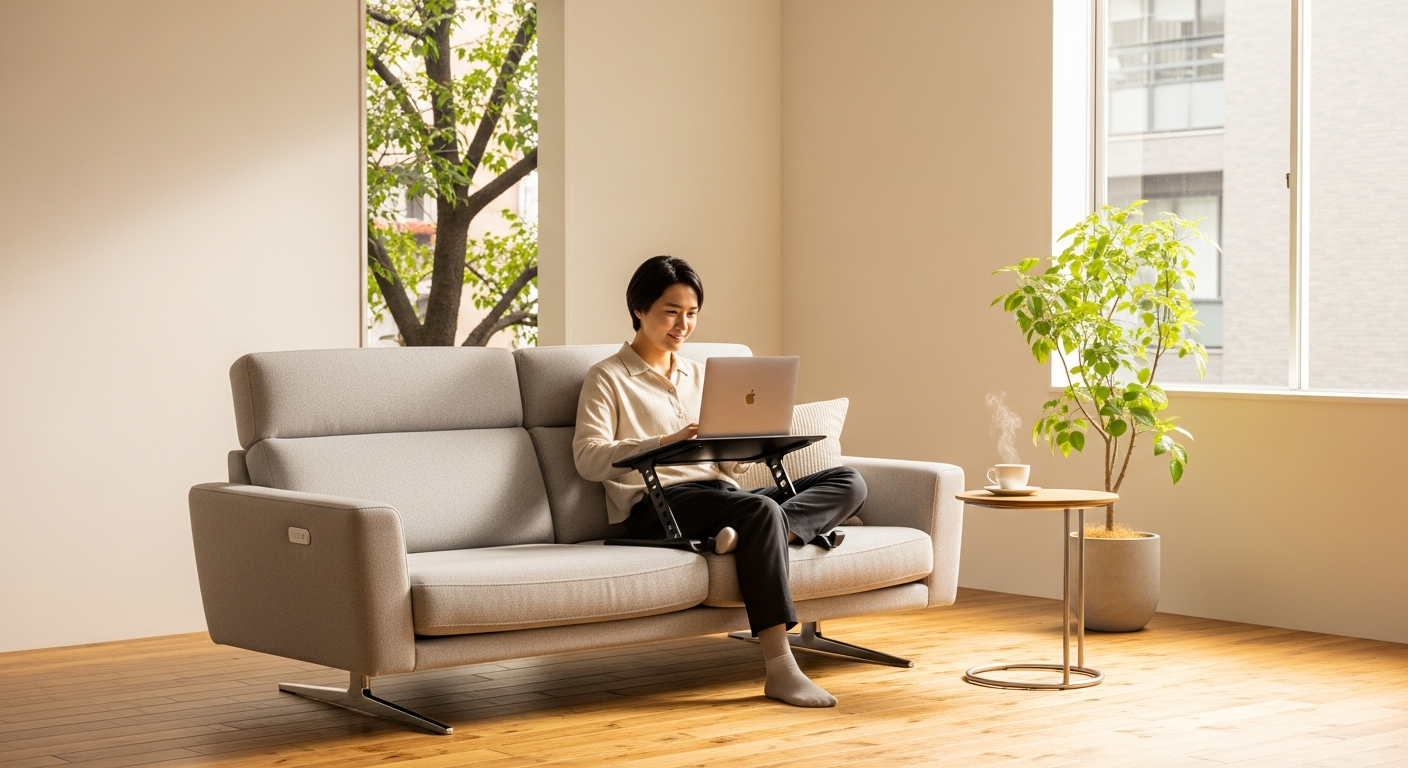
Ergonomic Sofas: Can You Actually Work From the Couch? Your Ultimate Guide to a Healthy WFH Setup with lesofa.club
The global shift to remote work has dramatically reshaped our daily lives, blurring the once-clear boundaries between professional and personal spaces. For many, the traditional office desk has been replaced by more unconventional workstations, with the living room sofa emerging as a surprisingly popular choice. The allure is undeniable: comfort, convenience, and a more relaxed atmosphere. Yet, a critical question persists: can you truly maintain productivity and, more importantly, a healthy posture while working from your couch? The answer, unequivocally, is yes – but it hinges entirely on embracing the principles of the ergonomic sofa working from home revolution.
At lesofa.club, we understand that your sofa isn’t just a piece of furniture; it’s a central hub for relaxation, connection, and increasingly, concentration. This comprehensive guide will delve deep into the world of ergonomic sofas, transforming your understanding of how your living room can become a sanctuary of both comfort and productivity. We’ll explore the profound benefits, pinpoint the essential features to look for, and provide actionable strategies to create a functional, comfortable, and spine-friendly workspace right on your couch. Say goodbye to back pain and hello to a new era of flexible, healthy remote work.
The Great Migration: How WFH Propelled Us to the Couch and Why It Matters
The sudden, widespread adoption of working from home caught millions unprepared. Many found themselves improvising workspaces in dining rooms, bedrooms, or even at kitchen counters. However, the sofa quickly became the default for its immediate appeal: unmatched comfort, a cozy environment, and the psychological relief of escaping a ‘stuffy’ office setup. The proximity to refreshments, the ability to multi-task with household chores, and the sheer informality often felt like a liberation.
But this newfound freedom came with a hidden cost for many. Standard sofas are designed for passive lounging, not active work. Extended periods spent slouched, hunched over a laptop, or twisted in awkward positions began to manifest as chronic pain – persistent backaches, stiff necks, aching shoulders, and even carpal tunnel syndrome. This widespread discomfort highlighted a critical gap: the need for furniture that supports our bodies for work, even when that work happens on a sofa. This is precisely where the innovative concept of the ergonomic sofa emerges as a vital, health-conscious solution, fundamentally changing how we approach remote work from the comfort of our homes.
Understanding Ergonomics: The Science of Comfort and Productivity, Couch-Style
Ergonomics is far more than a buzzword; it’s a science dedicated to optimizing the interaction between humans and their environments, particularly in the workplace. Its core mission is to design and arrange spaces, products, and systems to fit the user, thereby enhancing efficiency, productivity, and safety while drastically minimizing discomfort, fatigue, and injury. When we apply these principles to a sofa, it means crafting a seating experience that meticulously supports your body’s natural curves, promotes optimal posture, and significantly reduces strain during prolonged periods of sitting.
Ignoring ergonomic principles, whether you’re at a high-end office desk or a humble living room sofa, can lead to a cascade of long-term health consequences. Chronic musculoskeletal pain, persistent headaches, reduced concentration, and a notable decrease in overall productivity are common and debilitating outcomes. An ergonomic sofa is therefore not merely a luxury item; it represents a strategic investment in your health, well-being, and sustained professional output, especially if your couch has become an integral part of your daily work routine. It’s about empowering you to work smarter, not harder, by providing the foundational support your body needs.
The Hidden Dangers: Why Your Standard Couch is Sabotaging Your WFH Health
Traditional sofas, while perfect for unwinding after a long day, are inherently ill-suited for the demands of a prolonged workday. Their design prioritizes deep relaxation over active support, leading to a host of postural problems. Understanding these challenges is the first step towards rectifying them:
- The Slouching Epidemic: Lumbar Support Deficit: Most standard sofas lack the crucial lumbar support needed to maintain the natural inward curve of your lower spine (the lumbar lordosis). This absence forces your spine to round, placing excessive pressure on your intervertebral discs and muscles, leading directly to lower back pain and stiffness.
- The Neck Strain Nightmare: Poor Screen Height: When your laptop sits on your lap or a low coffee table, your head is inevitably angled downwards. This sustained forward head posture puts immense strain on your neck and upper back muscles, often resulting in tension headaches, shoulder knots, and chronic neck pain.
- Circulatory Complications: Restricted Blood Flow: Hunching over or sitting with your legs tucked under you can compress blood vessels, hindering proper circulation. This can lead to uncomfortable numbness, tingling sensations (paresthesia), and a general feeling of fatigue in your limbs.
- Premature Fatigue and Drained Energy: A lack of proper structural support means your muscles have to work harder to keep your body upright and stable. This constant, unacknowledged muscular effort leads to premature fatigue, making you feel drained and less focused much earlier in your workday.
- Repetitive Strain Injuries (RSIs): The Wrist and Hand Peril: Awkward wrist positions, such as those caused by typing directly on a laptop placed on your lap, can compress nerves and tendons. This significantly increases the risk of developing painful Repetitive Strain Injuries (RSIs) like carpal tunnel syndrome, tenosynovitis, or tendinitis.
These pervasive challenges underscore why relying on a standard sofa for prolonged work is a recipe for discomfort and potential long-term health issues. Without significant modifications or, ideally, an upgrade to an ergonomically engineered model, your work-from-home setup may be doing more harm than good.
Key Features That Elevate a Sofa to Ergonomic Status for Work
An ergonomic sofa is a meticulously designed piece of furniture, a sophisticated blend of form and function aimed at supporting your body in an optimal working posture. Here’s a deeper dive into the essential features that define true ergonomic comfort:
1. Superior Lumbar Support
This is arguably the most critical feature. The human spine has a natural ‘S’ curve, and the lumbar region (lower back) needs inward support. An ergonomic sofa will either have built-in, contoured lumbar support that perfectly cradles this curve or will be designed to allow for the strategic placement of a firm lumbar support pillow. This support prevents slouching, alleviates pressure on spinal discs, and maintains healthy spinal alignment throughout your workday.
2. Multi-Position Adjustable Backrest
The ability to adjust the angle of your backrest is paramount for dynamic sitting. Some ergonomic sofas offer several fixed positions, while others provide infinite recline options. An upright position (around 90-100 degrees) is ideal for active tasks like typing or video calls, while a slightly reclined position (110-120 degrees) can be more comfortable for reading or reflecting, reducing pressure on your spine. This flexibility allows you to shift postures throughout the day, preventing static load on any single area.
3. Optimized Seat Depth and Height
Seat Depth: The ideal seat depth allows you to sit with your back firmly against the backrest while your feet are flat on the floor (or a footrest), with a comfortable gap of about 2-4 inches between the edge of the seat and the back of your knees. This prevents pressure on the popliteal crease (behind the knees), which can restrict blood circulation. Sofas that are too deep force you to slouch or sit on the edge, both detrimental to posture.
Seat Height: While adjustable height isn’t common in sofas, choosing one with an appropriate height for your stature is crucial. Your hips should be slightly higher than your knees, allowing for an open hip angle. If the sofa is too low, it can make standing up difficult and place strain on your hips and lower back. Conversely, if it’s too high, your feet may dangle, requiring a footrest.
4. Intelligent Firmness and Cushioning
True ergonomic comfort isn’t about sinking into plushness; it’s about supportive cushioning. An ergonomic sofa will feature medium-to-firm, high-density foam or a combination of foam and springs that cradles your body without allowing you to sink too deeply. High-density foam maintains its shape and supportive qualities over time, offering durability and preventing the dreaded ‘hammock’ effect that leads to poor posture. Look for layered cushioning that provides both initial softness and underlying firmness.
5. Strategically Designed Armrests
Properly positioned armrests are essential for alleviating tension in your shoulders and neck. They should allow you to rest your forearms comfortably, keeping your shoulders relaxed and your elbows at roughly a 90-degree angle to your torso. Some ergonomic sofas feature adjustable armrests, allowing you to fine-tune their height and depth. This support reduces the load on your upper back and helps maintain a neutral typing position when using an external keyboard.
6. Versatile Modular and Sectional Designs
The inherent flexibility of modular sectional sofas makes them exceptionally ergonomic. These designs allow you to rearrange components to create various configurations tailored to your work style. A chaise lounge extension, for instance, provides invaluable leg support, reducing pressure on your lower back and improving circulation. You can also integrate components like built-in tables, storage ottomans, or even corner units that create a defined, supportive workspace within a larger seating arrangement.
7. Durable Frame Construction and Material Choices
Beyond the visible features, the underlying quality is paramount. An ergonomic sofa should boast a robust frame, typically constructed from kiln-dried hardwood or engineered wood, ensuring long-term stability and integrity. The upholstery material also plays a role: look for durable, breathable fabrics that can withstand daily use, such as tightly woven synthetics, performance fabrics, or even high-quality leather. Stain-resistant and easy-to-clean options are a bonus for a sofa that pulls double duty as a workspace.
Top Ergonomic Sofa Styles for the Discerning WFH Professional
While the market is flooded with sofas, specific styles are inherently better suited for supporting a productive workday. lesofa.club recommends exploring these options:
1. The Modern Adjustable Sofa Beds/Futons
Forget the flimsy futons of yesteryear. Modern sofa beds and futons have undergone a significant transformation. Many now feature robust frames, high-density foam mattresses, and, critically, multi-position backrests that can be locked into an upright or slightly reclined working angle. Their inherent firmness, designed for sleeping, often translates exceptionally well to providing consistent back support for sitting tasks. Look for models with independent backrest adjustments for personalized comfort.
2. Sectional Sofas with Integrated Chaises
A sectional featuring an extended chaise lounge is a game-changer for leg and lower back comfort. By allowing you to stretch out your legs, you can significantly reduce pressure on your lower back and improve overall circulation. This configuration is perfect for tasks that allow for a slightly more relaxed posture, such as reading documents or participating in lengthy video calls. Prioritize models with firm cushions and robust back support throughout all sections.
3. Deep-Seated Sofas with Purpose-Built Support
While deep seats can sometimes pose ergonomic challenges, certain designs overcome this with thoughtful engineering. Look for deep-seated sofas paired with firm, high-density foam cushions and, crucially, ample back support that extends high enough to support your shoulders. The key here is a design that encourages you to sit back into the sofa, rather than slouching forward. Often, these designs benefit from strategically placed decorative or lumbar pillows to fine-tune the support.
4. Advanced Power Reclining Sofas
For ultimate adjustability, power reclining sofas are hard to beat. They offer infinite adjustment options for both the backrest and leg rest, allowing you to pinpoint your perfect ergonomic angle with precision. Many high-end models even feature ‘zero-gravity’ positions, which elevate your legs above your heart to improve circulation and reduce spinal pressure. As an added bonus for WFH, many come equipped with built-in USB ports for convenient device charging.
5. Sofa-Chair Hybrids and Loveseats with High Backs
For solo workers or those with limited space, a high-backed loveseat or a specially designed sofa-chair hybrid can offer dedicated ergonomic support. These often incorporate elements from ergonomic office chairs, such as pronounced lumbar curves and higher backrests, within a more lounge-friendly aesthetic. They provide a compact, yet powerful, solution for an ergonomic WFH setup.
Mastering Your Ergonomic Couch Workspace: Setup Strategies from lesofa.club
Even the most advanced ergonomic sofa requires a thoughtful setup to unlock its full potential. Here’s how to optimize your couch-based workstation for peak health and productivity:
1. Elevate Your Screen: Laptop Stands and External Monitors
Placing your laptop directly on your lap is an ergonomic cardinal sin. Invest in a portable ergonomic laptop stand for couch or a lap desk that raises your screen to eye level. The top of your monitor should be at or slightly below eye level, about an arm’s length away. For extended work, consider connecting to an external monitor placed on a side table or a specialized rolling desk, which allows for greater screen real estate and better viewing angles.
2. External Keyboard and Mouse: Non-Negotiable for Healthy Wrists
For any serious couch working, an external keyboard and mouse are absolutely essential. They allow you to maintain a neutral wrist position, keep your arms closer to your body, and prevent the awkward postures associated with typing directly on a laptop. Opt for wireless models for maximum flexibility and minimal cable clutter. Ergonomic keyboards and mice can further enhance comfort and reduce strain.
3. Perfecting Lumbar Support: Beyond Built-In
If your sofa lacks robust built-in lumbar support, don’t despair. A firm, appropriately sized cushion or a rolled-up towel can effectively fill the gap between your lower back and the sofa backrest, supporting your natural spinal curve. Experiment with different densities and placements to find what feels best for your body.
4. Grounding Your Feet: The Importance of a Footrest
If your feet don’t comfortably reach the floor when you’re sitting with your back supported, a ergonomic footrest for couch is indispensable. It helps maintain your knees at roughly a 90-degree angle, takes pressure off your lower back, and significantly improves circulation to your legs and feet. Adjustable footrests allow for personalized height and angle settings.
5. Illuminating Your Workspace: Optimal Lighting
Good lighting is crucial to prevent eye strain and fatigue. Position your setup to take advantage of natural light whenever possible, avoiding direct glare on your screen. Supplement with a good task lamp that provides focused, adjustable illumination without harsh shadows. Consider a smart lamp that allows you to adjust color temperature to match the time of day, supporting your circadian rhythm.
6. The Power of Movement: Regular Breaks are Key
No matter how ergonomically perfect your setup, static postures are detrimental over time. Regular breaks are non-negotiable. Aim to stand up, stretch, walk around, or perform light exercises every 30-60 minutes. Even short bursts of movement can dramatically improve blood flow, reduce muscle stiffness, and refresh your mind, making you more productive in the long run.
7. Declutter and Organize: The Minimalist Approach
A tidy workspace promotes a clear mind. Utilize side tables, small rolling carts, or integrated storage options within your modular sofa to keep your essentials organized. Effective cable management prevents trip hazards and maintains a professional aesthetic, especially important for video calls.
The Balance Sheet: Pros and Cons of an Ergonomic Sofa WFH Setup
While the advantages are compelling, a balanced view acknowledges potential drawbacks. lesofa.club presents an honest assessment:
Pros: The Comfort and Flexibility Unleashed
- Unparalleled Comfort and Reduced Strain: A well-designed ergonomic sofa fundamentally changes the work experience, significantly reducing physical discomfort and mitigating the risk of long-term health issues like back pain and RSIs.
- Dynamic Flexibility and Versatility: Offers a refreshing change of scenery from a traditional desk, potentially boosting creativity, reducing monotony, and allowing for easy transitions between work and relaxation modes.
- Enhanced Relaxation and Reduced Stress: The inherently relaxed atmosphere of a sofa can contribute to a less formal, lower-stress work environment, which for some, leads to greater focus and job satisfaction.
- Space-Saving Innovation: For those in smaller homes or apartments, combining living and working spaces with a multi-functional ergonomic sofa is an incredibly efficient and stylish solution, negating the need for a dedicated office room.
- Improved Posture (with proper setup): When equipped with the right features and used correctly, an ergonomic sofa actively supports healthy spinal alignment, promoting better long-term musculoskeletal health.
Cons: The Challenges to Overcome
- Potential for Distraction and Blurred Lines: The very comfort and relaxed nature of a sofa can, for some individuals, lead to lower focus, increased procrastination, and a blurring of the work-life boundary. Self-discipline is crucial.
- Initial Investment Cost: Ergonomic sofas, with their specialized design, higher quality materials, and often adjustable mechanisms, typically come with a higher price tag than standard, basic models. However, this is an investment in health and productivity.
- Requires Conscious Discipline and Setup: It takes conscious effort to maintain good posture, utilize accessories correctly, and sustain a productive mindset when your workstation is also your relaxation hub.
- Not Universally Suitable: While highly effective for many, some individuals with specific ergonomic needs, very long work hours, or those who simply thrive in a more formal setting, may still prefer or require a dedicated, traditional desk setup for optimal productivity.
- Technology Integration Challenges: While improving, integrating multiple screens, complex peripherals, and robust cable management can be more challenging on a sofa than at a purpose-built desk.
Comparison Table: Ergonomic Sofa vs. Traditional Sofa for WFH Excellence
| Feature | Ergonomic Sofa (Ideal for WFH) | Traditional Sofa (Designed for Lounging) |
|---|---|---|
| Lumbar Support | Built-in or specifically designed for optimal lower back curve support; often adjustable or highly adaptable. | Usually minimal or non-existent; encourages rounding of the spine; requires external pillows for any support. |
| Cushion Firmness | Medium to firm, high-density foam (or hybrid) for sustained, resilient support without excessive sinking. | Often soft, plush, and designed to conform deeply, which can sag over time and offer little foundational support for work. |
| Backrest Design | Higher back, supportive contours, sometimes adjustable (multi-position or recline) to encourage upright posture. | Typically lower back, designed purely for relaxation; encourages slouching or leaning back passively. |
| Seat Depth & Height | Proportioned to allow feet flat on floor with back fully supported; often customizable or available in various dimensions. | Often deep, leading to awkward leg positions, slouching, or dangling feet for shorter individuals, straining hips and back. |
| Armrests Functionality | Designed to support arms at a comfortable, neutral height; sometimes adjustable for various tasks and body types. | Varies widely; often too low, too high, or poorly positioned for ergonomic work, forcing shoulder strain. |
| Overall Design Philosophy for Work | Prioritizes active sitting, posture maintenance, adjustability, and long-term comfort for sustained sitting tasks. | Prioritizes casual lounging, passive relaxation, and aesthetic appeal; not designed for prolonged, focused work. |
| Health Impact (Long-term WFH) | Minimizes physical strain, significantly reduces risk of back pain, neck strain, RSIs, and fatigue. Promotes well-being. | High risk of chronic back pain, severe neck strain, poor circulation, and various repetitive strain injuries due to poor posture. |
| Productivity Potential | Significantly enhances focus, concentration, and sustained productivity by reducing physical discomfort. | Can hinder productivity due to physical discomfort, increased fatigue, and difficulty maintaining focus. |
Frequently Asked Questions About Ergonomic Sofa Working with lesofa.club
Q1: Can any standard sofa be transformed into an ergonomic workspace with accessories?
While accessories like specialized lumbar pillows, portable laptop stands, and footrests can dramatically improve a standard sofa’s ergonomics, they can’t fully replicate the integrated design and structural support of a purpose-built ergonomic sofa. They are excellent for temporary fixes, enhancing an already decent sofa, or making a casual work session more comfortable, but for sustained, daily work, a truly ergonomic sofa is the superior investment.
Q2: How often should I take breaks when working from an ergonomic sofa?
Even with the most ergonomic setup, movement is critical. We recommend taking a short break (5-10 minutes) every 30-60 minutes. Use this time to stand up, stretch, walk around, and change your posture. This helps to improve blood circulation, reduce static load on your muscles and joints, and refresh your mental focus, ultimately boosting your productivity and preventing discomfort.
Q3: Are ergonomic sofas considerably more expensive than traditional models?
Generally, yes. The specialized design, higher quality, more durable materials, and often complex adjustable mechanisms required for true ergonomic support typically make these sofas a greater initial investment than basic, traditional models. However, consider it an invaluable investment in your long-term health, comfort, and sustained productivity, far outweighing the cost of chronic pain or reduced efficiency.
Q4: Can working from a sofa negatively impact my professional image on video calls?
It absolutely can, if not set up correctly. To maintain a professional image on video calls from your couch, ensure your background is tidy, uncluttered, and well-lit. Maintain an upright, engaged posture that communicates professionalism. Utilizing a good webcam for laptop can also make a significant difference, offering superior angles, clarity, and lighting compared to your laptop’s built-in camera.
Q5: How do I maintain the upholstery of an ergonomic sofa that’s used for daily work?
Regular maintenance is key. Vacuum your sofa weekly to remove dust and crumbs. Address any spills immediately with a clean cloth, blotting rather than rubbing. For optimal durability and ease of cleaning, consider sofas upholstered in performance fabrics, tightly woven synthetics, or leather. Periodically, a professional upholstery cleaner or a deep clean following manufacturer instructions can help maintain its appearance and hygiene, ensuring your investment lasts.
Q6: What if I have limited space? Can I still have an ergonomic couch setup?
Absolutely! Many ergonomic solutions are designed for compact spaces. Consider high-backed loveseats, smaller sectionals with a single chaise, or adjustable sofa beds that offer ergonomic support without overwhelming your room. Portable laptop stands and small, ergonomic side tables can also create a highly functional workspace within a limited footprint.
Conclusion: Embrace the Ergonomic Couch Revolution with lesofa.club
The notion of productively working from your couch is no longer a guilty indulgence but a perfectly viable, and often beneficial, option for the modern remote worker. By understanding and actively implementing the core principles of ergonomics, and by making a strategic investment in an ergonomic sofa or carefully chosen accessories, you possess the power to transform your living room into a highly functional, deeply comfortable, and health-conscious workspace.
At lesofa.club, we believe it’s about striking the perfect balance between ultimate comfort and uncompromising support, ensuring that your work-from-home journey is not only productive and efficient but also entirely pain-free and conducive to long-term well-being. It’s time to redefine your personal workspace, shedding the constraints of traditional office setups and embracing the unparalleled comfort and dynamic flexibility that a truly ergonomic sofa working from home setup can offer. Your back, your posture, and indeed, your overall productivity will undoubtedly thank you for it!
Ready to elevate your WFH experience?
Explore lesofa.club’s expertly curated selection of premium ergonomic sofas and essential accessories today. Find your ideal work-from-home oasis and invest in your comfort and productivity for years to come!