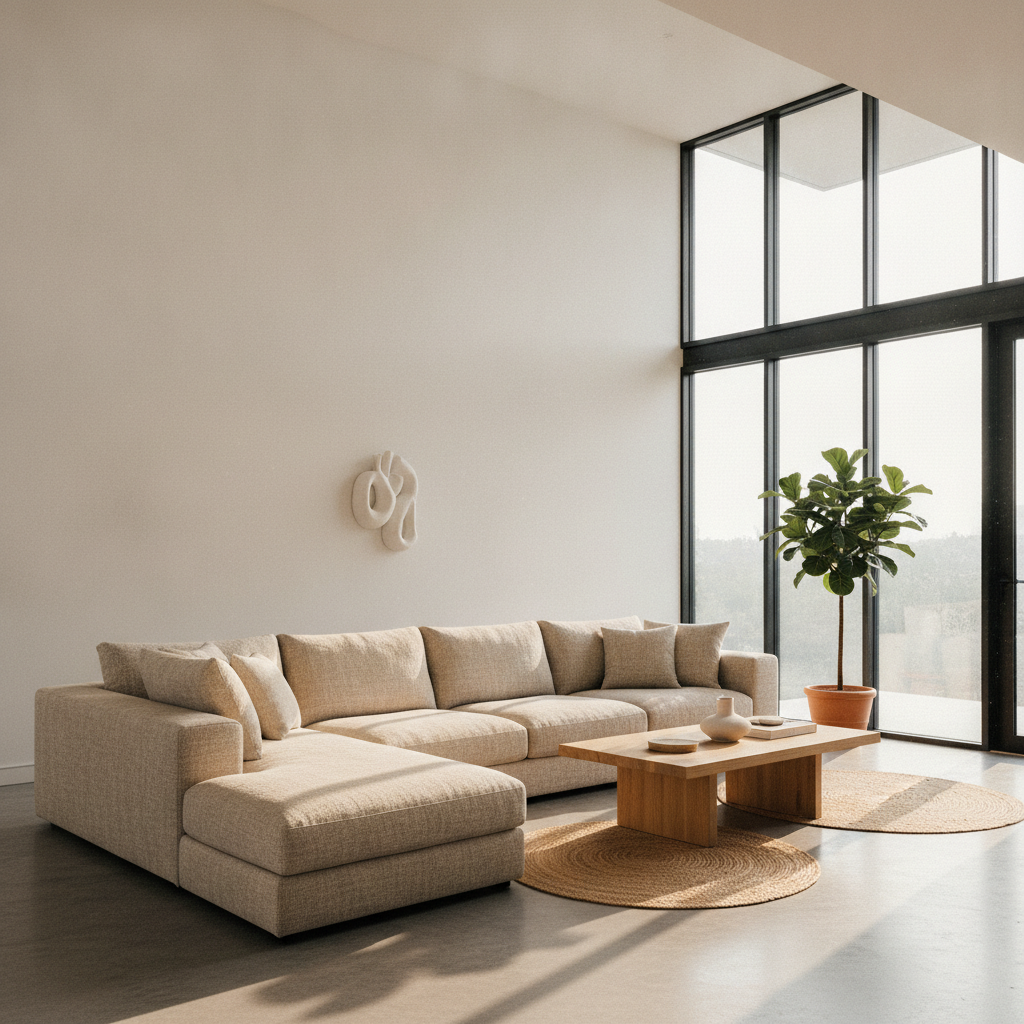
Eco-Sofa Fabrics for 2026: Balancing Scale, Wear, and Sustainability
Selecting a sofa fabric isn’t just about color or pattern; it’s a structural decision impacting longevity, maintenance, and the overall feel of a room. For 2026, the discussion shifts to materials that perform reliably while minimizing environmental impact. It’s no longer enough for a fabric to look good; it must stand up to use and align with a broader sustainability ethos. This means assessing durability, material provenance, and how a textile integrates with a furniture piece’s form and your interior’s scale.
Understanding Fabric Longevity & Environmental Impact
A sofa’s sustainability often hinges on its lifespan. A piece that lasts two decades uses fewer resources than one replaced every five years. This drives the current focus on durable, eco-conscious fabrics. A truly eco-friendly fabric extends beyond its raw material source; it considers the entire lifecycle: cultivation, manufacturing, transport, use, and disposal. Durability is a core component of this. A high-performance, long-lasting fabric is inherently more sustainable.
Key metrics guide our understanding of a fabric’s resilience:
- Double Rub Count (Wyzenbeek): This measures a fabric’s resistance to abrasion. For residential use, aim for at least 15,000 double rubs. For high-traffic family rooms or commercial settings, 30,000 to 50,000+ is advisable.
- Pilling Resistance: Measured on a scale of 1 to 5, where 5 indicates no pilling. Pilling is when fibers ball up on the surface, making a fabric look worn.
- Colorfastness: This assesses a fabric’s resistance to fading from light exposure or washing.
Material Deep Dive: Key Eco-Lux Fabric Contenders for 2026
Recycled Synthetics (PET, Polyester Blends)
Recycled synthetics, particularly those made from post-consumer PET bottles, offer a compelling balance of durability and eco-consciousness. They divert waste from landfills and oceans, giving plastics a second life.
- Pros: Exceptional durability (often exceeding 50,000 double rubs), excellent stain and fade resistance, available in a vast range of colors and textures. Many can mimic natural fibers effectively.
- Cons: Non-biodegradable; microplastic shedding can be a concern during washing, though solutions like microplastic filters are emerging. The manufacturing process, while using recycled content, still has an energy footprint.
- Spatial Focus: Their robustness makes them ideal for high-traffic areas, homes with children or pets. They maintain a crisp profile on structured sofas, preventing a visually ‘saggy’ appearance.
Explore durable options like recycled polyester upholstery fabric.
Organic Cottons & Linens
These natural fibers, when organically grown, reduce pesticide and herbicide use, preserving soil health and local ecosystems. GOTS (Global Organic Textile Standard) certification is the benchmark for organic textiles.
- Pros: Soft hand, breathable, hypoallergenic, and fully biodegradable. They offer a relaxed, inviting aesthetic. Organic cotton provides a softer feel, while organic linen brings a distinct texture.
- Cons: Generally less durable than synthetics (15,000-30,000 double rubs for cotton, 12,000-25,000 for linen), prone to wrinkling, and less stain-resistant. Lighter colors can show dirt more readily.
- Spatial Focus: Best suited for lower to medium-traffic areas where a casual, airy atmosphere is desired. Their natural drape softens rigid forms, making large pieces feel less imposing.
Consider the natural comfort of organic cotton upholstery or the textured elegance of organic linen upholstery.
Hemp & Jute Blends
Hemp and jute are two of the most sustainable natural fibers. They grow quickly, require minimal water and no pesticides, and enrich the soil. Both are incredibly strong.
- Pros: Exceptionally durable (30,000-60,000+ double rubs for hemp), highly renewable, biodegradable. They offer a distinctive, robust texture and a natural, earthy aesthetic.
- Cons: Can be coarse to the touch, and the color palette is typically limited to naturals, although dyeing is possible. Some blends may shed fibers initially.
- Spatial Focus: Excellent for high-traffic furniture where extreme durability is paramount. Their coarse texture provides visual weight, grounding a sofa in a space. Ideal for industrial, minimalist, or modern farmhouse aesthetics.
Find robust choices like hemp upholstery fabric.
Tencel & Lyocell (Eucalyptus-based)
Tencel and Lyocell are brand names for lyocell fiber, a semi-synthetic cellulose fiber made from wood pulp (often eucalyptus). The production process is typically a closed-loop system, recycling water and solvents, making it highly sustainable.
- Pros: Silky smooth feel, excellent drape, breathable, naturally resistant to wrinkles, and biodegradable. It’s strong for its delicate appearance (20,000-35,000 double rubs).
- Cons: Can be more expensive than other eco-options, and while durable, it might not be the top choice for extreme high-traffic situations where a more rugged texture is acceptable.
- Spatial Focus: Best for pieces where a luxurious, soft hand is desired. Its smooth finish can make a sofa feel lighter and more refined, suitable for formal living rooms or master suites.
Discover the smooth feel of Tencel upholstery fabric.
Performance Fabrics with Eco-Certifications (e.g., Crypton Green, Revolution Fabrics)
These fabrics are engineered for superior stain, odor, and moisture resistance, often with a focus on sustainable manufacturing or material content. Revolution Fabrics, for instance, are made from olefin (polypropylene), which is easily recyclable.
- Pros: Unmatched stain and liquid resistance, high durability (50,000-200,000+ double rubs), often contain recycled content or are made from inherently sustainable fibers.
- Cons: Can sometimes feel more synthetic than natural fibers, and while eco-certified, the full lifecycle impact still needs careful review. Some brands might still use PFCs, so verify certifications.
- Spatial Focus: The ultimate choice for family rooms, vacation rentals, or homes with pets where spills and heavy use are daily realities. Their crispness helps maintain sofa structure, preventing a ‘slouchy’ look in active spaces.
Consider advanced materials like Crypton Green fabric or Revolution Performance Fabric.
Integrating Eco-Fabrics with Form & Dimension
A sofa’s fabric isn’t an isolated decision; it interacts directly with the piece’s dimensions and its placement within a room. The tactile and visual weight of a fabric influences how a sofa sits in space.
Seat Depth
The chosen fabric can subtly alter the perceived and actual comfort of a seat depth. A thick, textured fabric on a sofa with a 20-inch seat depth might feel shallower than a smooth, thin fabric on the same depth, as the bulk consumes more usable space. For optimal lounging, a seat depth of 22 to 24 inches is common. For more upright, formal seating, 20 to 22 inches generally works. Consider how your chosen fabric’s volume and give will interact with these dimensions. A plush chenille will compress more than a tightly woven hemp, influencing how you sink into the seat.
Clearance
The overall size of your sofa, combined with its fabric choice, dictates necessary room clearance. A sofa upholstered in a visually heavy, coarse fabric, even if dimensionally identical to one in a light, smooth textile, can feel larger and demand more visual breathing room. Ensure you’re maintaining adequate walk paths – generally 30 to 36 inches around primary seating areas – to prevent the space from feeling cramped. The bulkier the fabric, the more pronounced this effect will be.
Cushion Firmness
Fabric choice should align with cushion firmness for both comfort and aesthetic longevity:
- Soft (Rating 1-3/5): Typically uses down blends or fiberfill. Best paired with softer, more pliable fabrics like organic linen or Tencel, which can conform to the cushion’s natural give and avoid looking too taut or creased.
- Medium (Rating 3-4/5): Often high-density foam wrapped in fiber. This is the most versatile, suiting a wide range of fabrics from tight cottons to recycled polyesters and most hemp blends. It offers a good balance of support and comfort.
- Firm (Rating 4-5/5): High-resilience foam provides maximum support. These cushions pair well with more structured, durable fabrics such as heavy hemp, tight weaves, or performance synthetics, which can withstand tension and maintain a sharp profile.
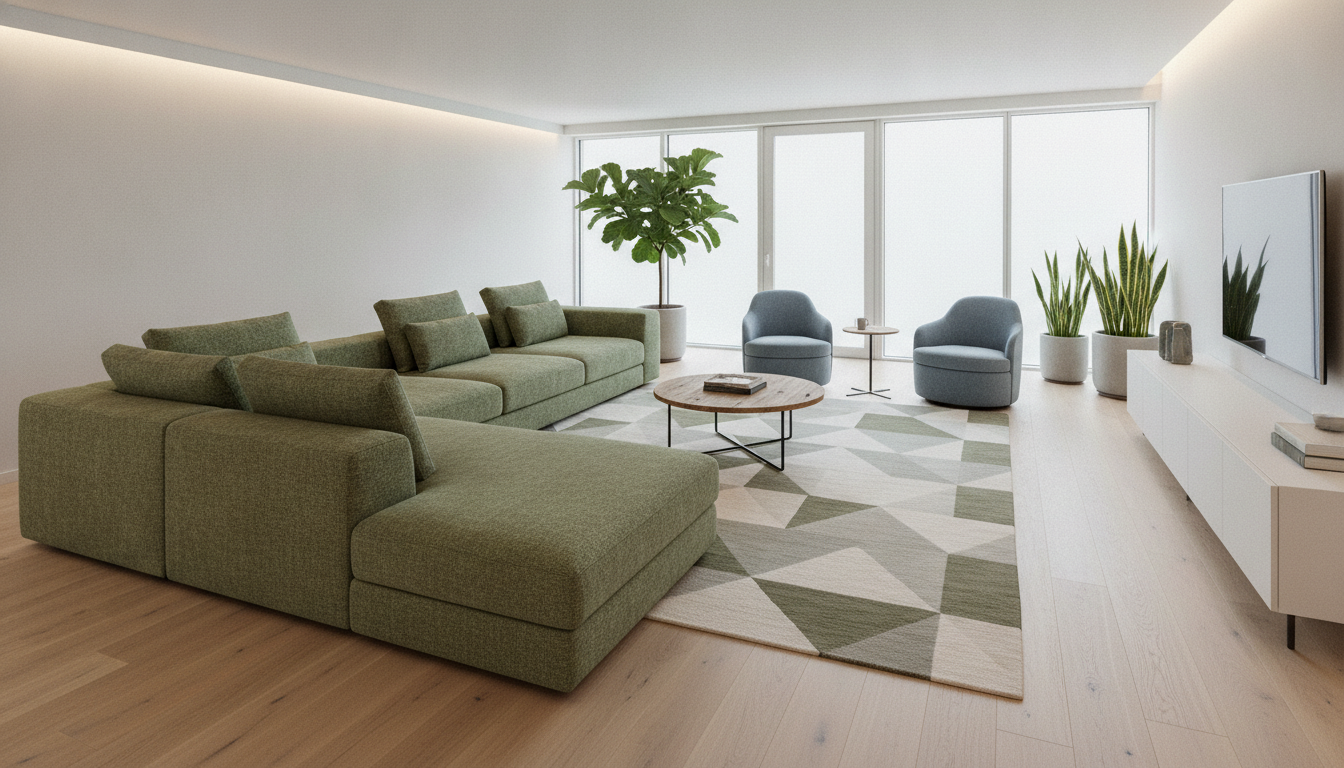
Practical Trade-offs: An Eco-Fabric Comparison
| Fabric Type | Durability (Double Rubs) | Feel/Texture | Eco-Impact Score (1-5, 5=best) | Best Use Case | Notes |
|---|---|---|---|---|---|
| Recycled Polyester | 50,000 – 100,000+ | Smooth to textured | 3 | High traffic, families | Versatile, stain-resistant |
| Organic Cotton | 15,000 – 30,000 | Soft, breathable | 4 | Low to medium traffic, casual | Prone to wrinkling, less stain resistant |
| Organic Linen | 12,000 – 25,000 | Crisp, textured | 4 | Low to medium traffic, airy spaces | Wrinkles easily, elegant drape |
| Hemp/Jute Blends | 30,000 – 60,000+ | Coarse, natural | 5 | High traffic, rustic, minimalist | Very strong, can be stiff initially |
| Tencel/Lyocell | 20,000 – 35,000 | Silky, smooth | 4 | Medium traffic, formal, luxurious | Biodegradable, closed-loop production |
| Performance (Eco-Cert) | 50,000 – 200,000+ | Varies, often smooth | 3-4 | Extreme traffic, kids, pets | Excellent stain/liquid resistance |

The Visual Weight of Eco-Fabrics
Beyond the technical specifications, consider a fabric’s visual weight. This refers to how a material appears in a room and its presence. Matte finishes, common in natural fibers like hemp and linen, tend to absorb light. This makes a sofa feel softer, less imposing, and visually lighter, allowing it to blend more seamlessly into a serene or minimalist space. Conversely, fabrics with a slight sheen, such as some Tencel blends or tightly woven recycled polyesters, reflect light. This can give a piece a more formal, ‘active,’ or even luxurious presence, making it a focal point. The weave itself contributes: a tight, plain weave presents a solid, structured appearance, while a slubby, loose weave (typical of many linens) feels more relaxed and organic. Understanding this interplay between texture, light, and weave ensures the sofa’s fabric choice complements the room’s overall aesthetic and spatial balance.
Maintenance & Longevity: The Eco-Friendly Equation
Choosing an eco-friendly fabric is only half the battle; proper maintenance ensures its extended life, further reducing environmental impact. Regular vacuuming prevents dirt and grit from abrading fibers. For spills, immediate spot cleaning is crucial. Always check the manufacturer’s care instructions, as cleaning methods vary significantly between natural fibers and performance synthetics. Some natural fabrics may require professional cleaning to prevent shrinking or discoloration. If considering fabric protectors, seek out eco-friendly, PFAS-free options to avoid introducing harmful chemicals into your home and the environment. A well-cared-for sofa is a sustainable sofa.
FAQ: Your Eco-Fabric Questions Answered
Q1: Are eco-friendly sofa fabrics actually durable?
Yes, many eco-friendly sofa fabrics are exceptionally durable, often rivaling or exceeding traditional options. Materials like hemp, jute, and recycled polyesters frequently boast high double rub counts (30,000 to 100,000+), making them suitable for high-traffic environments. Organic cottons and linens, while generally less robust for heavy daily use, still offer adequate durability (15,000-30,000 double rubs) for typical residential settings when properly cared for.
Q2: Will natural eco-fabrics stain easily?
Natural eco-fabrics like organic cotton and linen are generally more susceptible to staining than conventional synthetic or performance fabrics. Their porous fibers can absorb liquids more readily. However, immediate spot cleaning, regular maintenance, and the application of eco-friendly, PFAS-free fabric protectors can significantly mitigate this risk. Conversely, some eco-certified performance fabrics offer excellent stain resistance due to their inherent fiber structure or applied treatments.
Q3: How do I know if a fabric is truly sustainable?
Verifying a fabric’s sustainability requires looking beyond marketing claims. Look for established certifications such as GOTS (Global Organic Textile Standard) for organic cotton and linen, or OEKO-TEX Standard 100, which certifies absence of harmful substances. For wood-based fibers like Tencel, check for FSC (Forest Stewardship Council) certification for the wood pulp source. Transparency regarding material origin, manufacturing processes (e.g., closed-loop systems), and the fabric’s end-of-life options (recyclability, biodegradability) are key indicators of true sustainability. Don’t be afraid to ask suppliers for detailed information.
Ultimately, selecting a sofa fabric for 2026 demands a pragmatic approach. It’s about weighing material performance, environmental responsibility, and how the textile integrates with your furniture’s scale and your room’s function. The best choice isn’t just about what looks good, but what performs reliably, minimizes impact, and stands the test of time in your specific interior environment.
Related posts -
 Beyond the Vacuum: Advanced Sofa Care Routines for 2026’s High-Tech & Luxury Fabrics
 Future-Forward Comfort: Eco-Lux Sofa Fabrics Redefining 2026 Interiors
 Nature’s Embrace: Biophilic Sofa Designs to Enhance Wellness in Your 2026 Home
 Future-Proof Your Living Room: Top Eco-Friendly Sofa Fabrics for 2026