Why Armless and Modular Sofas Are Dominating Open Plan Homes
The modern home has undergone a remarkable transformation. Gone are the days of rigid, compartmentalized rooms, replaced by expansive, flowing open-plan layouts that encourage connection, light, and a sense of spaciousness. This shift in architectural design, however, presents a unique challenge when it comes to furniture selection. Traditional, bulky sofas with fixed arms and immovable structures often disrupt the visual flow and limit the versatility that open spaces promise. Enter the armless modular sofa – a revolutionary design concept that isn’t just adapting to open-plan living, but actively defining it. At lesofa.club, we’ve seen firsthand how these innovative seating solutions are becoming the cornerstone of contemporary interior design, offering unparalleled flexibility, aesthetic appeal, and functional brilliance for the modern homeowner.
The Rise of Open-Plan Living: A Modern Design Imperative
Open-plan living is more than just a trend; it’s a lifestyle choice. By combining living, dining, and kitchen areas into a single, cohesive space, homeowners achieve a myriad of benefits. Enhanced natural light floods deeper into the home, creating a brighter, more uplifting atmosphere. The visual continuity makes even smaller homes feel larger and more expansive. Communication and interaction among family members are naturally fostered, turning everyday activities into shared experiences. Moreover, open plans offer unparalleled flexibility for entertaining, allowing hosts to engage with guests while preparing meals, breaking down the traditional barriers between different areas of the home. This fluid environment demands furniture that can keep pace with its dynamic nature.
Why Traditional Sofas Fall Short in Open Plans
While beloved for their classic comfort, traditional sofas often become an impediment in open-plan settings. Their fixed, often cumbersome designs typically feature prominent armrests that consume valuable floor space and create visual blockages. In a sprawling room, a single, monolithic sofa can feel isolated, failing to define distinct zones or invite interaction. Reconfiguration is usually out of the question, leaving homeowners stuck with a static layout that might not adapt to evolving needs or social gatherings. The bulkiness of traditional pieces can also overwhelm a space, making it feel crowded rather than open and airy. For modern dwellers seeking versatility and sophisticated aesthetics, a different approach to seating is crucial.
Enter the Armless Modular Sofa: A Paradigm Shift
The armless modular sofa emerges as the quintessential solution for open-plan homes, perfectly embodying the principles of flexibility, space efficiency, and modern design. It’s a concept that breaks free from the constraints of conventional furniture, offering a dynamic and adaptable approach to seating.
Unparalleled Flexibility and Customization
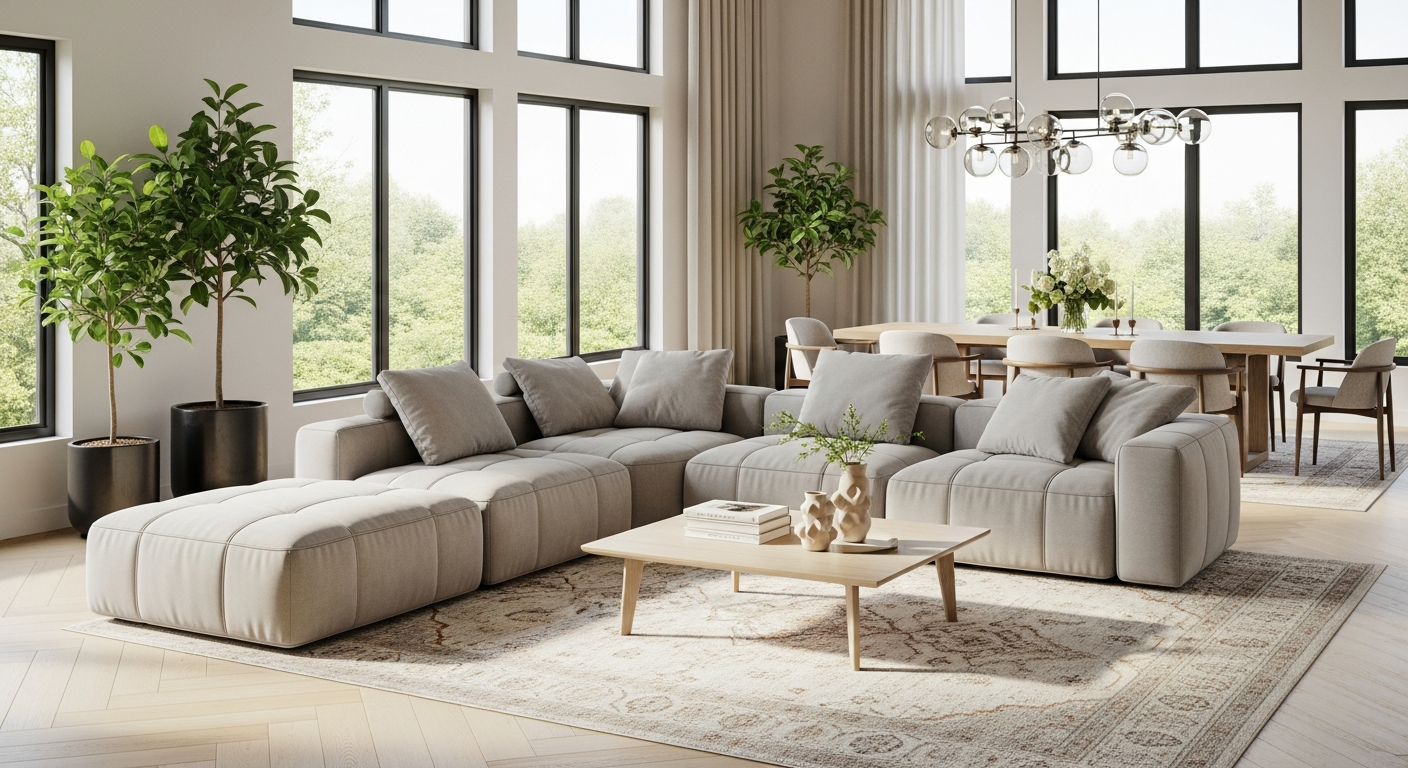
At the heart of the modular sofa’s appeal is its extraordinary flexibility. Composed of individual, independent units—such as corner pieces, armless chairs, and ottomans—these sofas can be arranged and rearranged in countless configurations. Imagine transforming a sprawling U-shape for movie nights into two distinct L-shapes for a lively dinner party, or even scattering individual pieces to create intimate conversational nooks. This adaptability means your living space can effortlessly evolve with your lifestyle, whether you’re hosting a large gathering, seeking a cozy spot for reading, or simply refreshing your decor. A versatile configurable sectional sofa offers endless possibilities.
Maximizing Space and Visual Flow
The absence of armrests is not merely an aesthetic choice; it’s a stroke of genius in terms of functionality. Armless units instantly create a lighter, more streamlined profile, allowing your eye to sweep uninterrupted across the room. This visual continuity is paramount in open-plan spaces, fostering a sense of expansive flow. Without bulky arms, you gain precious inches of seating area, making the sofa feel more spacious and inviting, especially in homes where every square foot counts. Furthermore, armless designs allow for seamless integration with other furniture pieces, as there are no hard boundaries to contend with. This design philosophy maximizes both perceived and actual space, a critical advantage in modern interiors.
Effortless Adaptability to Evolving Needs
Life is dynamic, and your home should be too. A key advantage of the armless modular sofa is its ability to adapt over time. Starting with a smaller configuration, you can easily add more modules as your family grows or your needs change. Conversely, if you downsize or want to open up space, modules can be removed or repurposed. This longevity and adaptability make it a wise, long-term investment, ensuring your sofa remains relevant and functional for years to come. It’s furniture that grows with you, not just sits there.
Aesthetic Versatility and Modern Appeal
The clean lines and understated elegance of armless modular sofas perfectly complement contemporary aesthetics. Whether your style is minimalist, industrial, Scandinavian, or a sophisticated blend, these sofas provide a sleek, uncluttered foundation. They often serve as a canvas, allowing you to introduce personality through cushions, throws, and complementary accent pieces. Their inherent modernity ensures they never look out of place in a cutting-edge open-plan design. A sleek mid-century modern armless sofa, for instance, can anchor an entire living area with understated elegance.
Key Features to Look for in an Armless Modular Sofa
Investing in a modular sofa requires thoughtful consideration of several key features to ensure it meets your specific needs and stands the test of time:
- Frame Material: Look for sturdy construction. Kiln-dried hardwood frames (like oak or birch) are preferred for their durability and resistance to warping. Metal frames also offer excellent longevity and a modern aesthetic.
- Upholstery: The fabric choice impacts both aesthetics and practicality. Performance fabrics (e.g., solution-dyed acrylics, Crypton) are excellent for high-traffic areas and homes with children or pets, offering stain and fade resistance. Natural fibers like linen or cotton offer breathability and a softer feel but may require more delicate care. For a touch of luxury, consider a durable performance velvet sofa.
- Cushioning: A combination of high-density foam for support and down or feather blend for softness provides the best of both worlds. Ensure cushions are reversible for even wear.
- Connectors: Secure, easy-to-use connectors are crucial for modular pieces. Look for robust interlocking mechanisms that keep modules firmly in place while allowing for effortless rearrangement.
- Ease of Cleaning: Removable, machine-washable covers are a huge plus. If not, ensure the fabric is easily spot-cleaned or can withstand professional cleaning. To keep your upholstery pristine, a reliable upholstery cleaner is essential.
Armless vs. Modular: Understanding the Nuances
While often discussed together, it’s important to understand that ‘armless’ and ‘modular’ are distinct features that, when combined, create the ultimate open-plan seating solution.
- Armless Sofas: These are simply sofas designed without traditional armrests. They can be fixed-length sofas, not necessarily modular. Their primary benefit is a streamlined look and maximum seating space for their footprint.
- Modular Sofas: These are sofas made up of individual, separable units that can be rearranged. They can have arms on some units (e.g., an end piece with one arm) or be entirely armless. Their primary benefit is flexibility and customization.
The magic truly happens when these two concepts merge. An armless modular sofa offers the unhindered visual flow and maximal seating area of an armless design, combined with the unparalleled reconfigurability of modular units. This potent combination is what makes them ideal for the fluid demands of open-plan homes.
Comparison Table: Sofa Types in Open Plan Homes
| Feature | Traditional Fixed Sofa | Armless Fixed Sofa | Armless Modular Sofa |
|---|---|---|---|
| Flexibility/Reconfigurability | Very Low (fixed) | Low (fixed) | Very High (endless arrangements) |
| Space Efficiency | Low (arms consume space) | Medium-High (no arms) | Very High (no arms, adaptable footprint) |
| Visual Flow in Open Plan | Can be obstructive | Good, streamlined | Excellent, seamless |
| Aesthetic Adaptability | Classic, less modern | Modern, minimalist | Highly versatile, modern |
| Ability to Zone Spaces | Limited | Limited | Excellent (create distinct areas) |
| Investment (typically) | Medium to High | Medium to High | High (due to design/engineering) |
| Future-Proofing | Low | Medium | Very High (grows with needs) |
Design Tips for Integrating Armless Modular Sofas in Open Plan Homes
To truly harness the power of your armless modular sofa in an open-plan environment, consider these design strategies:
- Define Zones with Rugs: Use a stylish large area rug to anchor your sofa and visually delineate the living area from the dining or kitchen space. This helps create distinct ‘rooms’ within the open layout.
- Complementary Furniture: Pair your sofa with low-profile coffee tables and lightweight side tables that don’t obstruct sightlines. Nesting tables are an excellent choice for versatility.
- Strategic Placement: While modular sofas can be placed against a wall, consider floating them in the middle of the room to act as a natural room divider, defining pathways and separate zones.
- Pops of Color and Texture: Since armless modular sofas often have clean, neutral lines, use accent pillows and throws to introduce color, pattern, and texture, adding warmth and personality without breaking the visual flow.
- Lighting Layers: Incorporate various lighting sources—ambient overhead, task lighting (floor lamps), and accent lighting (table lamps)—to enhance the mood and function of different areas around your sofa.
Maintenance and Care for Your Modern Sofa
To ensure your armless modular sofa remains a stunning centerpiece for years to come, proper care is essential:
- Regular Vacuuming: Vacuum regularly using an upholstery attachment to remove dust and crumbs, preventing them from embedding into the fabric.
- Spot Cleaning: Address spills immediately. Blot, don’t rub, with a clean white cloth. Always test cleaning solutions on an inconspicuous area first.
- Cushion Rotation: Rotate and fluff cushions frequently to maintain their shape and ensure even wear.
- Professional Cleaning: Depending on the fabric, consider professional deep cleaning every 12-18 months to refresh the upholstery and extend its life.
FAQs About Armless Modular Sofas
Q1: Are armless modular sofas comfortable without arms to lean on?
A1: Absolutely! Modern armless modular sofas are designed with comfort in mind. Many feature plush backrests and deep seats. You can also use decorative pillows as additional support, or configure an ottoman next to an armless seat to create a chaise-like lounging experience. The lack of arms often allows for more flexible seating positions, letting you stretch out more freely.
Q2: How do armless modular sofas stay together?
A2: Most modular sofa units come with integrated connectors, often located underneath or on the sides of the frames. These can be alligator clips, metal brackets, or simple interlocking mechanisms that securely hold the pieces together, preventing them from shifting apart. They are typically easy to engage and disengage for reconfiguration.
Q3: Can I add or remove modules from my armless modular sofa later?
A3: Yes, this is one of the primary benefits! As long as the manufacturer offers individual modules for sale, you can typically expand or reduce your sofa configuration over time. It’s always a good idea to check with the retailer or manufacturer about module availability and compatibility before purchase, especially regarding fabric dye lots if you plan to expand much later.
Q4: Are armless modular sofas more expensive than traditional sofas?
A4: The price can vary widely depending on the brand, materials, and number of modules. While a single armless module might seem comparable to a traditional sofa piece, building a large, complex modular configuration can be a significant investment. However, considering their longevity, adaptability, and the value they add to an open-plan space, many find them to be a cost-effective choice in the long run.
Q5: How do I choose the right size armless modular sofa for my open plan?
A5: Start by measuring your space. Use painter’s tape on the floor to visualize different configurations and footprints. Consider traffic flow around the sofa and how it will interact with other zones. An armless design already saves visual space, but ensuring the overall dimensions work within your open plan is crucial. Remember the flexibility – you can always start smaller and add on.
Conclusion: Embrace the Future of Flexible Living
The ascendancy of the armless modular sofa in open-plan homes is no accident. It is a thoughtful response to the evolving needs of modern living, offering a blend of aesthetic elegance, unparalleled flexibility, and clever space utilization that traditional furniture simply cannot match. For homeowners seeking to create dynamic, adaptable, and visually harmonious environments, this innovative seating solution provides the ultimate foundation. At lesofa.club, we wholeheartedly believe that an armless modular sofa isn’t just a piece of furniture; it’s an investment in a more fluid, functional, and aesthetically pleasing lifestyle. Explore the possibilities and redefine your living space today!
Ready to transform your open-plan home? Browse our curated selection of armless modular sofas and discover the perfect configuration to elevate your space!