
Green Clean: Eco-Friendly Sofa Cleaning Tips for a Sustainable 2026 Home
In an era where sustainability is not just a buzzword but a way of life, extending our eco-conscious choices to every corner of our homes is paramount. As we look towards 2026 and beyond, the pursuit of a greener lifestyle naturally leads us to reconsider our cleaning practices. Our sofas, often the centerpiece of our living spaces, absorb everything from daily grime to spills and allergens. But how do we keep them pristine without resorting to harsh chemicals that harm our health and the planet? The answer lies in eco-friendly sofa cleaning, a method that promises a sparkling clean without the environmental guilt or the health risks.
This comprehensive guide from lesofa.club will walk you through the world of sustainable sofa care. We’ll explore why going green with your cleaning products is more beneficial than you might think, delve into the essential steps for different fabric types, and equip you with the knowledge to maintain a fresh, healthy, and inviting sofa that contributes to a truly sustainable home.
Why Choose Eco-Friendly Sofa Cleaning? The Benefits Unveiled
The allure of conventional cleaning products often comes from their immediate, visible results and strong scents, which many equate with cleanliness. However, these products frequently contain volatile organic compounds (VOCs), phthalates, and other hazardous chemicals that can linger in your home’s air and on your furniture, posing risks to human health and the environment.
Health Benefits: Breathing Easier
Opting for eco-friendly sofa cleaning means saying goodbye to respiratory irritants, skin allergens, and potential endocrine disruptors found in traditional cleaners. For households with children, pets, or individuals sensitive to chemicals, this shift is more than a preference—it’s a necessity. Natural ingredients like vinegar, baking soda, and essential oils provide powerful cleaning action without the noxious fumes or residues, contributing to better indoor air quality and a safer living environment. You’ll notice a significant difference in how fresh your home feels, truly clean without the artificial fragrance masking underlying chemical odors.
Environmental Impact: A Lighter Footprint
The lifecycle of eco-friendly cleaning products has a significantly lighter impact on our planet. They are often biodegradable, meaning they break down naturally without polluting waterways or harming aquatic life. Furthermore, many green cleaning solutions come in concentrated forms, reducing plastic waste, or are packaged in recyclable materials. By choosing sustainable options, you’re not just cleaning your sofa; you’re actively participating in the global effort to reduce pollution and conserve natural resources. It’s a small change with a powerful collective impact.
Longevity of Your Sofa: Gentle Yet Effective
Harsh chemicals can strip natural fibers, fade colors, and degrade the integrity of your sofa’s upholstery over time, leading to premature wear and tear. Eco-friendly cleaning methods, conversely, are typically gentler on fabrics. While effective at lifting dirt and stains, they work with the fabric rather than against it, preserving its texture, color, and structural integrity. This means your beloved sofa can maintain its beauty and comfort for much longer, delaying the need for costly replacements and further reducing your consumption footprint.
Cost-Effectiveness: Smart Savings
One of the most appealing aspects of eco-friendly sofa cleaning, especially DIY methods, is its affordability. Many of the most effective green cleaning agents—white vinegar, baking soda, lemon juice, and castile soap—are common household staples that are inexpensive and readily available. Crafting your own cleaning solutions can significantly cut down on your household expenses, offering a budget-friendly alternative to specialized chemical cleaners or professional services. Investing in bulk supplies of large tubs of baking soda or white vinegar is a smart economic and environmental choice.
Understanding Your Sofa Fabric: The First Step to a Green Clean
Before embarking on any cleaning adventure, it’s crucial to identify your sofa’s fabric type and check its care label. This small tag, often hidden under cushions, holds the key to safe and effective cleaning. The codes are universal:
- W: Water-based cleaner safe.
- S: Solvent-based cleaner only (water will stain).
- WS: Both water and solvent-based cleaners are safe.
- X: Vacuum only; no liquids. Professional cleaning recommended.
Ignoring these codes can lead to irreversible damage, regardless of how eco-friendly your cleaning solution is. Always spot-test any cleaning agent in an inconspicuous area first.
Essential Eco-Friendly Cleaning Arsenal: Your DIY Toolkit
Building your green cleaning kit is simple and inexpensive:
- Vacuum Cleaner with Upholstery Attachments: Essential for removing loose dirt and debris.
- High-quality Microfiber Cloths: Absorbent, non-abrasive, and reusable for streak-free cleaning.
- Spray Bottles: For mixing and applying solutions.
- Soft Brushes: For gentle scrubbing and lifting dirt from fabric fibers.
- White Vinegar: A natural disinfectant, deodorizer, and stain remover.
- Baking Soda: Excellent for absorbing odors and mild abrasive for scrubbing.
- Castile Soap: A concentrated, plant-based, biodegradable soap that’s gentle yet effective. Dr. Bronner’s castile soap is a popular choice.
- Hydrogen Peroxide (3%): A natural brightener and disinfectant, especially good for organic stains.
- Lemon Juice: Natural bleaching agent and fresh scent.
- Cornstarch: Great for absorbing grease stains.
Step-by-Step Eco-Friendly Sofa Cleaning Guide
Pre-Cleaning: The Foundation of a Flawless Finish
Every effective cleaning routine begins with thorough preparation.
- Vacuum Thoroughly: Remove all cushions and use your vacuum’s upholstery attachment to meticulously vacuum every surface, crevice, and corner. This removes loose dirt, pet hair, dust mites, and crumbs, preventing them from turning into mud once wet.
- Spot Testing: Always, without exception, test your chosen cleaning solution on an inconspicuous area of the sofa first (e.g., the back or under a cushion). Apply a small amount, let it sit for 5-10 minutes, then blot dry. Check for discoloration, shrinkage, or water rings before proceeding.
Tackling General Dirt and Grime
- Baking Soda Sprinkle: For general freshening and odor absorption, sprinkle a generous amount of baking soda over the entire sofa. Let it sit for at least 30 minutes, or even overnight for stubborn odors. Then, vacuum it all up. This method is incredibly effective for revitalizing upholstery.
- Vinegar and Water Solution (for W or WS codes): Mix equal parts white vinegar and distilled water in a spray bottle. Lightly mist the sofa’s surface (do not saturate). Use a clean microfiber cloth to gently wipe the area. The vinegar smell will dissipate as it dries, leaving behind a fresh, clean scent.
- Castile Soap Solution (for W or WS codes): For a slightly stronger clean, mix a few drops of liquid castile soap with a cup of distilled water. Apply sparingly with a damp (not wet) microfiber cloth, working in small sections. Rinse the cloth frequently and wipe with a separate clean, damp cloth to remove soap residue, then dry with a third clean, dry cloth.
- Steam Cleaning (for suitable fabrics): For W or WS fabrics that can tolerate moisture, a handheld steam cleaner can be a powerful eco-friendly tool. The heat and moisture penetrate fibers to lift dirt and sanitize without chemicals. Move the steamer quickly and avoid over-wetting, then follow up with a dry cloth.
Eco-Friendly Spot Treatment Solutions
- Coffee/Tea: Blot immediately with a clean cloth. Mix 1 part white vinegar with 2 parts water and a tiny drop of castile soap. Apply to the stain with a clean cloth, working from the outside in. Blot, don’t rub.
- Grease/Oil: Sprinkle cornstarch or baking soda generously over the fresh stain to absorb the oil. Let it sit for at least 15-30 minutes, then vacuum. For remaining residue, apply a tiny amount of diluted castile soap solution and blot.
- Ink: For fresh ink, a small amount of rubbing alcohol on a clean white cloth can sometimes work (test first!). Blot, don’t rub. For older stains, a paste of baking soda and water may help.
- Pet Accidents: Blot up as much liquid as possible. Sprinkle baking soda over the area to absorb odor and moisture. Let it sit for several hours or overnight, then vacuum. For urine stains, mix equal parts hydrogen peroxide (3%) and water with a few drops of dish soap. Apply, let sit for 10-15 minutes, then blot.
- Odors: A liberal sprinkle of baking soda left for several hours (or overnight) is often sufficient. For persistent odors, a light mist of a diluted white vinegar solution can also work wonders.
Deep Dive into Specific Sofa Fabric Care
Natural Fibers (Cotton, Linen, Hemp)
These fabrics are durable but can be prone to water staining or shrinking if over-wet. Stick to methods suitable for ‘W’ or ‘WS’ codes. Light misting with a vinegar or castile soap solution is best. Always ensure thorough drying to prevent mildew. Opening windows or using fans helps considerably. Sunlight is also a natural disinfectant for these robust fibers.
Synthetics (Polyester, Microfiber)
Polyester and microfiber are generally very durable and resistant to water stains. They often carry ‘W’ or ‘WS’ codes. A diluted castile soap solution or vinegar-water mix works well. For microfiber, a simple damp cloth with plain water can often remove most surface dirt. For tougher stains, a small amount of rubbing alcohol can be effective on microfiber (test first, as it’s a solvent).
Delicate Fabrics (Velvet, Silk, Wool)
These fabrics often require professional cleaning (‘S’ or ‘X’ codes) due to their delicate nature. If your care label permits, for velvet (W or WS), avoid saturating it. A dry cleaning powder (eco-friendly formulation) can be gently brushed in and vacuumed out. For light refresh, use a very lightly dampened cloth with plain water for velvet, always brushing in the direction of the pile. Silk and wool are particularly susceptible to water spots and shrinking; if you must attempt DIY, use minimal moisture and quick drying, or consult a professional.
Leather Sofas: A Special Eco-Treatment
Leather requires a different approach. Start by vacuuming thoroughly with a soft brush attachment. Wipe down with a soft, damp cloth. For cleaning, mix a few drops of mild eco-friendly leather cleaner or castile soap with distilled water. Dampen a cloth with the solution and gently wipe the leather, section by section. Follow immediately with a clean, damp cloth to wipe away any residue, then dry with a soft, dry cloth. To condition and protect, mix 1 part white vinegar with 2 parts olive oil. Apply a small amount to a clean cloth and gently rub into the leather in circular motions, then buff with a clean, dry cloth. This restores shine and suppleness.
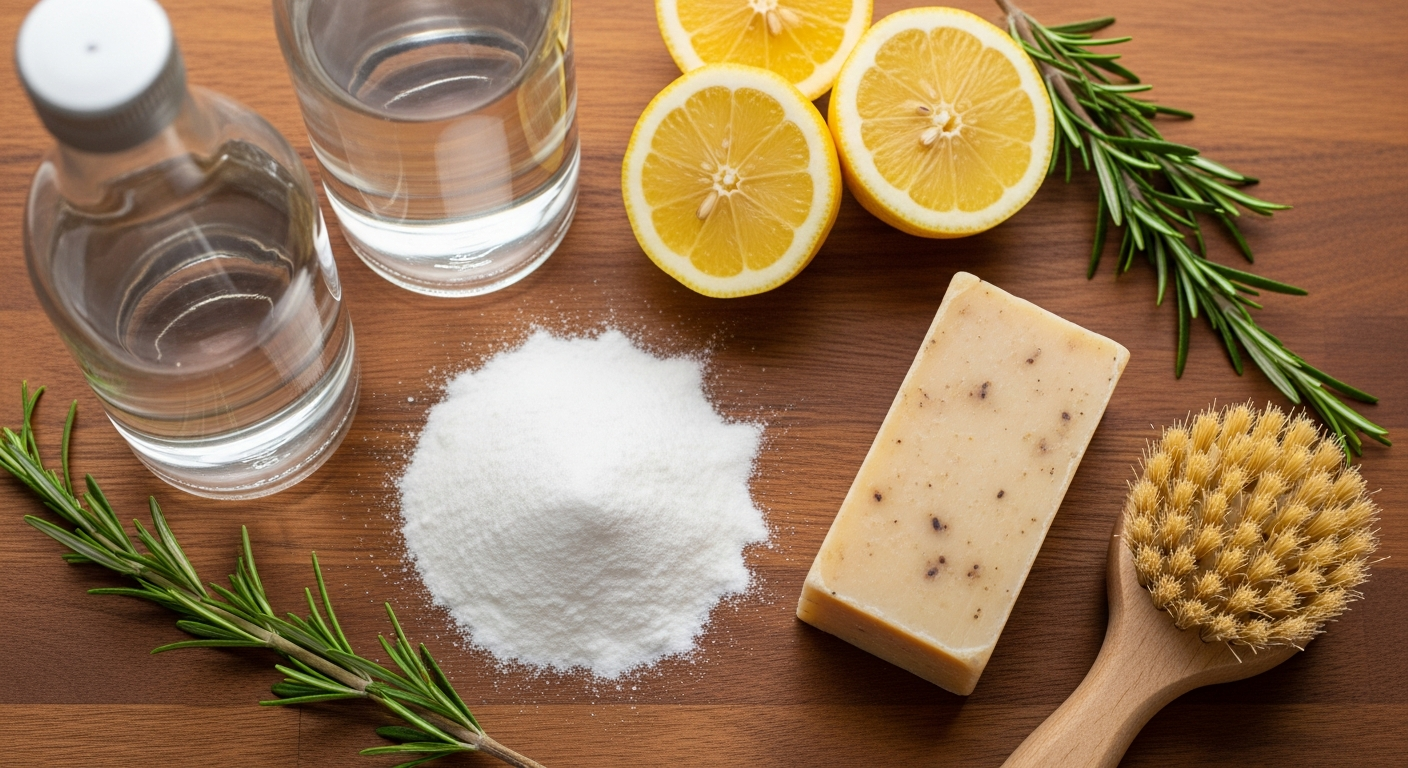
Your natural toolkit for effective eco-friendly sofa cleaning, using simple household ingredients.
Prevention is Key: Maintaining a Clean Sofa, Sustainably
The best cleaning is often preventative. By adopting simple habits, you can significantly reduce the frequency of deep cleaning.
- Regular Vacuuming: Make it a weekly ritual to vacuum your sofa, removing dust, crumbs, and pet dander before they settle into the fibers.
- Immediate Spill Clean-up: The faster you address a spill, the less likely it is to set. Always blot, don’t rub.
- Using Throws/Slipcovers: For high-traffic sofas or those prone to spills (e.g., in homes with kids or pets), washable throws or slipcovers offer an excellent protective barrier.
- Sunlight Exposure for Sanitization: Periodically remove cushions and let them air out in direct sunlight. UV rays are a natural disinfectant and deodorizer.
- Pet Grooming: Regularly brush your pets to minimize shedding and dander that can accumulate on your sofa.
Eco-Friendly Cleaning Solutions: DIY vs. Store-Bought
While DIY solutions are incredibly effective and cost-efficient, sometimes convenience or specific fabric requirements call for a store-bought option. Thankfully, the market for certified eco-friendly cleaning products has expanded significantly.
When choosing store-bought options, look for certifications from reputable organizations like the EPA’s Safer Choice program, Ecocert, or Green Seal. These certifications ensure that the products meet rigorous standards for environmental and human health safety. Brands like Seventh Generation upholstery cleaner or ECOS often provide effective, plant-based alternatives that are readily available.
Comparison Table: Eco-Friendly Sofa Cleaning Methods
| Method | Fabric Suitability | Effectiveness | Cost | Environmental Impact |
|---|---|---|---|---|
| Baking Soda Sprinkle | All fabrics (especially S, X) | Excellent for deodorizing, mild freshening | Very Low | Minimal (biodegradable) |
| Vinegar & Water Solution | W, WS fabrics (Cotton, Linen, Synthetics) | Good for general cleaning, light stains, disinfecting | Low | Minimal (biodegradable, non-toxic) |
| Castile Soap Solution | W, WS fabrics (Synthetics, robust Natural) | Good for deeper cleaning, moderate stains | Low-Moderate | Low (biodegradable) |
| Hydrogen Peroxide (diluted) | W, WS fabrics (spot treatment for organic stains) | Good for pet accidents, brightening | Low | Low (breaks down to water & oxygen) |
| Eco-Friendly Steam Cleaner | W, WS fabrics (Polyester, robust Cotton) | Excellent for deep cleaning, sanitizing, lifting dirt | Moderate (initial investment) | Minimal (uses only water) |
| Certified Eco-Friendly Product | Varies by product (check label) | Good to Excellent (convenience factor) | Moderate | Low (look for certifications like Safer Choice) |
| Vinegar & Olive Oil (Leather) | Leather | Cleans, conditions, restores shine | Very Low | Minimal (natural ingredients) |
The Future of Sofa Care: Innovations for a Greener Tomorrow
The quest for sustainability in home care is ongoing, and innovation continues to shape the future of sofa cleaning. We can anticipate even smarter fabrics engineered for stain resistance and easier cleaning, potentially reducing the need for harsh interventions. Self-cleaning technologies, eco-friendly fabric coatings, and advanced biodegradable cleaning tools are on the horizon, promising an even greener approach to maintaining our cherished furniture. These advancements will further empower us to live in harmony with our environment, one clean sofa at a time.
Frequently Asked Questions (FAQs) About Eco-Friendly Sofa Cleaning
Q: Can I use vinegar on all sofa fabrics?
A: No, vinegar is generally safe for ‘W’ and ‘WS’ coded fabrics like cotton, linen, and most synthetics. However, it should be avoided on delicate fabrics like silk, acetate, or rayon, and always spot-test first, especially on darker colors, as it can occasionally affect dyes.
Q: How often should I clean my sofa using eco-friendly methods?
A: For general maintenance, weekly vacuuming and monthly baking soda deodorizing are recommended. Deep cleaning with liquid solutions depends on usage and spills, typically every 3-6 months for high-traffic sofas, or once a year for less used ones. Immediate spot treatment for spills is always crucial.
Q: Are store-bought eco-friendly cleaners truly safe?
A: Most reputable eco-friendly cleaners are significantly safer than conventional ones. Look for third-party certifications like the EPA’s Safer Choice label, Green Seal, or Ecocert, which verify that products meet stringent environmental and health standards. Always read labels and ingredient lists.
Q: What’s the best way to remove pet odors naturally?
A: Baking soda is your best friend for pet odors. Sprinkle it liberally, let it sit for several hours (or overnight), then vacuum thoroughly. For stubborn odors or urine stains, a diluted solution of hydrogen peroxide (3%) and water with a tiny drop of eco-friendly dish soap can be highly effective (always spot-test first!).
Q: When should I call a professional eco-friendly cleaner?
A: If your sofa is an ‘S’ or ‘X’ code fabric, has very old, set-in stains, or you’re unsure about cleaning it yourself, it’s best to call a professional. Many upholstery cleaners now offer green cleaning services that use non-toxic, biodegradable solutions and specialized equipment for deep, safe cleaning.
Conclusion: Embrace a Sustainable Sparkle
Embracing eco-friendly sofa cleaning is more than just a trend; it’s a commitment to a healthier home, a cleaner planet, and a more sustainable lifestyle. By utilizing simple, natural ingredients and adopting mindful cleaning habits, you can keep your sofa looking fresh and inviting without compromising on your values. From a quick freshen-up with baking soda to a deeper clean with vinegar and castile soap, the power to create a sparkling, sustainable home is in your hands.
Ready to transform your home with a sparkling, sustainably clean sofa? Share your favorite eco-friendly cleaning tips in the comments below, or explore our guides for more insights into sustainable living!